SIP vs Lumpsum: Which Is Better for Mutual Fund Investing?
SIP or lumpsum? Compare how each mutual fund investment method works, see worked examples, and learn which suits your income, risk comfort and goals.
- How SIP and lumpsum investing work
- Worked examples with future value calculations
- Which approach suits salaried investors, windfalls and volatile markets
When investing in mutual funds, you can invest a fixed amount every month through a SIP (Systematic Investment Plan) or invest a large amount at once as a lumpsum. Both can work well. The right choice depends on how your money arrives and how you handle market ups and downs.
This guide is for general information only and isn't investment advice. Mutual fund investments are subject to market risks. Past returns don't guarantee future returns.
How SIP works
With a SIP, a fixed amount is invested at regular intervals, usually monthly. Because you buy units at different prices, you buy more units when prices are low and fewer when they're high. This is often called rupee cost averaging.
SIP future value formula
FV = P × [((1 + i)ⁿ − 1) ÷ i] × (1 + i)
Where P is the monthly SIP, i is the expected monthly return and n is the number of months.
How lumpsum works
You invest a single, larger amount at once. If markets rise after you invest, the whole amount benefits. If they fall, the whole amount is affected.
FV = P × (1 + r)ᵗ, where r is the annual return and t is years.
Worked example (assuming 12% a year)
| SIP | Lumpsum | |
|---|---|---|
| Amount | ₹10,000 a month for 10 years | ₹12,00,000 at the start |
| Total invested | ₹12,00,000 | ₹12,00,000 |
| Estimated value after 10 years | About ₹23.2 lakh | About ₹37.3 lakh |
The lumpsum looks better here because all the money is invested for the full ten years, while SIP money is invested gradually. But this assumes a steady 12% return, which never happens in real markets. Returns vary year to year, and the order of good and bad years matters a lot for a lumpsum.
SIP vs lumpsum compared
| Factor | SIP | Lumpsum |
|---|---|---|
| Best for | Monthly income, building a habit | Bonuses, inheritance, maturity proceeds |
| Market timing risk | Lower, spread over time | Higher, one entry point |
| Discipline | Automatic | One decision |
| Behaviour in falling markets | Buys more units at lower prices | Whole amount drops |
| Potential in rising markets | Lower than lumpsum | Higher |
Which should you choose?
- Salaried and investing from income? SIP fits naturally with your pay cycle.
- Have a large amount now? Lumpsum can make sense for long horizons, especially in debt or hybrid funds. For equity, some investors use an STP (Systematic Transfer Plan), parking money in a liquid fund and transferring to equity gradually.
- Nervous about market falls? SIP reduces the anxiety of picking the "right" day.
- Long horizon (10+ years)? Time in the market matters more than the method.
How to compare SIP and lumpsum for your goal
- Define your goal and time horizon. For example, ₹25 lakh in 10 years.
- Choose a realistic return assumption. Use conservative numbers and test a few.
- Calculate the SIP needed. Use a SIP calculator to find the monthly amount.
- Calculate the lumpsum needed. Use a lumpsum calculator for comparison.
- Check what you can actually afford. Monthly cash flow usually decides it.
- Review yearly. Increase your SIP as income grows (see step-up SIP).
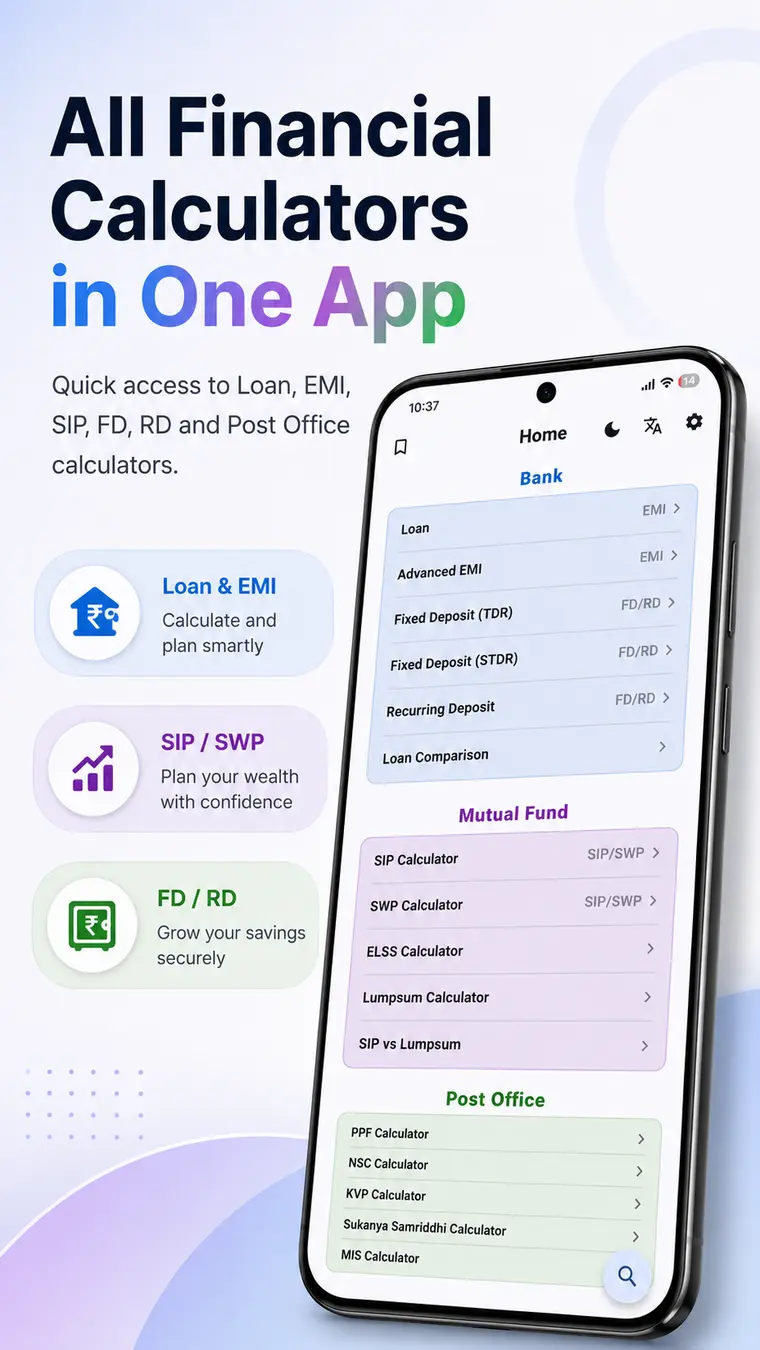
FinCalc India includes SIP, lumpsum, SIP vs lumpsum, SWP and step-up SIP calculators, with charts that show how invested amount and returns grow over time.
Measuring returns correctly
SIP returns are usually measured with XIRR, because money goes in at different times. Lumpsum returns are usually measured with CAGR. Read CAGR vs XIRR to understand the difference.
Key takeaways
- SIP invests a fixed amount regularly and spreads out market timing risk.
- Lumpsum invests everything at once, with more upside and more timing risk.
- Salaried investors often prefer SIP. Windfalls can go lumpsum or via STP.
- Over long horizons, staying invested matters more than the method.
Frequently asked questions
Is SIP better than lumpsum?
Neither is always better. Lumpsum can earn more in rising markets, while SIP reduces timing risk and suits monthly income.
Can I do both SIP and lumpsum?
Yes. Many investors run a monthly SIP and add lumpsum amounts when they receive bonuses or windfalls.
What return should I assume for SIP calculations?
Use conservative assumptions and test several scenarios. Actual returns vary and are not guaranteed.
What is rupee cost averaging?
Buying a fixed rupee amount regularly, so you buy more units when prices are low and fewer when prices are high.

We're an independent app studio in Pune, India. We build Finance Calculator: EMI & SIP and write these guides from what we learn making it and from the questions our users send us. Spotted an error? Email qunovixtechnologies@gmail.com.