The 50/30/20 Budget Rule: A Simple Way to Manage Money
The 50/30/20 rule splits take-home pay into needs, wants and savings. Learn how it works, see worked examples in rupees and how to adjust it for your life.
- How the 50/30/20 rule splits your take-home pay
- Worked examples at different income levels
- How to adapt the rule and track it each month
Budgets fail when they're too complicated. The 50/30/20 rule is popular because it's simple: three categories and three percentages.
This is general information, not financial advice.
What is the 50/30/20 rule?
The rule was popularised by Elizabeth Warren and Amelia Warren Tyagi in their 2005 book All Your Worth. It splits your take-home pay (after tax) into:
| Share | Category | Examples |
|---|---|---|
| 50% | Needs | Rent or EMI, groceries, utilities, transport, insurance, minimum loan payments |
| 30% | Wants | Eating out, entertainment, shopping, holidays, subscriptions |
| 20% | Savings and debt | Emergency fund, investments, SIPs, extra loan repayments |
Worked examples
| Monthly take-home | Needs (50%) | Wants (30%) | Savings (20%) |
|---|---|---|---|
| ₹40,000 | ₹20,000 | ₹12,000 | ₹8,000 |
| ₹75,000 | ₹37,500 | ₹22,500 | ₹15,000 |
| ₹1,20,000 | ₹60,000 | ₹36,000 | ₹24,000 |
Needs vs wants
The trickiest part is being honest about what's a need.
- Need: basic groceries. Want: premium brands and takeaway.
- Need: a phone plan. Want: the latest phone on EMI.
- Need: transport to work. Want: a cab when the metro works fine.
A useful question: "Would I be in real trouble without this?"
How to start a 50/30/20 budget
- Find your monthly take-home pay. Use what actually arrives in your account.
- Calculate the three amounts. 50%, 30% and 20%.
- List last month's spending. Use bank statements or an expense tracker.
- Sort each expense into needs, wants or savings.
- Compare with the targets. Where are you over or under?
- Pay yourself first. Move the 20% to savings on payday, before spending.
Adapting the rule
The 50/30/20 split is a starting point:
- High-rent cities: needs may exceed 50%. Try 60/20/20 and look for ways to bring needs down over time.
- Big goals or debt: try 50/20/30, putting 30% towards savings or repayments.
- Low income: focus on covering needs and building even a small emergency fund.
Track it each month
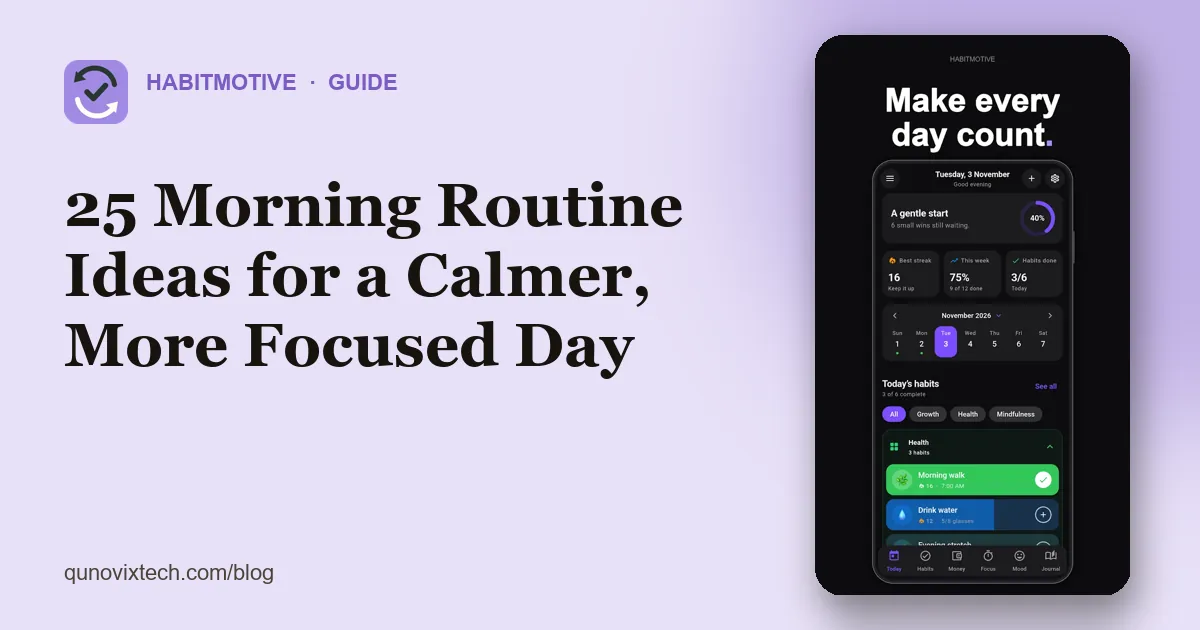
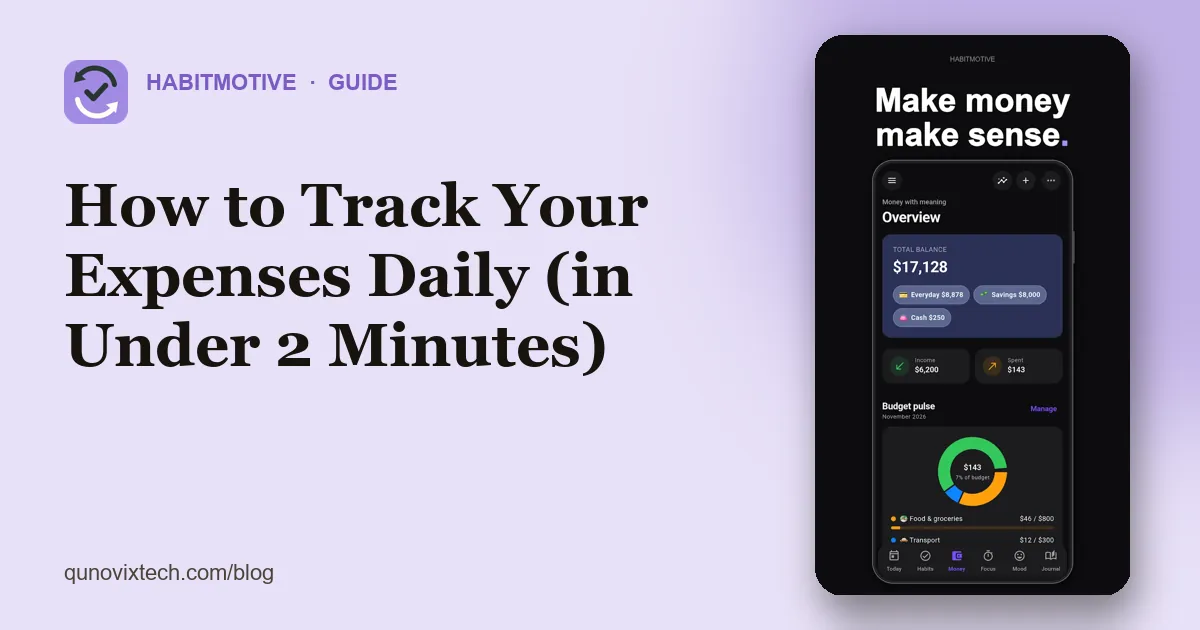
A budget only works if you know where money goes. Logging expenses as they happen (see how to track expenses daily) makes the monthly check quick.
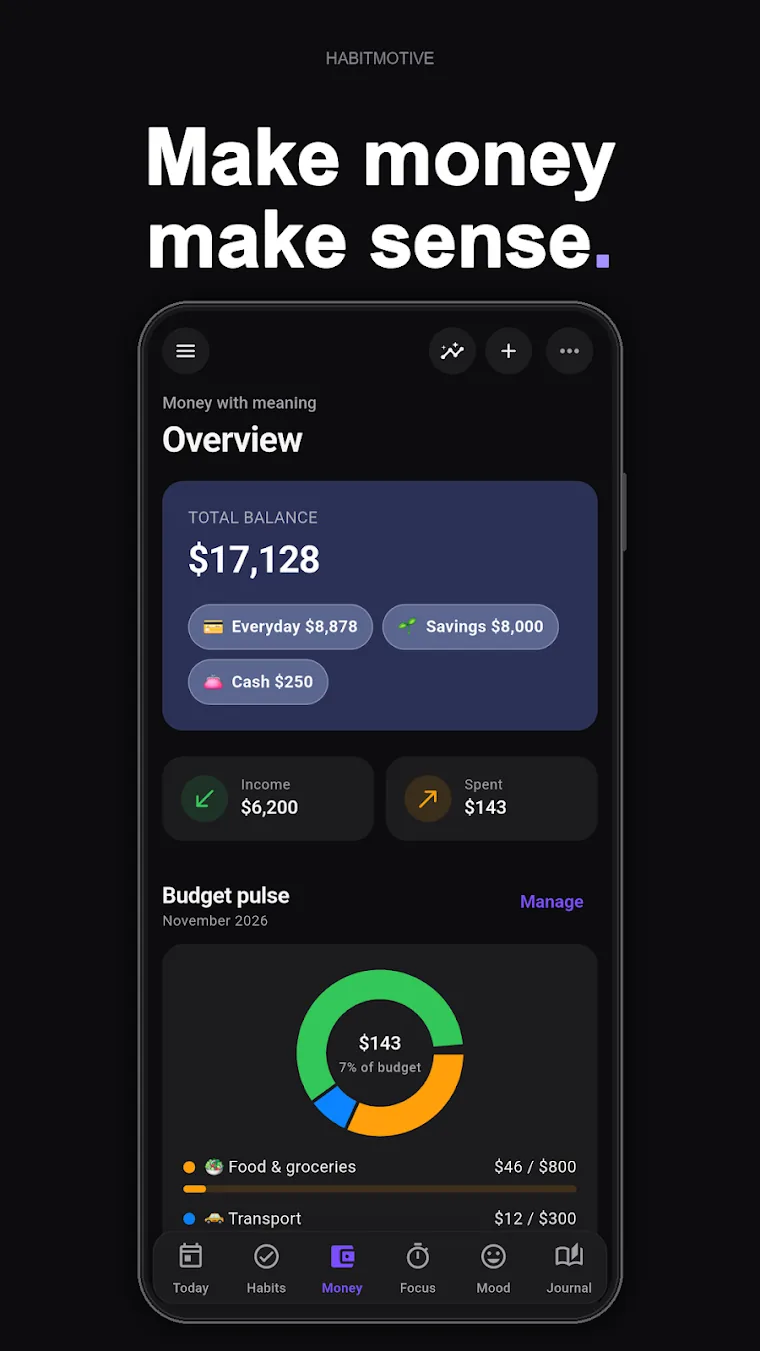
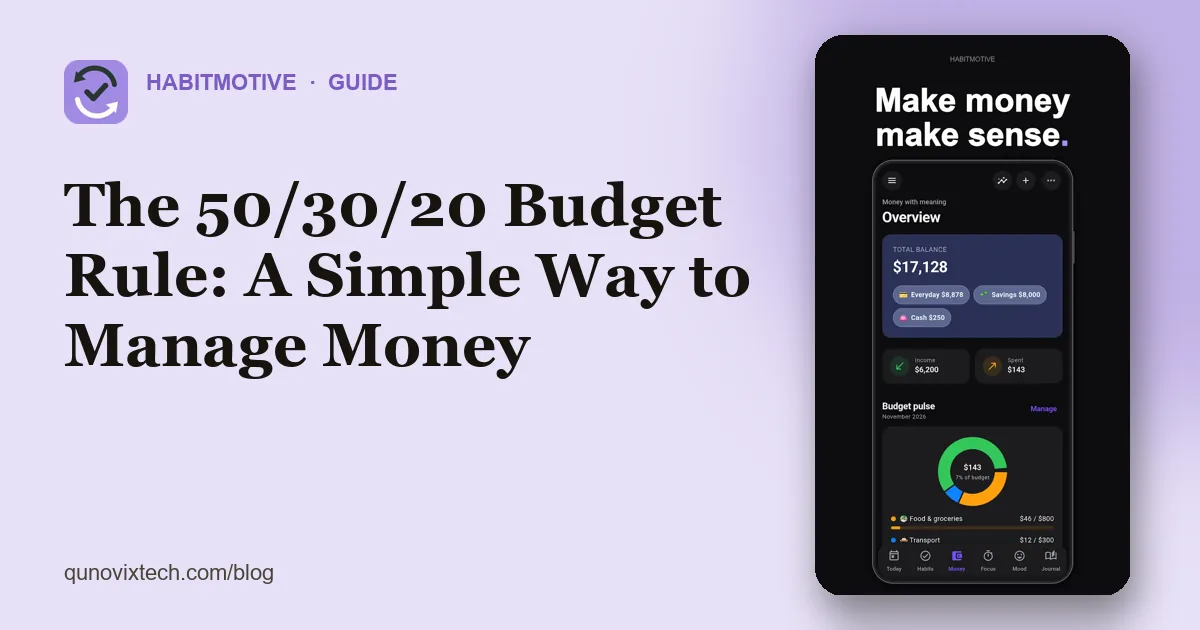
HabitMotive includes a money section where you can track expenses, income, transfers and account balances, set category budgets and see spending charts, alongside your habits. Make "log every expense" one of your tracked habits.
Key takeaways
- 50% for needs, 30% for wants, 20% for savings and debt repayment.
- Use take-home pay and be honest about needs vs wants.
- Pay yourself first by moving savings on payday.
- Adjust the split to your city, income and goals.
Frequently asked questions
What is the 50/30/20 rule?
A budgeting guideline that puts 50% of take-home pay toward needs, 30% toward wants and 20% toward savings and debt repayment.
Does the 50/30/20 rule work in India?
It can, though high rents in big cities may push needs above 50%. Adjust the percentages to your situation.
Is EMI a need or a want?
EMIs on essential loans, like a home loan, are usually needs. EMIs on non-essential purchases are better treated as wants.
Where should the 20% savings go?
Typically an emergency fund first, then goal-based savings and investments, and extra debt repayment.

We're an independent app studio in Pune, India. We build HabitMotive: Habit Tracker and write these guides from what we learn making it and from the questions our users send us. Spotted an error? Email qunovixtechnologies@gmail.com.