How to Track Your Expenses Daily (in Under 2 Minutes)
Daily expense tracking shows where your money really goes. Learn a two-minute routine, which categories to use, and how to turn tracking into a lasting habit.
- Why daily tracking beats monthly guesswork
- A two-minute daily routine and simple category list
- How to review spending weekly and act on what you find
Most people underestimate how much they spend on small things: snacks, deliveries, cabs, subscriptions. Tracking expenses daily, even briefly, reveals where money actually goes. It takes less than two minutes a day.
Why track daily?
- Accuracy. Small cash and UPI payments are easy to forget by the end of the month.
- Awareness. Logging a purchase makes you pause and think about it.
- Control. You can adjust mid-month instead of discovering problems afterwards.
Keep categories simple
Too many categories make tracking tedious. Start with around ten:
| Category | Examples |
|---|---|
| Groceries | Vegetables, milk, staples |
| Food & dining | Restaurants, deliveries, snacks |
| Transport | Fuel, metro, cabs, parking |
| Bills & utilities | Electricity, internet, phone |
| Rent / EMI | Housing payments |
| Shopping | Clothes, gadgets, household items |
| Health | Medicines, doctor visits |
| Entertainment | Movies, subscriptions |
| Family & gifts | Gifts, celebrations |
| Other | Anything else |
The 2-minute daily routine
- Pick a time. For example, after dinner (attach it to an existing habit, see habit stacking).
- Check payment apps and wallet. Look at UPI history, card notifications and cash spent.
- Log each expense. Amount, category and a short note.
- Glance at your budget. See how much is left in key categories.
- Tick the habit. Mark "log expenses" as done in your tracker.
Weekly review (10 minutes)
- Which category grew the most?
- Any surprise purchases?
- Any subscriptions you no longer use?
- Are you on track for your 50/30/20 split?
Tips that make it stick
- Log immediately when you can. Right after paying is easiest.
- Round numbers are fine. ₹247 can be ₹250. Consistency beats precision.
- Track transfers separately. Moving money between your own accounts isn't spending.
- Attach receipts for big purchases. Useful for warranties and returns.
- Don't judge. The goal is awareness first.
Make expense tracking a habit
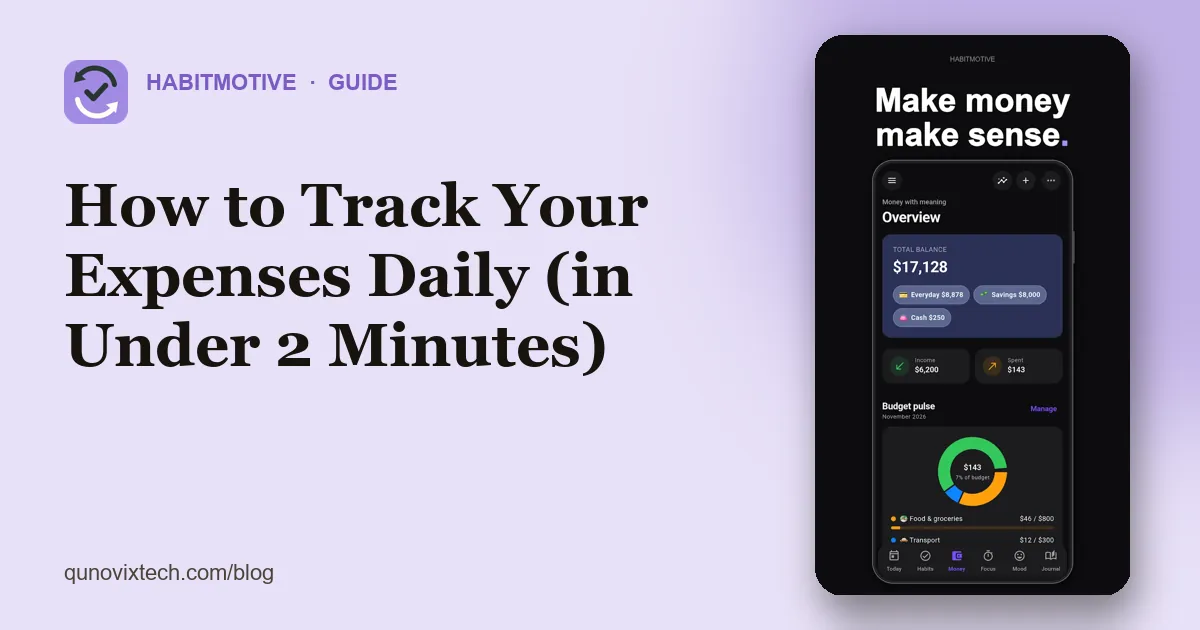
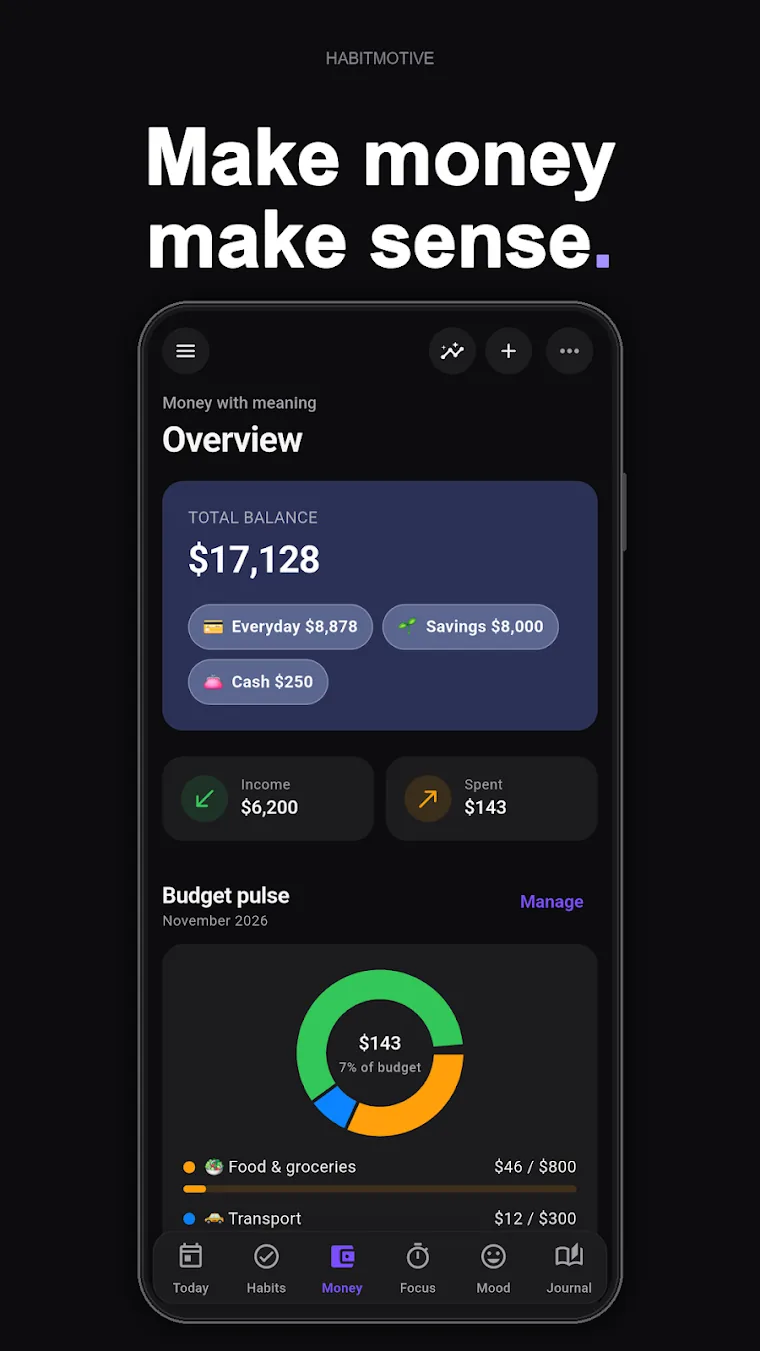
Tracking expenses is itself a habit. In HabitMotive, you can log expenses, income and transfers, attach receipts, set category budgets and see charts, and also track "log expenses" as a daily habit with a streak. For building the habit itself, see how to build a habit.
Key takeaways
- Daily tracking catches small expenses you'd otherwise forget.
- Use around ten simple categories.
- A two-minute evening routine is enough, plus a weekly review.
- Treat expense logging as a habit and track it.
Frequently asked questions
What is the easiest way to track expenses?
Log expenses once a day, at a fixed time, using a simple app with a few categories.
How many expense categories should I use?
Around ten is enough for most people. Too many makes tracking tedious.
Should I track every small expense?
Yes, at least for the first month. Small expenses often add up to more than expected.
How often should I review my spending?
A quick daily glance and a 10-minute weekly review work well.

We're an independent app studio in Pune, India. We build HabitMotive: Habit Tracker and write these guides from what we learn making it and from the questions our users send us. Spotted an error? Email qunovixtechnologies@gmail.com.