How to Build a Habit That Sticks: A Science-Based Guide
Learn how habits form and how to build one that lasts: cues, tiny starts, rewards, tracking and recovering from missed days, with a simple step-by-step plan.
- How the habit loop works: cue, routine, reward
- Why starting tiny beats starting big
- A step-by-step plan for building one habit at a time
Most of what we do each day happens on autopilot: brushing teeth, checking the phone, making tea. Habits are powerful because they don't need willpower. The challenge is turning a new behaviour into one of those automatic routines.
How habits form
Habits form through repetition in a consistent context. When you repeat a behaviour after the same cue, the link between cue and behaviour strengthens until the behaviour starts to happen automatically.
A popular way to describe this is the habit loop, made widely known by Charles Duhigg's The Power of Habit:
| Part | What it is | Example |
|---|---|---|
| Cue | The trigger | Finishing breakfast |
| Routine | The behaviour | A 10-minute walk |
| Reward | What makes it feel good | Fresh air, a ticked box |
Why willpower isn't enough
Motivation rises and falls. A habit that depends on "feeling like it" will fail on tired days. Good habit design makes the behaviour so easy and so clearly cued that you do it even when motivation is low.
How to build a habit in 6 steps
- Pick one habit. Starting several at once spreads your attention thin. Choose the one that matters most.
- Make it tiny. Shrink it until it feels almost too easy: two push-ups, one page, a one-minute tidy.
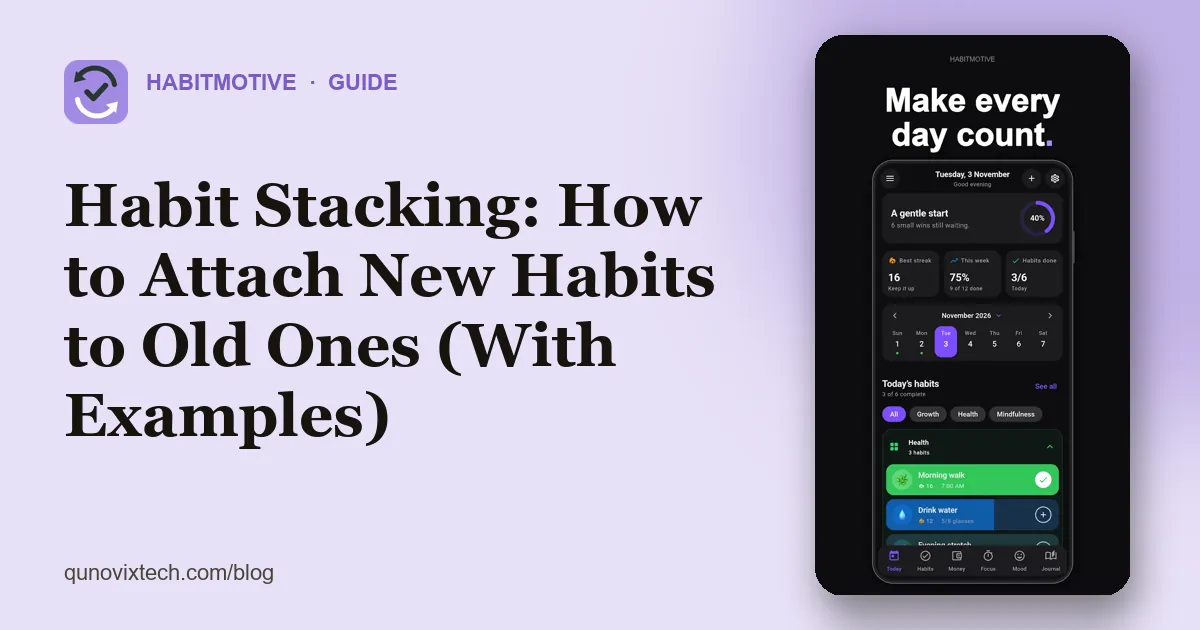
- Attach it to a cue. Use an existing routine: "After I pour my morning tea, I'll read one page." This is habit stacking.
- Make it obvious. Put the book on the table, the shoes by the door, the water bottle on your desk.
- Make it satisfying. Tick it off in a habit tracker. Seeing a streak grow is a reward in itself.
- Grow it gradually. Once it's automatic, increase the amount slowly.
Track it
Tracking does two things: it reminds you, and it rewards you. Seeing a calendar fill up or a streak grow makes the habit more satisfying, especially early on when the real benefits are still invisible.
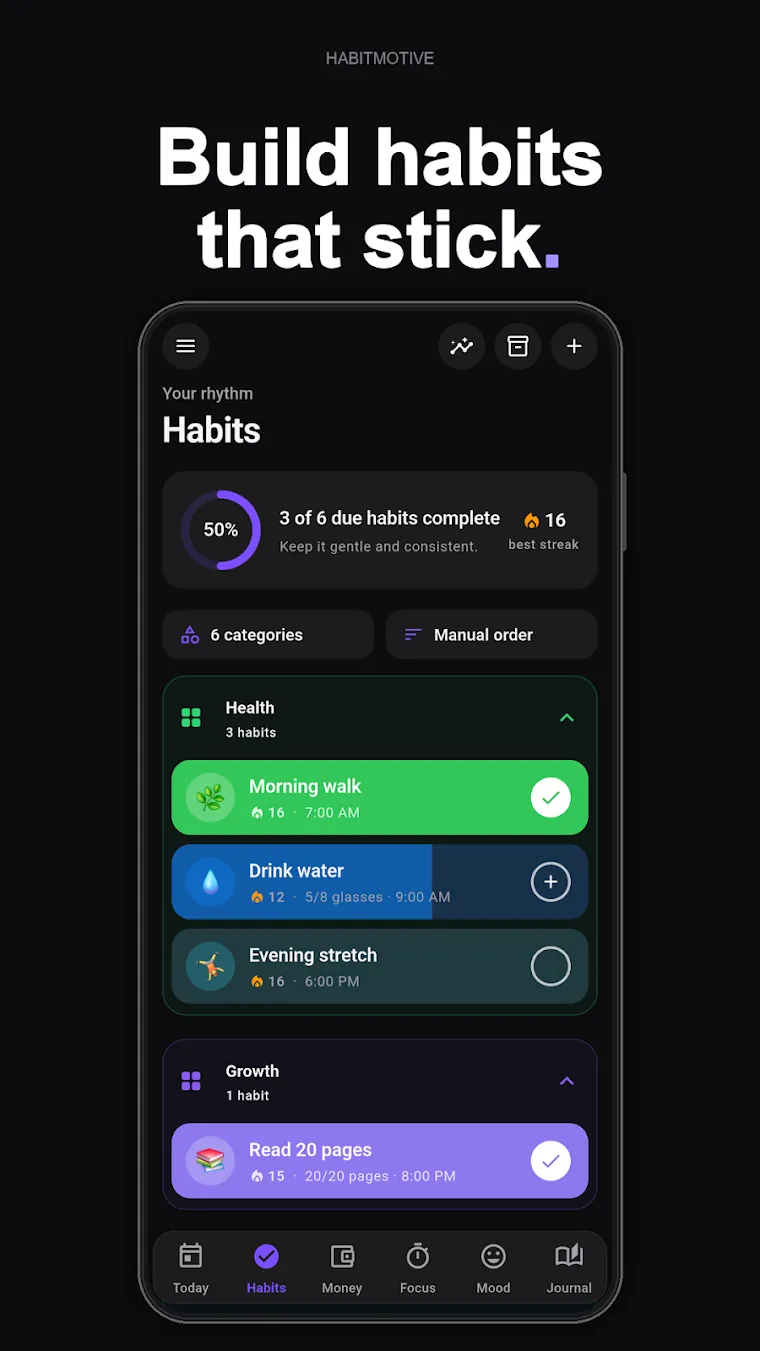
HabitMotive supports simple check-off habits as well as counters, timers, stopwatches and checklists, with streaks, heatmaps and progress charts so you can see consistency at a glance.
Expect it to take time
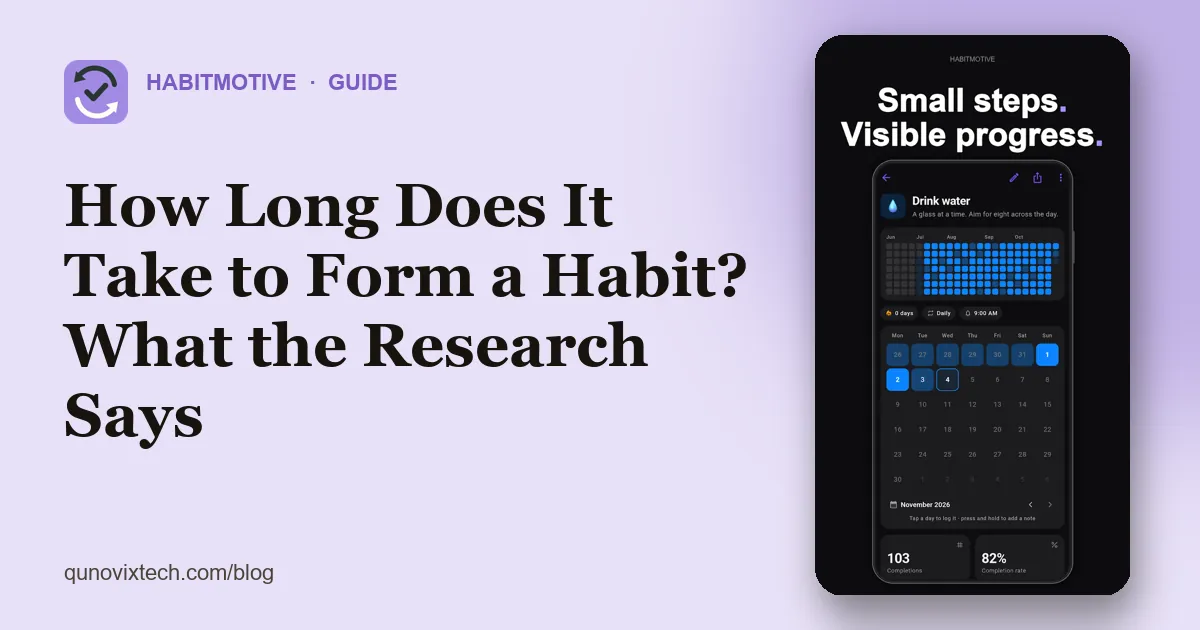
There's no magic 21 days. Research suggests forming a habit often takes around two months, and sometimes much longer (see how long it takes to form a habit). Be patient.
Plan for bad days
- Have a minimum version. On a bad day, do the tiny version: one push-up still counts.
- Never miss twice. One missed day barely matters. Two can start a new pattern.
- Don't punish yourself. Guilt makes it harder to restart. See what to do when you miss a day.
Habit ideas to start with
- Drink a glass of water after waking.
- Walk for ten minutes after lunch.
- Read one page before bed.
- Write one line in a journal.
- Do two minutes of stretching.
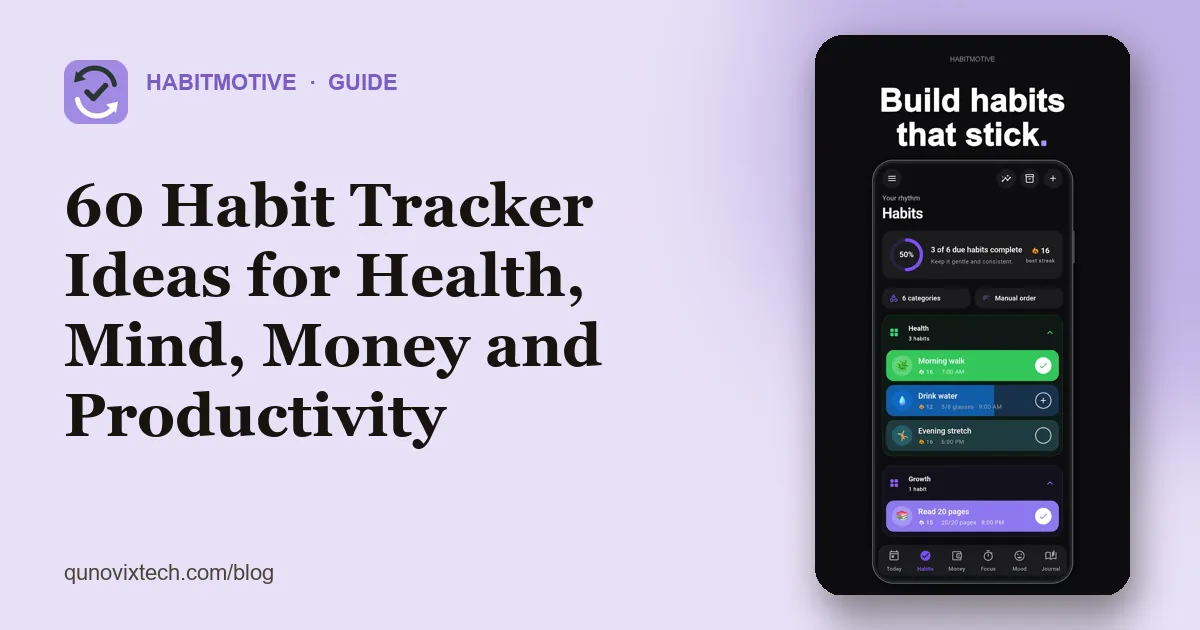
For more, see our list of habit tracker ideas.
Key takeaways
- Habits form through repetition after a consistent cue.
- Start tiny and attach the new habit to an existing routine.
- Make it obvious, easy and satisfying, and track it.
- Expect months, not days, and never miss twice.
Frequently asked questions
What is the fastest way to build a habit?
Start very small, attach it to an existing routine, and repeat it daily in the same context. There's no shortcut, but these steps make it easier.
Does it take 21 days to form a habit?
Not usually. A well-known study found a median of about 66 days, with a wide range between people and habits.
Should I build several habits at once?
It's usually easier to focus on one habit until it feels automatic, then add another.
Does tracking habits help?
For many people, yes. Tracking acts as a reminder and a reward.

We're an independent app studio in Pune, India. We build HabitMotive: Habit Tracker and write these guides from what we learn making it and from the questions our users send us. Spotted an error? Email qunovixtechnologies@gmail.com.