Block Puzzle Strategy: How to Manage Board Space Like a Pro
Most block puzzle games end because of poor board space. Learn zone strategies, how to avoid dead cells, keep lanes open and recover from a crowded board.
- Why board space, not luck, decides most games
- Zone strategies that keep your board flexible
- How to recover when the board is almost full
Ask any experienced block puzzle player what matters most, and they'll say the same thing: space. Games rarely end because of one bad piece. They end because the board slowly fills with awkward gaps until nothing fits. Managing board space is the most important skill in the game.
Think in shapes, not cells
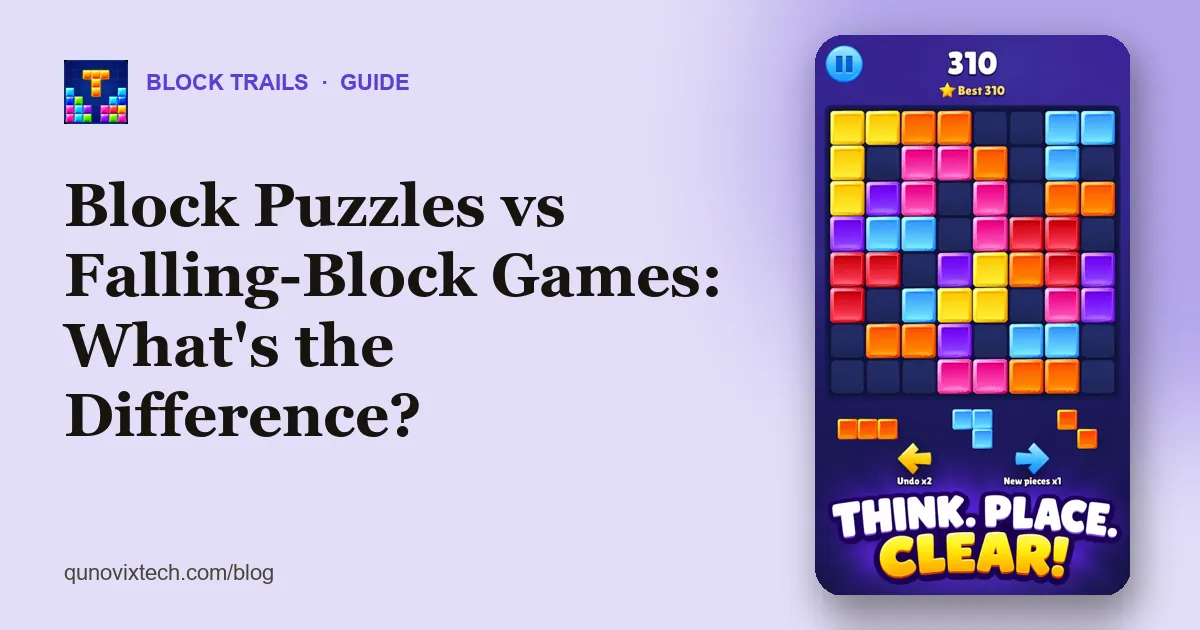
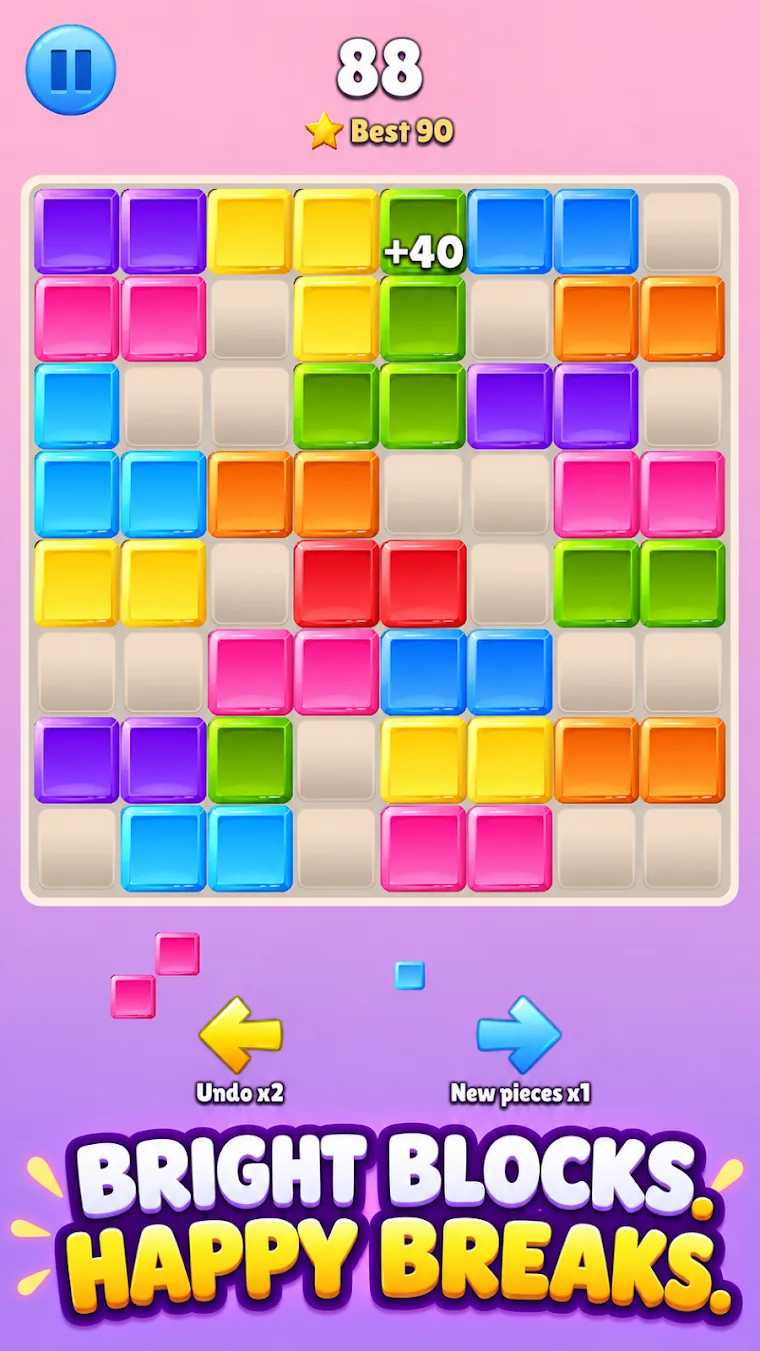
Instead of counting empty cells, look at what shapes the empty space can hold. An 8×8 board with 20 empty cells can be safe if they form open rectangles, or deadly if they're scattered single holes.
Ask yourself: "Could a 3×3 square fit right now? Could a 1×5 line?"
Zone strategies
Edge-first
Fill the outer rows and columns first. This keeps the centre open for large pieces and naturally creates lines that are easy to clear.
Two-zone
Mentally split the board: one side for "building" (filling lines) and one side kept open as a safety zone for big pieces.
Lane-keeping
Reserve one row and one column as long-piece lanes. Only fill them when you're completing a clear.
Dead cells and how to avoid them
A dead cell is an empty square that almost no piece can fill, typically a single hole surrounded on all sides. Dead cells are dangerous because they block entire lines from clearing.
To avoid them: - Before each placement, check the cells around the piece. - Avoid leaving one-cell gaps next to walls. - Prefer placements that leave rectangular spaces.
The "can the worst piece fit?" test
Before placing a piece, imagine the worst piece you could get next, usually a 3×3 square or a long line. If your move leaves no room for it, consider a different placement.
How to recover a crowded board
- Stop chasing combos. Focus only on clearing lines.
- Find the nearest clears. Look for rows or columns that need just one or two cells.
- Use small pieces surgically. Single blocks and short lines are your rescue tools.
- Clear intersections. A row-and-column clear frees the most space.
- Use a booster if available. An undo or new set of pieces can save a run (in Block Trails, Undo and New Pieces boosters are designed for exactly this).
Piece-by-piece guide
| Piece | Where it fits best |
|---|---|
| Single block | Plugging holes, finishing lines |
| Short lines (1×2, 1×3) | Finishing lines along edges |
| Long lines (1×4, 1×5) | Reserved lanes, edge rows |
| 2×2 square | Corners and edges |
| 3×3 square | Open centre or cleared areas |
| L-shapes | Corners and around existing blocks |
Good space habits = longer games = more combos
Board management and scoring go together. An open board gives you room to set up the combos that produce big scores. Start with the fundamentals in 12 block puzzle tips.
Key takeaways
- Judge board space by the shapes it can hold, not the number of empty cells.
- Use edge-first, two-zone or lane-keeping strategies.
- Avoid dead cells and test each move against the worst possible next piece.
- On a crowded board, stop chasing combos and clear lines with small pieces.
Frequently asked questions
What is the best strategy for block puzzle games?
Keep the board open by building from the edges, avoiding single holes and always leaving room for large pieces.
How do I avoid running out of space?
Clear lines early, keep a lane for long pieces and test each move against the worst possible next piece.
Should I place pieces in the corners?
Yes. Corners and edges are usually the safest places for many pieces, keeping the centre flexible.
What should I do when the board is almost full?
Focus on the quickest clears, use small pieces to finish lines and use boosters if available.

We're an independent app studio in Pune, India. We build Block Trails: Block Puzzle and write these guides from what we learn making it and from the questions our users send us. Spotted an error? Email qunovixtechnologies@gmail.com.