Why Puzzle Games Are So Relaxing (and How to Play Them to Unwind)
Puzzle games can be a calm way to take a break. Learn why block and sorting puzzles feel relaxing, what makes a game soothing, and how to play mindfully.
- Why simple puzzle games can feel calming
- What separates a relaxing game from a stressful one
- Healthy ways to use puzzle games as a break
After a long day, many people reach for a puzzle game rather than a fast-paced action game. Block puzzles, sorting games and logic puzzles share a quiet, absorbing quality that helps the mind settle. Here's why, and how to make the most of it.
Why puzzle games can feel relaxing
They give your mind one clear task
Everyday stress often comes from juggling many open problems. A puzzle offers a single, well-defined problem with clear rules. Focusing on it can crowd out background worries for a while.
They offer quick, satisfying wins
Clearing a line or finishing a level gives an immediate sense of completion. Small, frequent wins feel good, especially on days when bigger tasks drag on.
They can create a sense of "flow"
Psychologist Mihaly Csikszentmihalyi described flow as a state of full absorption that happens when a task's challenge matches your skill. A well-designed puzzle game adjusts difficulty gradually, which makes flow more likely.
They're predictable and fair
Good puzzle games have consistent rules. Nothing unexpected jumps out at you. That predictability is calming compared with games built on time pressure or sudden surprises.
What makes a puzzle game relaxing (or not)
| Relaxing | Stressful |
|---|---|
| No timer, or optional timers | Constant countdowns |
| Gentle sounds and colours | Loud effects and flashing screens |
| Short sessions you can stop anytime | Long sessions that punish quitting |
| Undo or hint options | Harsh penalties for mistakes |
| Works offline, few interruptions | Frequent pop-ups and notifications |
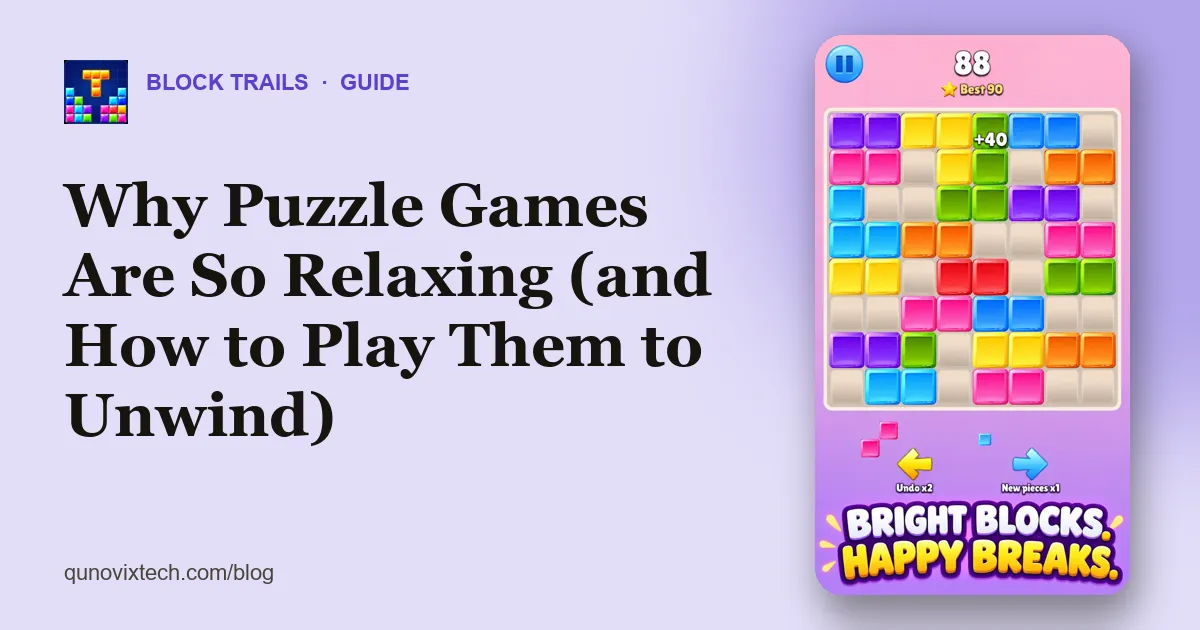
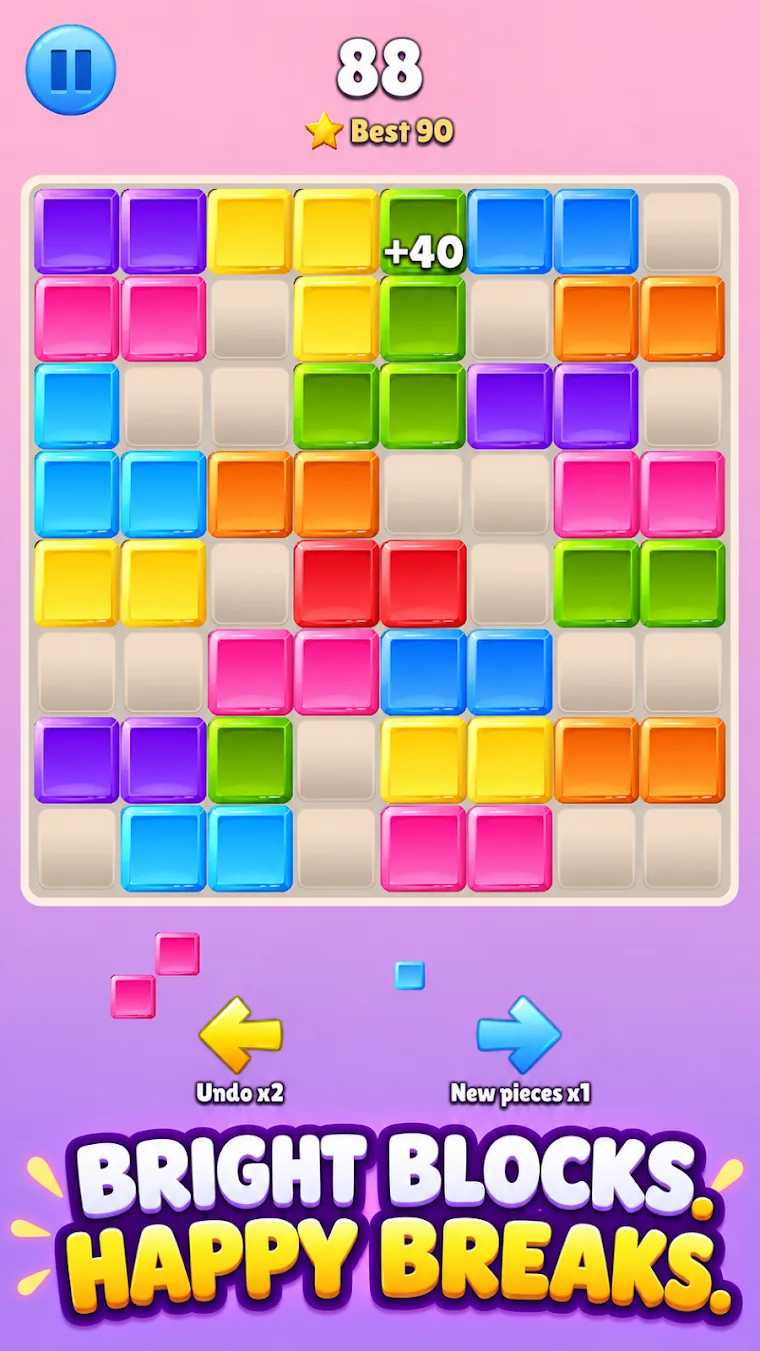
Block Trails was designed around this idea: no timers in Classic mode, bright but calm visuals, a placement preview and options to reduce motion.
How to use puzzle games to unwind
- Set a natural stopping point. For example, "one Classic game" or "three Journey levels".
- Turn off notifications. Use Do Not Disturb so you're not pulled back to messages.
- Choose calm settings. Lower the volume, choose a soothing theme or turn on reduced motion.
- Breathe between moves. Puzzle games without timers let you pause whenever you like.
- Stop before it becomes a chore. If you feel frustrated, it's time for a break.
Healthy gaming habits
- Avoid playing late into the night if it delays sleep.
- Mix screen breaks with non-screen breaks like a short walk or stretching.
- Notice how you feel after playing. Calm and refreshed is the goal.
Different puzzles for different moods
- Block puzzles: steady, rhythmic and good for short breaks. Start with how to play block puzzle games.
- Sorting puzzles: calm and visual, like water sort games.
- Logic puzzles: more thoughtful, like arrow puzzles.
Key takeaways
- Puzzle games give your mind a single clear task, quick wins and a chance at flow.
- Relaxing games have no harsh timers, calm visuals and easy stopping points.
- Set a stopping point, mute notifications and choose calm settings.
- Use games as one kind of break among others, and stop if it stops feeling good.
Frequently asked questions
Are puzzle games good for stress?
Many people find simple puzzle games a calming way to take a short break. They're not a treatment for stress or anxiety, but they can be a pleasant way to switch off.
What makes a game relaxing?
No time pressure, calm visuals and sounds, fair rules and the ability to stop at any time.
How long should I play to relax?
Short sessions of 10–20 minutes work well for most people. Set a natural stopping point before you start.
Is it okay to play puzzle games before bed?
A short, calm session is fine for many people, but screens and engaging games can delay sleep. Stop at least a little while before bed.

We're an independent app studio in Pune, India. We build Block Trails: Block Puzzle and write these guides from what we learn making it and from the questions our users send us. Spotted an error? Email qunovixtechnologies@gmail.com.