Why Arrow Puzzles Get Harder (and How to Keep Improving)
Arrow puzzles get harder in specific ways: more arrows, longer chains and tighter packing. Learn what changes as levels progress and how to improve.
- The specific ways arrow puzzle levels increase in difficulty
- Skills that carry you through harder tiers
- How to practise when progress slows
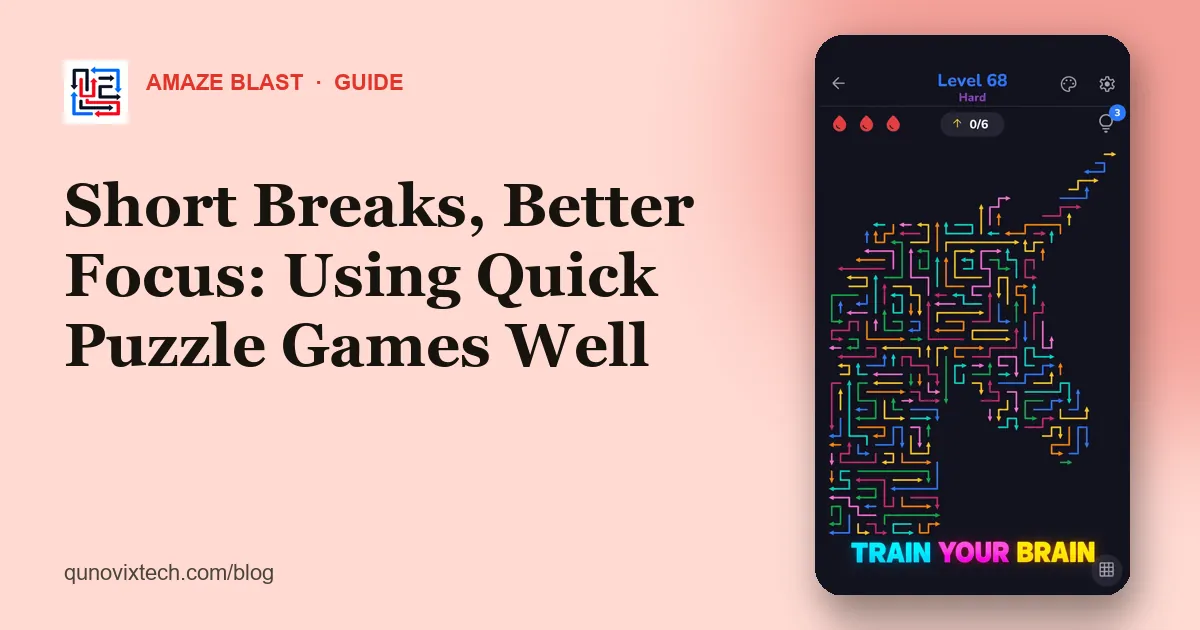
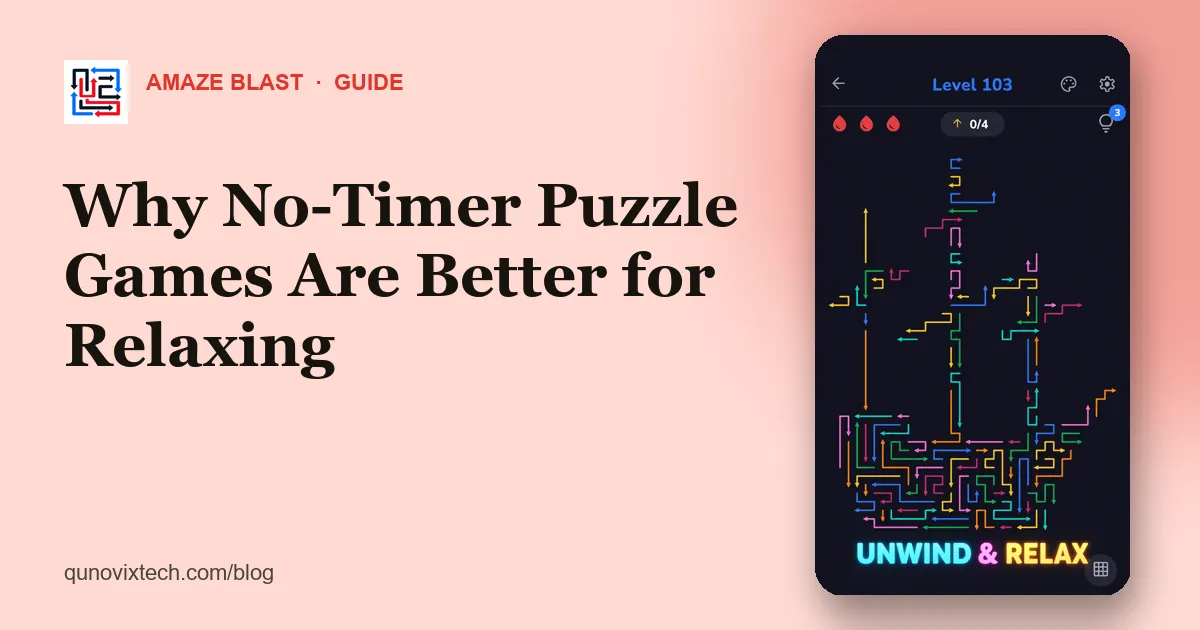
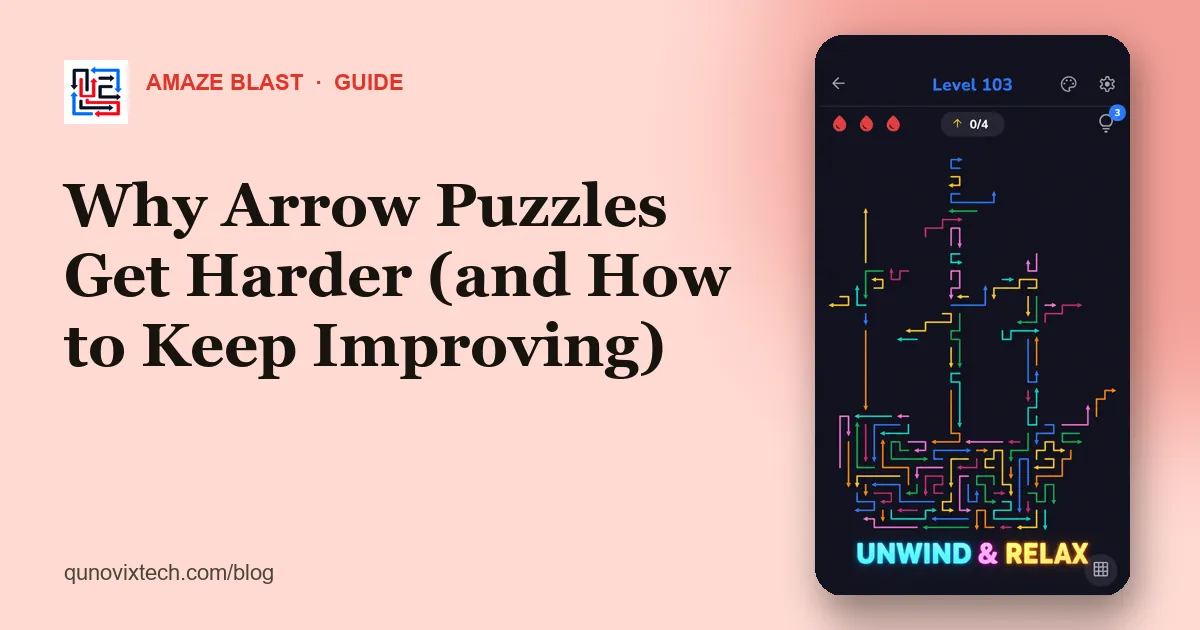
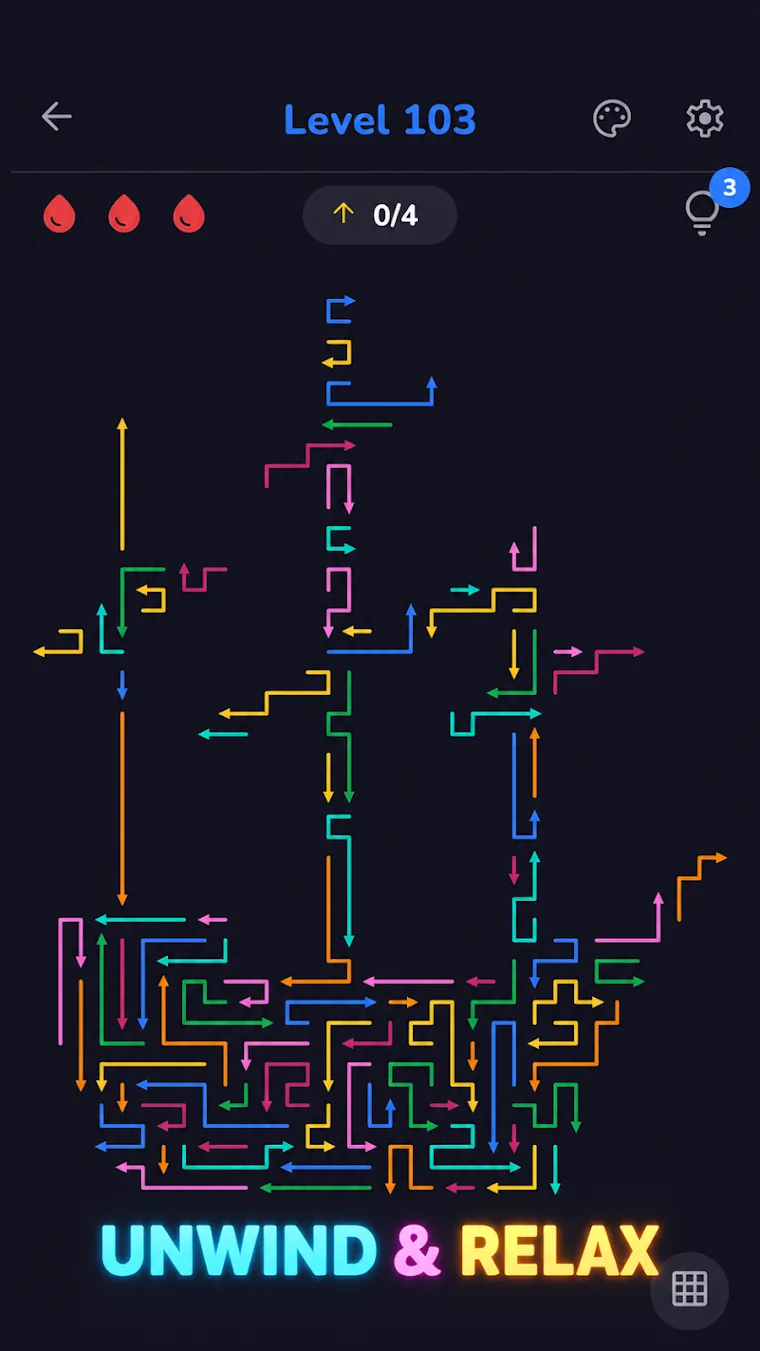
The first levels of an arrow puzzle are a breeze. A few hundred levels later, you're looking at a maze of tightly packed arrows that seems impossible. Understanding why levels get harder helps you develop the right skills.
How difficulty increases
More arrows
Simply adding arrows increases the number of possible moves and the time it takes to scan the board.
Tighter packing
When arrows sit close together, more of them block each other. Fewer arrows are free at the start.
Longer dependency chains
In early levels, one blocker frees one arrow. In harder levels, you might need to clear five arrows in a specific order to free one important one.
Distant blockers
The arrow blocking your path may sit on the far side of the maze. Spotting these long-range dependencies is a key skill.
Fewer obvious starting points
Easy levels have many edge arrows pointing outward. Hard levels may offer only a few, forcing you to find the one productive opening.
Difficulty tiers in Amaze Blast
Amaze Blast labels tougher levels as "Hard" or "Super Hard", across 10,000 handcrafted levels. The mazes often form shapes, from animals to ships, which makes them fun to look at but adds visual complexity.
Skills for harder levels
| Skill | What it means |
|---|---|
| Full-board scanning | Checking every edge and line after each move |
| Chain tracing | Following blockers back to the first free arrow |
| Region thinking | Splitting big mazes into smaller puzzles |
| Pattern recognition | Spotting queues, head-to-head pairs and gateways |
| Patience | Thinking before tapping instead of guessing |
Our arrow puzzle strategy guide explains each of these.
How to keep improving
- Replay a level you found hard. Notice how quickly you solve it the second time.
- Slow down. Speed doesn't matter without a timer. Accuracy does.
- Name the pattern. After a tough level, ask what the key trick was.
- Mix difficulty. Alternate hard levels with easier ones to stay motivated.
- Take breaks. Fresh eyes spot patterns that tired eyes miss.
When progress feels slow
Hitting a difficulty wall is normal. It usually means you're about to learn a new pattern. Try a couple of hints sparingly (see when to use hints), study why the solution works, and that pattern will become familiar.
New to arrow puzzles? Start with how to solve arrow puzzles.
Key takeaways
- Levels get harder through more arrows, tighter packing and longer chains.
- Distant blockers and fewer free starting arrows add challenge.
- Scanning, chain tracing, region thinking and pattern recognition are key skills.
- Replay hard levels, slow down and learn the pattern behind each solution.
Frequently asked questions
Why are later arrow puzzle levels so hard?
They have more arrows, tighter packing and longer chains of arrows blocking each other.
How many levels does Amaze Blast have?
Amaze Blast has 10,000 handcrafted levels, from easy warm-ups to Super Hard mazes.
How do I get better at arrow puzzles?
Practise scanning the whole board, trace blockers back to free arrows and learn common patterns.
Is it normal to get stuck on hard levels?
Yes. Getting stuck is part of learning new patterns. Take a break or use a hint sparingly.

We're an independent app studio in Pune, India. We build Amaze Blast: Arrow Puzzle and write these guides from what we learn making it and from the questions our users send us. Spotted an error? Email qunovixtechnologies@gmail.com.