Block Puzzles vs Falling-Block Games: What's the Difference?
Block puzzles and falling-block games look similar but play very differently. Compare rules, pace, strategy and which suits you if you want a calmer game.
- How grid block puzzles differ from falling-block games
- Why one is calm and the other is fast
- Which style suits your mood and play time
People often call any game with coloured blocks "a Tetris game", but modern grid block puzzles play very differently from classic falling-block games. If you enjoy one, you may or may not enjoy the other. Here's how they compare.
The core difference: pieces fall, or pieces wait
In a falling-block game (Tetris is the most famous), pieces drop from the top of a tall well. You rotate and move them before they land, and complete horizontal lines to clear them. The pieces keep falling faster as you level up.
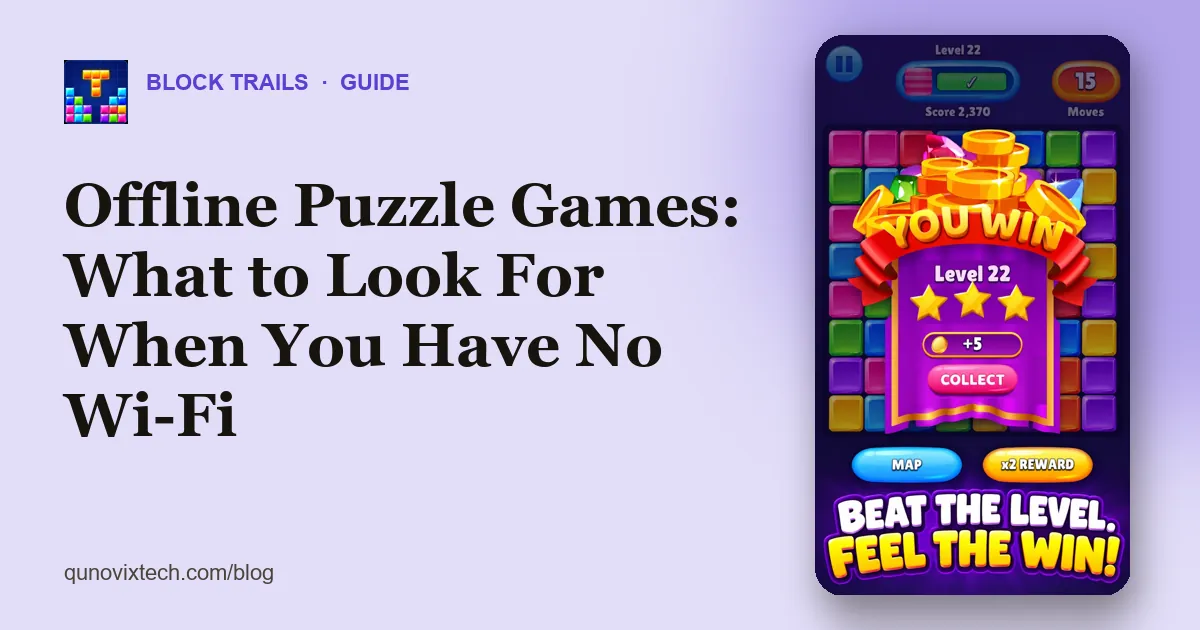
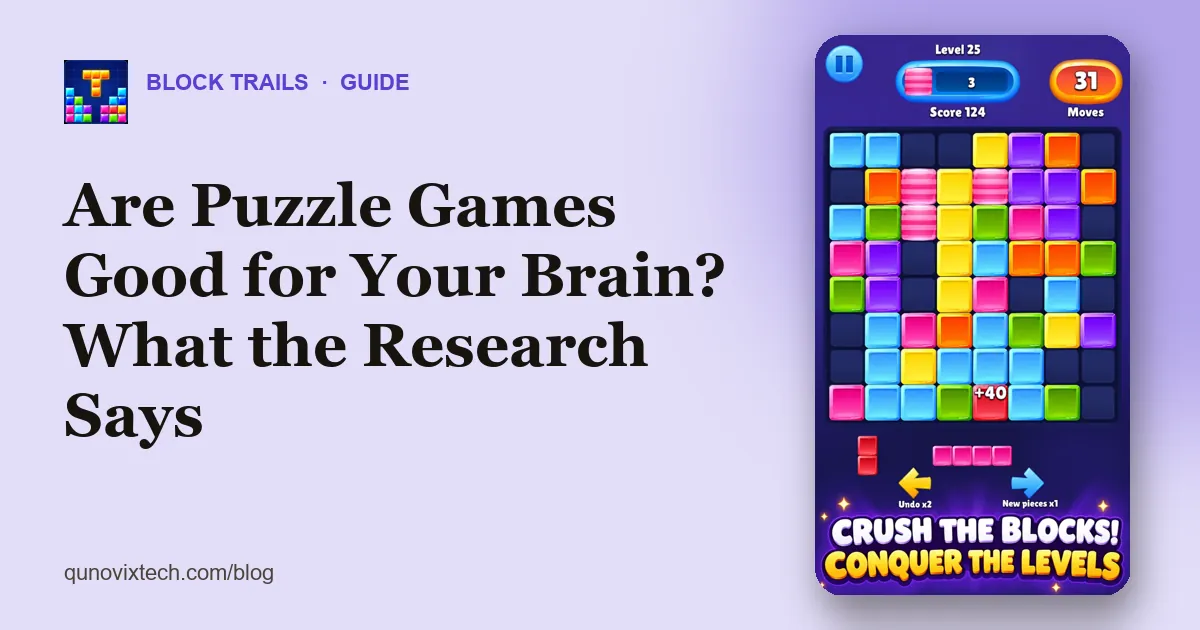
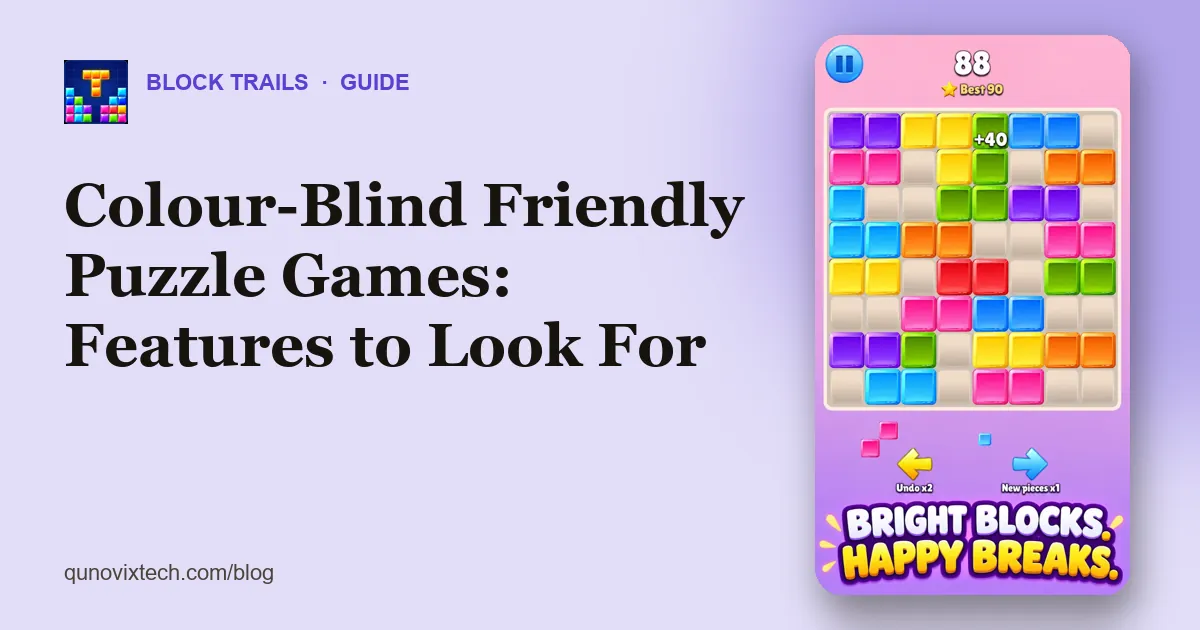
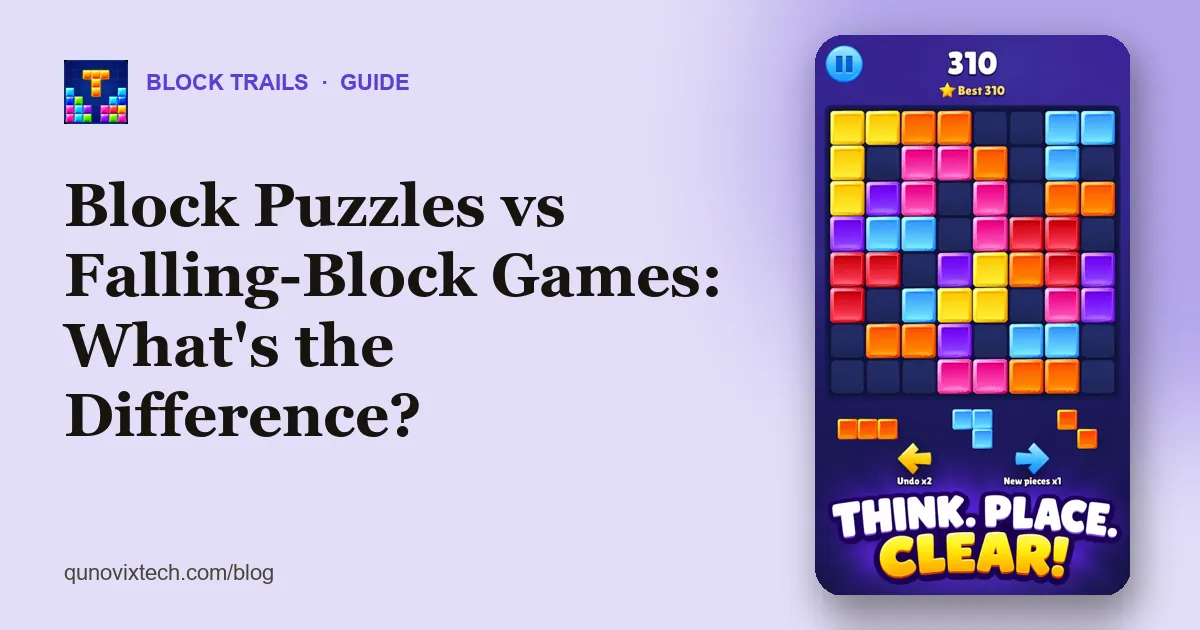
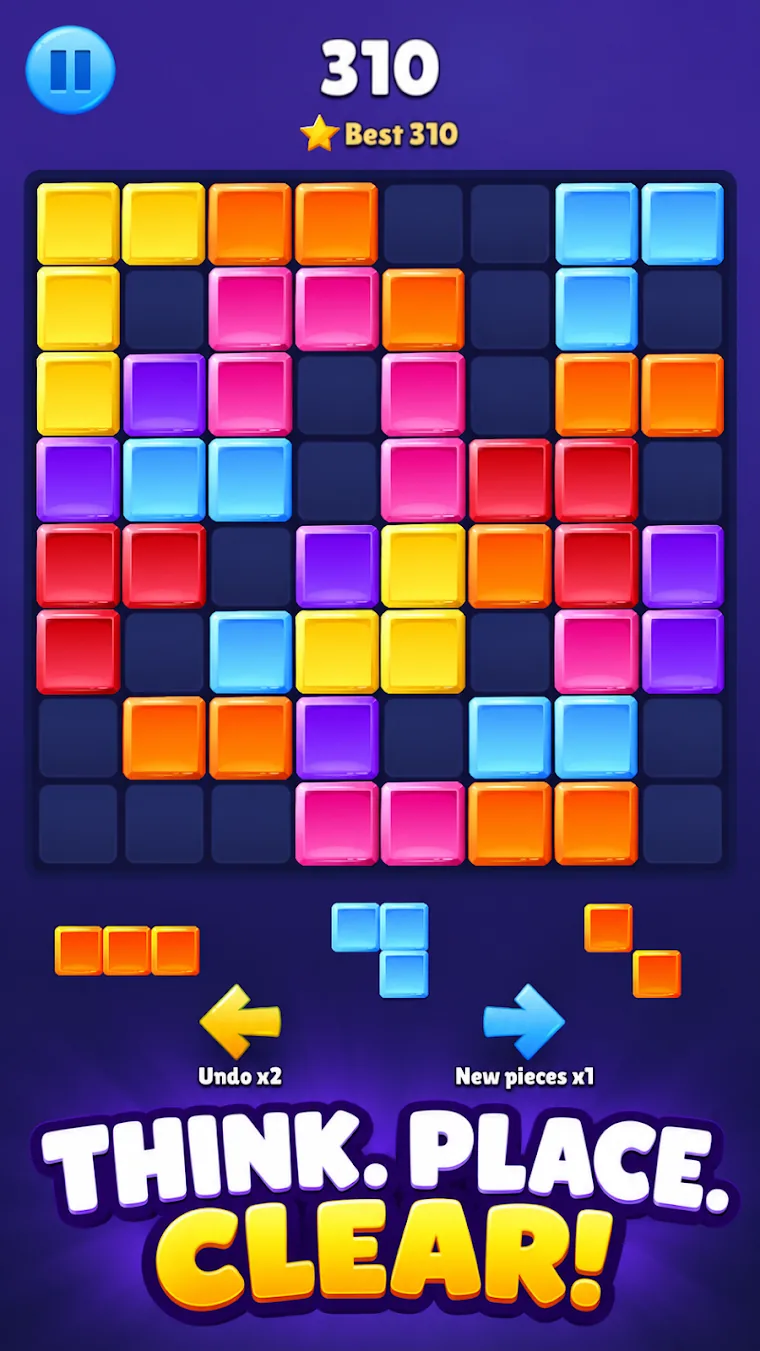
In a grid block puzzle like Block Trails, pieces don't fall. They wait in a tray. You drag them anywhere on a square board, and both rows and columns clear when full.
Side-by-side comparison
| Falling-block games | Grid block puzzles | |
|---|---|---|
| Board | Tall, narrow well | Square grid (e.g. 8×8) |
| Piece movement | Pieces fall; you steer and rotate | You drag pieces anywhere |
| Rotation | Yes | Usually no |
| Lines cleared | Horizontal rows | Rows and columns |
| Time pressure | Constant, increasing speed | None in classic modes |
| Pieces visible | Current and next piece | Usually three in a tray |
| Game over | Stack reaches the top | No piece fits the board |
| Feel | Fast, reflex-driven | Calm, strategic |
Strategy differences
Falling-block games reward fast decisions, stacking flat surfaces and keeping a well open for long pieces. Reflexes and speed matter.
Grid block puzzles reward planning. Because there's no timer, the challenge is thinking ahead: where all three pieces will fit, how to keep space for big squares and how to set up combos. Read block puzzle strategy for more.
Which should you play?
- Want adrenaline and speed? Falling-block games.
- Want to relax or play in short bursts? Grid block puzzles.
- Play with one hand on a commute? Grid block puzzles are easier, with drag-and-drop and no time limit.
- Like planning more than reacting? Grid block puzzles.
Why grid block puzzles became so popular on phones
Touchscreens suit drag-and-drop better than precise rotation controls. No timer means you can pause anytime, which fits phone use: a few minutes in a queue, on a train or before bed. Games can also be played offline (see games to play without Wi-Fi).
Key takeaways
- Falling-block games are fast, with falling pieces, rotation and only row clears.
- Grid block puzzles are calm, with draggable pieces and row-and-column clears.
- Grid puzzles reward planning. Falling-block games reward reflexes.
- Choose based on whether you want speed or a relaxing, strategic break.
Frequently asked questions
Is a block puzzle the same as Tetris?
No. Tetris is a falling-block game with rotation and time pressure. Grid block puzzles let you place pieces anywhere, usually without rotation or timers.
Can you rotate pieces in block puzzle games?
Most grid block puzzles, including Block Trails, don't allow rotation.
Which is harder, block puzzles or falling-block games?
They're hard in different ways. Falling-block games test speed. Grid block puzzles test planning and space management.
Do block puzzles clear columns too?
Yes. Grid block puzzles clear both full rows and full columns.

We're an independent app studio in Pune, India. We build Block Trails: Block Puzzle and write these guides from what we learn making it and from the questions our users send us. Spotted an error? Email qunovixtechnologies@gmail.com.