BMI for Children and Teens: How It Works (and Why It's Different)
Children's BMI works differently from adults'. Learn how BMI percentiles work for kids and teens, what the categories mean and when to see a doctor.
- Why adult BMI categories don't apply to children
- How BMI-for-age percentiles work
- What parents should and shouldn't do with a child's BMI
If you've calculated your child's BMI with an adult calculator, the result can be confusing or alarming. That's because children's BMI is interpreted differently. Children are still growing, and their body fat changes naturally with age and between boys and girls.
Why adult categories don't work for children
For adults, a BMI of 25 means the same at age 25 or 55. For children, a BMI of 18 might be perfectly healthy at one age and not at another. Body fat changes during growth, so a fixed number can't be used.
Instead, children and teenagers use BMI-for-age percentiles, which compare a child's BMI with other children of the same age and sex.
How BMI percentiles work
The BMI is calculated with the usual formula (weight in kg ÷ height in m²), then plotted on a growth chart for the child's age and sex. The percentile shows how the child compares.
For example, a child at the 60th percentile has a BMI higher than 60% of children of the same age and sex in the reference population.
Common categories for ages 2–19
The US Centers for Disease Control and Prevention (CDC) uses these percentile categories:
| BMI-for-age percentile | Category |
|---|---|
| Below 5th | Underweight |
| 5th to below 85th | Healthy weight |
| 85th to below 95th | Overweight |
| 95th and above | Obesity |
The WHO publishes its own growth references, and many countries, including India, use national or WHO growth charts. For children under five, the WHO Child Growth Standards are widely used.
Why you shouldn't use an adult BMI calculator for kids
Adult calculators apply adult categories. A healthy child could be labelled "underweight" simply because children naturally have lower BMIs than adults. Always use a children's growth chart or ask a healthcare professional.
What parents should do
- Use the right tool. A paediatric BMI-for-age calculator or growth chart, not an adult one.
- Measure accurately. Shoes off, light clothing, at the same time of day.
- Look at the trend. One reading matters less than how your child is growing over time.
- Talk to your paediatrician if your child's BMI is outside the healthy percentile range or changes suddenly.
- Focus on habits, not numbers, with your child.
Talking to children about weight
Experts generally advise focusing conversations on healthy habits rather than weight or body size:
- Talk about energy, strength and feeling good, not "fat" or "thin."
- Eat meals together when possible.
- Make physical activity fun and part of family life.
- Keep sugary drinks as occasional treats.
- Avoid putting children on restrictive diets without medical guidance.
When to see a doctor
- Your child's BMI is below the 5th or above the 85th percentile.
- Your child has lost or gained weight quickly without an obvious reason.
- You're worried about eating habits, energy or growth.
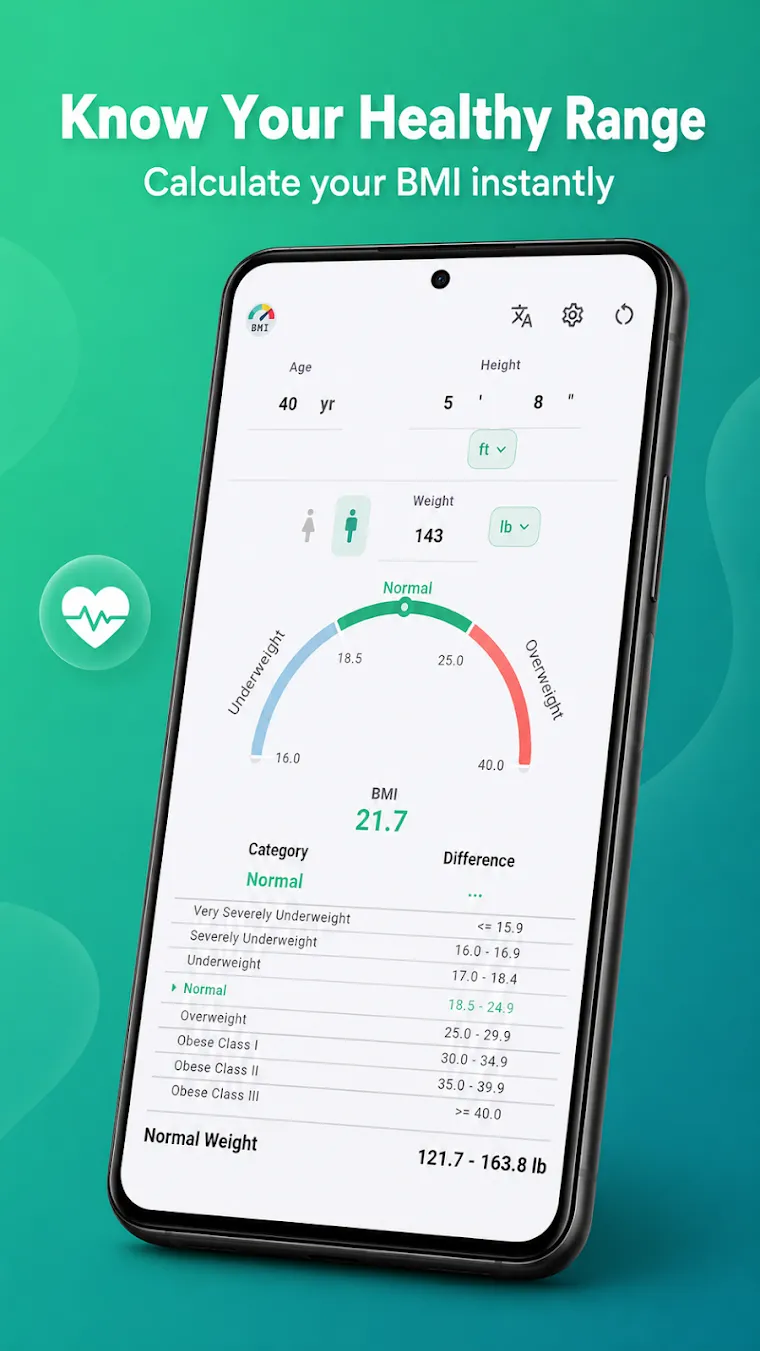
BMI Calculator is designed for adults. For your own BMI, see how to calculate BMI and the BMI chart for adults.
Key takeaways
- Children and teens use BMI-for-age percentiles, not adult categories.
- The CDC classes the 5th to below the 85th percentile as healthy weight.
- Don't use adult calculators for children.
- Focus on habits and growth trends, and talk to a paediatrician with any concerns.
Frequently asked questions
Can I use a normal BMI calculator for my child?
No. Adult BMI categories don't apply to children. Use a BMI-for-age growth chart or ask your paediatrician.
What is a healthy BMI percentile for a child?
Between the 5th and below the 85th percentile, according to CDC categories.
At what age do adult BMI categories apply?
Generally from age 18 or 20 depending on the guideline. Until then, BMI-for-age percentiles are used.
Should I tell my child their BMI?
Experts usually recommend focusing on healthy habits rather than numbers, especially with younger children.

We're an independent app studio in Pune, India. We build BMI Calculator and write these guides from what we learn making it and from the questions our users send us. Spotted an error? Email qunovixtechnologies@gmail.com.