How to Lower Your BMI Safely: 10 Sustainable Steps
Want to lower your BMI? These 10 sustainable steps cover realistic goals, food, movement, sleep and tracking, so you can bring your BMI down safely.
- How much your weight needs to change to move your BMI
- Ten sustainable habits that help lower BMI
- When to seek medical advice before losing weight
Lowering your BMI means lowering your weight relative to your height. Since your height doesn't change, the only way to lower BMI is to change body weight, ideally by losing fat while keeping muscle. Here's a sustainable approach.
How much weight changes your BMI?
For a given height, each BMI point equals a fixed amount of weight:
| Height | 1 BMI point ≈ |
|---|---|
| 155 cm | 2.4 kg |
| 165 cm | 2.7 kg |
| 175 cm | 3.1 kg |
| 185 cm | 3.4 kg |
So someone 175 cm tall with a BMI of 28 would need to lose about 9.2 kg to reach a BMI of 25. Use your height in metres squared to work out yours (see how to calculate BMI).
10 sustainable steps to lower your BMI
1. Set a realistic first goal
Aim for 5–10% of your body weight first. That's often enough to bring health benefits. See how to set a realistic weight-loss goal.
2. Eat mostly whole foods
Build meals around vegetables, fruit, whole grains, dal, beans, eggs, fish, lean meat, curd and nuts. These are filling and nutrient-dense.
3. Prioritise protein
Protein helps you feel full and supports muscle while losing weight. Include a source at every meal.
4. Watch drinks
Sugary drinks, sweetened tea and coffee, juices and alcohol add up quickly without filling you up.
5. Mind portions, especially of calorie-dense foods
Rice, rotis, oil, ghee, fried snacks and sweets are easy to over-serve. A smaller plate and measuring oil for a week can be eye-opening.
6. Move more every day
Walking is underrated. Increasing daily steps, taking stairs and standing breaks all help, alongside structured exercise.
7. Add strength training
Two or more sessions a week help preserve muscle as you lose weight. Bodyweight exercises at home count.
8. Sleep well
Short sleep is linked with increased appetite and cravings for many people. Aim for regular, sufficient sleep.
9. Track your progress
Weigh at a consistent time, track the trend, and measure your waist monthly. A weight tracking app such as WeightTrack makes trends easy to see.
10. Be patient
Around 0.5–1 kg a week is a commonly recommended, sustainable pace for many adults. At that rate, a BMI point takes roughly three to six weeks for most heights.
How to lower your BMI step by step
- Calculate your current BMI. Use a weekly average weight.
- Pick a first target. For example, 5% of your weight or the next BMI category boundary.
- Choose two habits to start. For example, a daily 30-minute walk and swapping sugary drinks for water.
- Track weekly. Recalculate your BMI from your weekly average.
- Add one habit at a time. Every few weeks, add a new habit like strength training or protein at breakfast.
- Review monthly. Adjust based on your trend, not individual days.
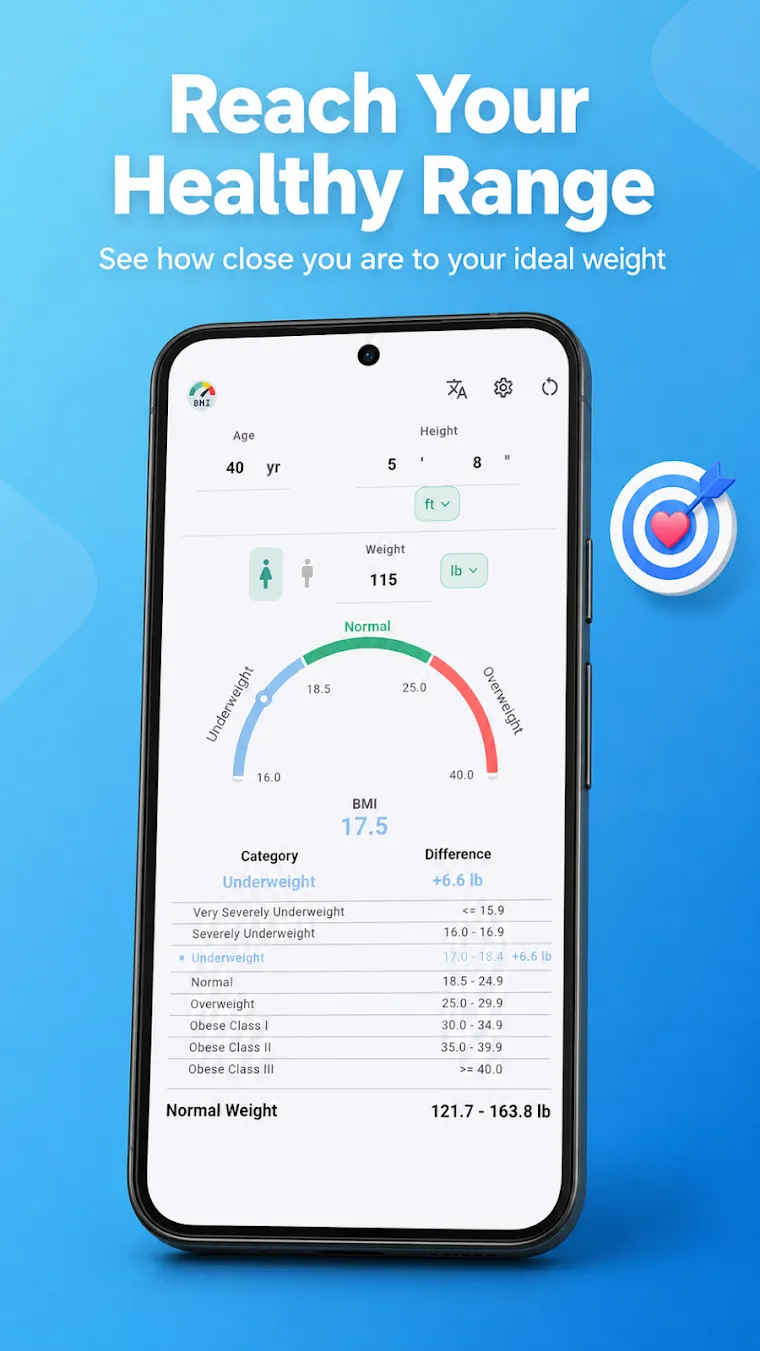
BMI Calculator shows how many kilograms separate you from the healthy range, which makes it easier to set a concrete goal.
When to get medical advice first
Talk to a doctor before starting a weight-loss plan if you:
- Have a BMI of 35 or more, or diabetes, heart disease or other health conditions.
- Take medications that affect weight or blood sugar.
- Are pregnant or breastfeeding.
- Have a history of eating disorders.
Key takeaways
- BMI only falls when body weight falls, so focus on sustainable fat loss.
- Start with a 5–10% goal and build habits gradually.
- Whole foods, protein, daily movement, strength training and sleep all help.
- Track weekly averages and get medical advice if you have health conditions.
Frequently asked questions
How fast can I lower my BMI?
At 0.5–1 kg a week, most people lower their BMI by about one point every three to six weeks, depending on height.
Can exercise alone lower BMI?
Exercise helps, but changes to food and drink usually have a bigger effect on weight. Combining both works best.
Will building muscle raise my BMI?
It can, slightly, because muscle adds weight. That's one reason to track waist size and body fat alongside BMI.
What's the healthiest way to lower BMI?
Gradual weight loss through balanced eating, regular movement, strength training and good sleep, with medical advice if needed.

We're an independent app studio in Pune, India. We build BMI Calculator and write these guides from what we learn making it and from the questions our users send us. Spotted an error? Email qunovixtechnologies@gmail.com.