A 10-Minute Daily Planning Routine for Calmer Days
Ten minutes of planning can save hours. Here's a simple daily planning routine using your to-do list and calendar, with morning and evening versions to try.

- Why ten minutes of planning saves time later
- A step-by-step evening and morning planning routine
- How to combine your to-do list with time blocks on a calendar
Days without a plan get taken over by whatever's loudest: messages, small requests, interruptions. A short daily planning routine gives you a clear picture of what matters before the day starts. It takes about ten minutes.
Evening or morning?
Both work. Choose based on your energy:
| Evening planning | Morning planning |
|---|---|
| Wake up knowing exactly what to do | Plan with a fresh mind |
| Clears your head before sleep | Accounts for overnight changes |
| Good if mornings are rushed | Good if evenings are tiring |
Many people like to plan in the evening and do a two-minute check in the morning.
The 10-minute daily planning routine
- Review today (2 minutes). Tick off finished tasks. Move unfinished ones to a realistic new date. Delete anything that no longer matters.
- Check your calendar (1 minute). Look at tomorrow's fixed commitments: meetings, classes, appointments, pickups.
- Choose your top three (2 minutes). Pick the three tasks that would make tomorrow a success. At least one should be important but not urgent.
- Estimate time (2 minutes). Roughly how long will each task take? Be honest. Most people underestimate.
- Block time (2 minutes). Put your top task into a specific slot, ideally when your energy is highest.
- Set reminders (1 minute). Add reminders for anything time-sensitive.
Your top three: how to choose
Ask: "If I only finish three things tomorrow, which three would I be glad I did?" Use the Eisenhower Matrix if you're unsure. Tasks that are important but not urgent, such as studying, exercise and planning, often deserve a top-three spot.
Combine a to-do list with time blocks
A to-do list tells you what. A calendar tells you when. Combining them gives you a realistic plan:
- Keep all tasks in your to-do app.
- Each evening, put only your top tasks into calendar time blocks.
- Leave buffer time between blocks for interruptions.
- Batch small tasks, like emails, calls and errands, into one block.
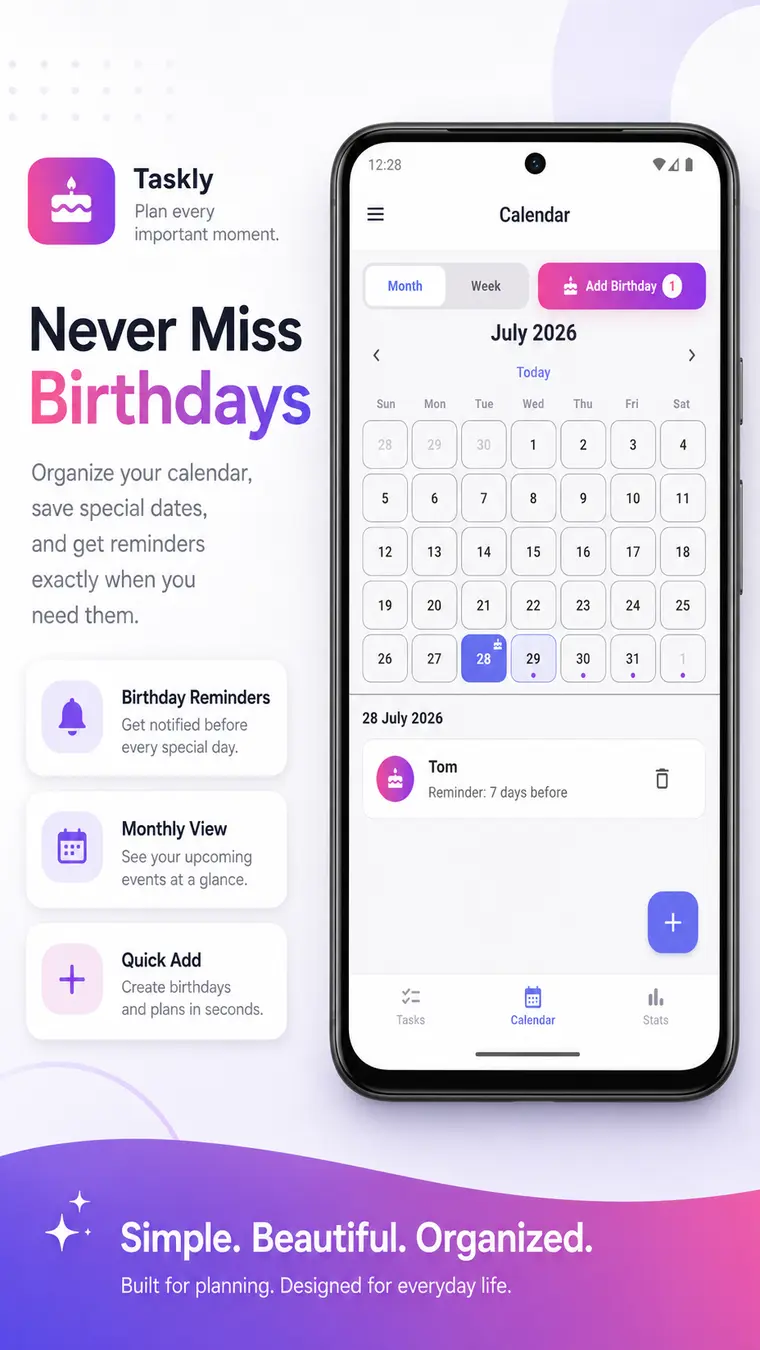
To Do List includes a calendar view so you can see tasks, reminders and birthdays by date.
Example plan for a workday
| Time | Block |
|---|---|
| 9:00–10:30 | Top task: finish client proposal |
| 10:30–11:00 | Emails and messages |
| 11:00–12:30 | Meetings |
| 14:00–15:00 | Second priority: review budget |
| 15:00–15:30 | Small tasks batch (calls, forms) |
| 17:30 | Daily planning routine for tomorrow |
Make it stick
- Same time, same place. Attach planning to an existing habit, such as after dinner or after shutting your laptop.
- Keep it short. If it takes 30 minutes, you'll stop doing it.
- Leave white space. A plan with no buffer breaks the moment something unexpected happens.
- Review weekly. Once a week, do a longer weekly review to look further ahead.
What to do when the plan falls apart
Some days will go off track. That's normal. At midday, take two minutes to re-plan: what's the one thing you can still get done today? Move the rest without guilt.
Key takeaways
- Ten minutes of planning clears your head and focuses your day.
- Review today, check your calendar, pick a top three and set reminders.
- Put your top task into a time block when your energy is highest.
- Leave buffer time and re-plan at midday if needed.
Frequently asked questions
What is a daily planning routine?
A short, regular habit of reviewing your tasks, choosing priorities and scheduling time for them, usually done the evening before or first thing in the morning.
How long should daily planning take?
Five to fifteen minutes is enough for most people. A longer review once a week covers the bigger picture.
Should I plan every hour of my day?
No. Block time for your most important tasks and leave buffer time. Over-planning makes plans fragile.
What's the difference between a to-do list and a schedule?
A to-do list is what you need to do. A schedule is when you'll do it. Combining them makes your plan realistic.

We're an independent app studio in Pune, India. We build To Do List: Tasks & Reminders and write these guides from what we learn making it and from the questions our users send us. Spotted an error? Email qunovixtechnologies@gmail.com.