The Eisenhower Matrix: How to Prioritise Tasks (With Examples)
The Eisenhower Matrix sorts tasks into urgent and important. Learn the four quadrants, see everyday examples and use the method with your to-do list app.
- What the four quadrants of the Eisenhower Matrix mean
- Real examples for work, home and study
- How to apply the matrix to your to-do list in 10 minutes
When everything feels urgent, it's hard to know where to start. The Eisenhower Matrix is a simple way to sort tasks so you spend time on what matters, not just on what's loudest.
Where the Eisenhower Matrix comes from
The matrix is named after Dwight D. Eisenhower, the US general and president, who is often quoted as saying that what is important is seldom urgent and what is urgent is seldom important. The four-box version was later popularised by Stephen Covey in The 7 Habits of Highly Effective People.
The two questions
Every task gets two quick questions:
- Is it urgent? Does it need attention soon, with clear consequences if it waits?
- Is it important? Does it move you toward your goals, responsibilities or values?
The four quadrants
| Urgent | Not urgent | |
|---|---|---|
| Important | Do it now. Deadlines, crises, real emergencies | Schedule it. Planning, health, learning, relationships |
| Not important | Delegate or minimise. Many interruptions, some calls and messages | Drop it. Mindless scrolling, busywork |
Quadrant 1: Urgent and important (do)
Things that genuinely can't wait: a report due today, a sick child, a bill due tomorrow. Do these first. If you live here all the time, it's a sign that Quadrant 2 is being neglected.
Quadrant 2: Important but not urgent (schedule)
This is where long-term progress happens: exercise, learning a skill, planning, maintenance, time with family. These never shout for attention, which is exactly why they get pushed aside. Put them on your calendar or give them a due date and reminder.
Quadrant 3: Urgent but not important (delegate or minimise)
Things that feel pressing but don't move you forward: many messages, some meetings, other people's small requests. Delegate where possible, batch them, or give them a fixed slot.
Quadrant 4: Not urgent and not important (drop)
Time fillers. Some rest and fun is important, so this isn't about banning leisure. It's about noticing when "just five minutes" becomes an hour.
Everyday examples
| Task | Quadrant | What to do |
|---|---|---|
| Electricity bill due tomorrow | 1 | Pay it today |
| Start a morning walk routine | 2 | Schedule three walks this week |
| Colleague asks for a file you don't own | 3 | Point them to the right person |
| Reorganising phone apps for an hour | 4 | Skip it |
| Study for an exam next month | 2 | Block 45 minutes a day |
| Car making a strange noise | 1 or 2 | Book a service before it becomes urgent |
How to use the Eisenhower Matrix with your to-do list
- List everything. Write all your current tasks in one place.
- Ask the two questions. For each task, decide if it's urgent and if it's important.
- Mark Quadrant 1 as high priority. Set due dates for today or tomorrow.
- Give Quadrant 2 tasks a date. Choose a specific day this week and add a reminder so they don't slip.
- Batch or hand off Quadrant 3. Group similar small tasks or note who should do them.
- Delete Quadrant 4. Be honest and remove tasks that don't matter.

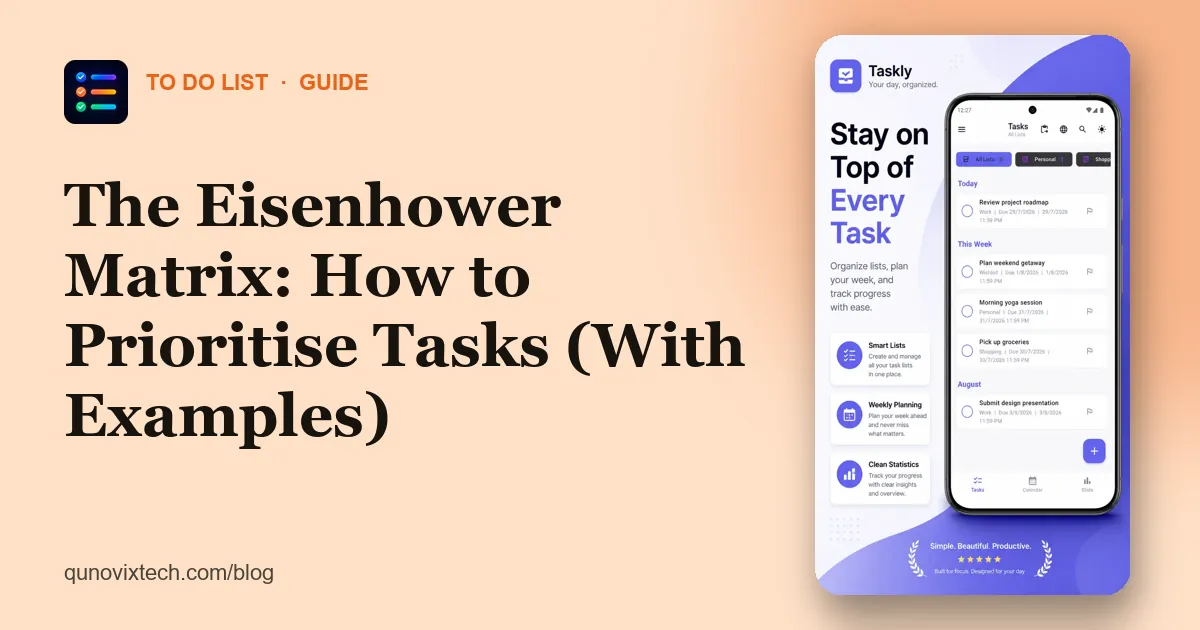
In a to-do app like To Do List, you can use separate lists, due dates and reminders to reflect the matrix: urgent tasks go into today, important-but-not-urgent tasks get a date later in the week.
Common mistakes
- Treating everything as Quadrant 1. If it's all urgent, nothing is. Be strict.
- Ignoring Quadrant 2. This quadrant prevents future crises. Protect time for it.
- Over-sorting. The matrix should take minutes, not an hour. Quick judgments are fine.
Combine it with other methods
The matrix tells you what matters. Methods like the 1-3-5 rule tell you how much to take on each day. Used together, they make a realistic plan.
Key takeaways
- Sort tasks by two questions: is it urgent, and is it important?
- Do Quadrant 1, schedule Quadrant 2, minimise Quadrant 3 and drop Quadrant 4.
- Quadrant 2 is where long-term progress happens, so give it dates and reminders.
- Keep sorting quick. The goal is clarity, not perfection.
Frequently asked questions
What is the Eisenhower Matrix in simple terms?
It's a four-box grid that sorts tasks by urgency and importance, so you know what to do now, schedule, delegate or drop.
Which quadrant is most important?
Quadrant 2 (important but not urgent) is often considered the most valuable because it includes planning, health and growth, things that prevent future emergencies.
Can I use the Eisenhower Matrix for personal life?
Yes. It works well for household tasks, studying, health and family commitments, not just work.
How often should I sort my tasks?
Quickly every day when choosing today's tasks, and more thoroughly during a weekly review.

We're an independent app studio in Pune, India. We build To Do List: Tasks & Reminders and write these guides from what we learn making it and from the questions our users send us. Spotted an error? Email qunovixtechnologies@gmail.com.