How Often Should You Weigh Yourself? Daily vs Weekly Explained
Should you weigh yourself daily or weekly? We compare both, explain what research suggests and show how to weigh in without stressing over the number.
- The pros and cons of daily, weekly and monthly weigh-ins
- What research on self-weighing suggests
- How to weigh daily without being upset by normal ups and downs
"How often should I weigh myself?" is one of the most common questions people ask when they start tracking their weight. The honest answer is that it depends on you, but there's useful evidence and a few practical rules that make any frequency work better.
Daily, weekly or monthly: a comparison
| Frequency | Pros | Cons | Best for |
|---|---|---|---|
| Daily | Most accurate trend; builds awareness | Normal fluctuations can feel stressful | People who can focus on averages |
| Weekly | Less noise to think about; quick routine | One unusual day can mislead you | People who find daily numbers stressful |
| Monthly | Very low effort | Too slow to adjust habits; easy to forget | Maintenance, or when the scale feels unhelpful |
What research suggests
Several studies have looked at "self-weighing". In a number of weight-loss trials, people who weighed themselves regularly, often daily, tended to lose more weight or regain less than those who weighed less often. One commonly cited example is a 2015 trial led by Dori Steinberg, which used daily weighing with feedback as part of a weight-loss programme.
Studies like these show an association with better outcomes in those programmes, but they don't mean daily weighing is right for everyone. Some people find frequent weighing increases anxiety or unhealthy thoughts about food and body image. If that's you, weigh less often, or not at all, and focus on other measures of health.
Why daily weighing can be more accurate
It sounds backwards, but more weigh-ins can make you less reactive to the number. Your weight naturally goes up and down by a kilogram or more from day to day because of water, food in your gut and salt intake (see why your weight fluctuates). A single weekly weigh-in can land on a high or low day by chance.
With daily weigh-ins, you can look at a weekly average or trend line, which smooths out those swings and shows what's really happening. Our guide to reading your weight trend explains how.
The golden rule: watch the trend, not the day
Whatever frequency you choose:
- Never judge progress by one weigh-in.
- Compare weekly averages, not individual days.
- Look at the direction over two to four weeks.
How to weigh yourself consistently
- Weigh at the same time of day. First thing in the morning is most consistent. See the best time to weigh yourself.
- Use the same scale, on a hard, flat floor. Moving a scale or putting it on carpet changes readings.
- Wear the same thing, or nothing. Clothes can add a kilogram or more.
- Go after using the toilet, before eating or drinking.
- Log it straight away. Note anything unusual, such as a salty dinner, poor sleep or your period.
- Review the weekly average, not the daily number.
Choose a frequency that suits you
- Choose daily if you like data and can treat individual numbers as noise.
- Choose two or three times a week if daily feels like too much but weekly feels too random.
- Choose weekly if numbers easily affect your mood. Always weigh on the same day and time.
- Pause the scale if weighing is causing distress. Measurements, how clothes fit, energy, sleep and fitness are all valid signs of progress (see how to track progress beyond the scale).
How an app helps
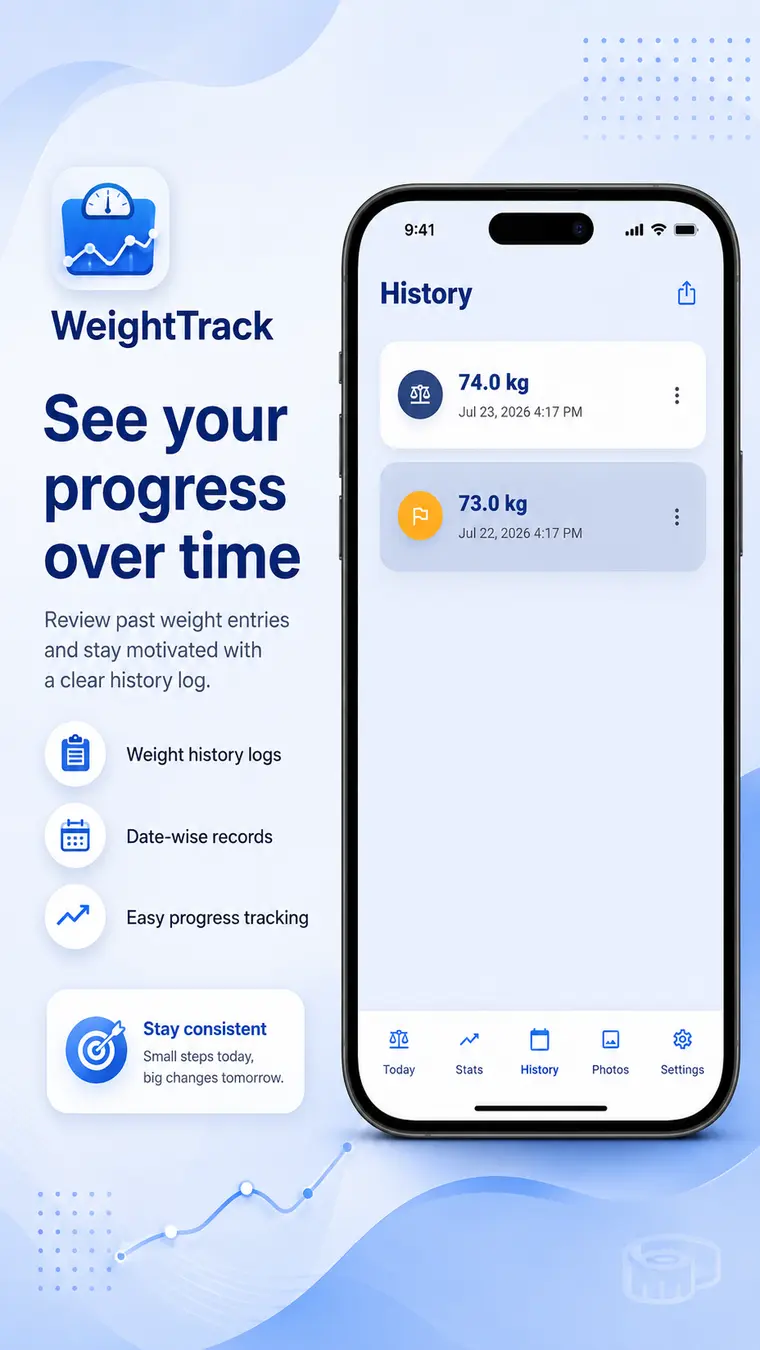
A weight tracking app such as WeightTrack does the maths for you. It shows trends, averages and streaks, so a daily weigh-in becomes a quick log rather than a judgement. Reminders help you weigh at the same time each day.
Key takeaways
- Daily weigh-ins give the most accurate trend if you focus on averages.
- Weekly weigh-ins work if you keep the same day, time and conditions.
- Research links regular self-weighing with better weight-loss outcomes in many programmes, but it isn't right for everyone.
- Judge progress on two-to-four-week trends, never one number.
Frequently asked questions
Is it bad to weigh yourself every day?
Not for most people, as long as you focus on weekly averages instead of daily changes. If daily weighing makes you anxious, weigh less often.
Why do some experts say weigh once a week?
Weekly weighing reduces the number of fluctuations you see, which some people find less stressful. The trade-off is that one unusual day can give a misleading reading.
How much does weight fluctuate in a day?
It's common for weight to vary by one to two kilograms over a day because of food, drink, water and salt.
What's the best day to weigh yourself weekly?
Choose a typical day. Many people avoid Mondays, because weekend meals and salt can push the number up temporarily.

We're an independent app studio in Pune, India. We build WeightTrack: Weight Tracker and write these guides from what we learn making it and from the questions our users send us. Spotted an error? Email qunovixtechnologies@gmail.com.