Why Does My Weight Fluctuate So Much? 8 Normal Reasons
Up two kilos overnight? Daily weight changes are normal. Learn eight common reasons your weight fluctuates, from salt and water to carbs, hormones and sleep.

- Why the scale can jump a kilo or more overnight
- Eight everyday causes of weight fluctuations
- How to tell a fluctuation from real fat gain
You ate well yesterday, and today the scale is up a kilo. It's frustrating, but it's normal. Body weight is made up of fat, muscle, bone, organs, water and whatever is in your digestive system. Several of those change by the hour.
Here are eight common reasons your weight fluctuates, and how to tell when a change is real.
1. Water and salt
Eating salty food makes your body hold on to more water for a while. A restaurant meal, pickles, packaged snacks or a salty curry can show up on the scale the next morning. It usually settles within a day or two.
2. Carbohydrates and glycogen
Your body stores carbohydrates as glycogen in your muscles and liver, and glycogen is stored with water, commonly cited as around three grams of water per gram of glycogen. After a carb-heavy day, glycogen stores refill and the scale goes up. This is also why the first week of a low-carb diet often shows a big drop that's mostly water.
3. Food still in your system
The food and drink you've had, and haven't yet digested, has weight. A large dinner late at night can easily appear on the next morning's weigh-in.
4. Bowel movements
Weighing before or after using the toilet can make a noticeable difference. Constipation can keep your weight higher for a few days.
5. The menstrual cycle
Many women notice water retention and higher weight in the days before their period, which then drops afterwards. Comparing the same point in each cycle gives a clearer picture.
6. Exercise
A tough workout, especially a new one, can cause muscles to hold extra water while they repair. Some people see a temporary rise after starting a new exercise programme.
7. Sleep and stress
Poor sleep and stress affect hormones that influence appetite, fluid balance and digestion. A run of bad nights can show up on the scale.
8. Medicines and health conditions
Some medications and medical conditions affect water retention or weight. If you notice sudden, unexplained or rapid weight changes, or swelling in your legs or ankles, speak to a doctor.
Fluctuation vs real change
| Fluctuation | Real change |
|---|---|
| Jumps up or down within 1–3 days | Moves steadily over weeks |
| Follows a salty meal, carbs, travel, your period | Follows a sustained change in eating or activity |
| Weekly average stays similar | Weekly average shifts in one direction |
The key is the weekly average. Gaining a kilogram of body fat requires eating a large surplus of energy over time, often estimated at several thousand calories, far more than one meal. A one-day jump is almost always water and food.
How to handle fluctuations
- Weigh under the same conditions. Same time, same scale, same clothing.
- Log notes. Write "salty dinner" or "day before period" next to your weight.
- Use a weekly average or trend line. See our guide to weight trends and moving averages.
- Compare weeks, not days. Look at the direction over two to four weeks.
- Don't react to one weigh-in. Cutting food drastically after a high reading usually backfires.
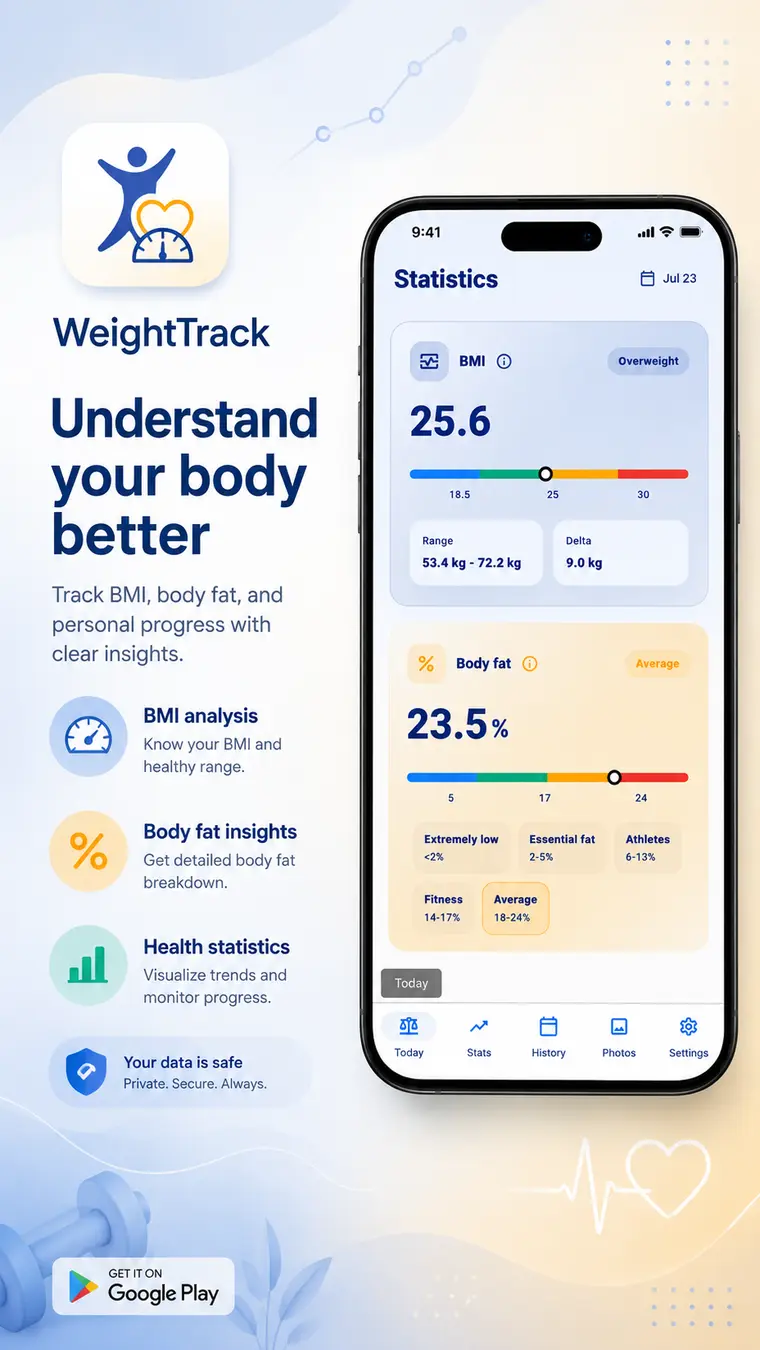
A tracker like WeightTrack calculates weekly averages and trends automatically, so the noise doesn't hide your progress.
Key takeaways
- Daily weight changes of one to two kilograms are common and usually water and food.
- Salt, carbs, digestion, hormones, exercise, sleep and stress all play a part.
- Use weekly averages and two-to-four-week trends to judge real change.
- See a doctor about sudden, unexplained weight changes or swelling.
Frequently asked questions
Is it normal to gain 1 kg overnight?
Yes. It's usually caused by water, salt, carbohydrates or food that hasn't been digested yet, and it often goes away within a few days.
How much does weight fluctuate during the day?
It's typically lowest in the morning and higher in the evening. Variations of one to two kilograms through the day are common.
Why is my weight up after a workout?
Muscles can hold extra water while they recover, especially after new or intense exercise. It usually settles as your body adapts.
When should I worry about weight changes?
Talk to a doctor if you have rapid, unexplained gain or loss, swelling, or other symptoms alongside the weight change.

We're an independent app studio in Pune, India. We build WeightTrack: Weight Tracker and write these guides from what we learn making it and from the questions our users send us. Spotted an error? Email qunovixtechnologies@gmail.com.