How to Track Weight-Loss Progress (Beyond the Scale)
The scale is only one measure of progress. Learn how to track weight-loss progress with trends, waist measurements, photos, fitness and non-scale victories.
- Six ways to measure progress, not just your weight
- How to measure your waist accurately
- A simple monthly progress check you can repeat
When weight loss is going well, the scale feels like a friend. When it stalls, it can feel like the only thing that matters. Tracking several measures gives you a fuller, fairer view of your progress and makes it much easier to keep going.
1. Weight trend, not single weights
Weight is still useful, as long as you track the trend. Use weekly or moving averages rather than daily numbers. See how to read your weight trend.
2. Waist measurement
Waist size is a useful indicator of abdominal fat. Many health organisations use waist measurements alongside BMI to assess health risk.
How to measure your waist
- Stand up straight and breathe out normally. Don't hold your breath or pull your stomach in.
- Find the right spot. A common method is halfway between your lowest rib and the top of your hip bone. Use the same spot every time.
- Wrap a tape measure around your body. Keep it level and snug, but not tight.
- Read the measurement. Note it with the date.
- Repeat monthly. Waist size changes slowly, so measure every two to four weeks.
3. Progress photos
Photos show changes in shape that numbers can't. Take them monthly in the same conditions. Our progress photos guide explains how.
4. How your clothes fit
Choose one pair of jeans or trousers that's currently snug and try them on monthly. It's simple and surprisingly motivating.
5. Fitness markers
Fitness often improves before weight changes much. Track one or two:
- How long it takes to walk a familiar route.
- Number of push-ups or squats you can do.
- Flights of stairs you can climb comfortably.
- Minutes of continuous exercise.
6. Non-scale victories
These are the everyday wins that make the effort worthwhile:
- More energy in the afternoon.
- Better sleep.
- Feeling more confident.
- Fewer cravings, or cravings that are easier to manage.
- Improved results at a health check-up.
Write them down. They're easy to forget and great to read on a hard day.
A simple monthly progress check
| Measure | Last month | This month |
|---|---|---|
| Weekly average weight | 78.4 kg | 76.9 kg |
| Waist | 92 cm | 89 cm |
| Progress photos | Taken | Taken |
| Fitness | 20 squats | 30 squats |
| Wins | Slept better | Took stairs at work daily |
Why multiple measures help
When one measure stalls, another often keeps moving. During a weight-loss plateau, a smaller waist or better fitness reminds you that your efforts are working.
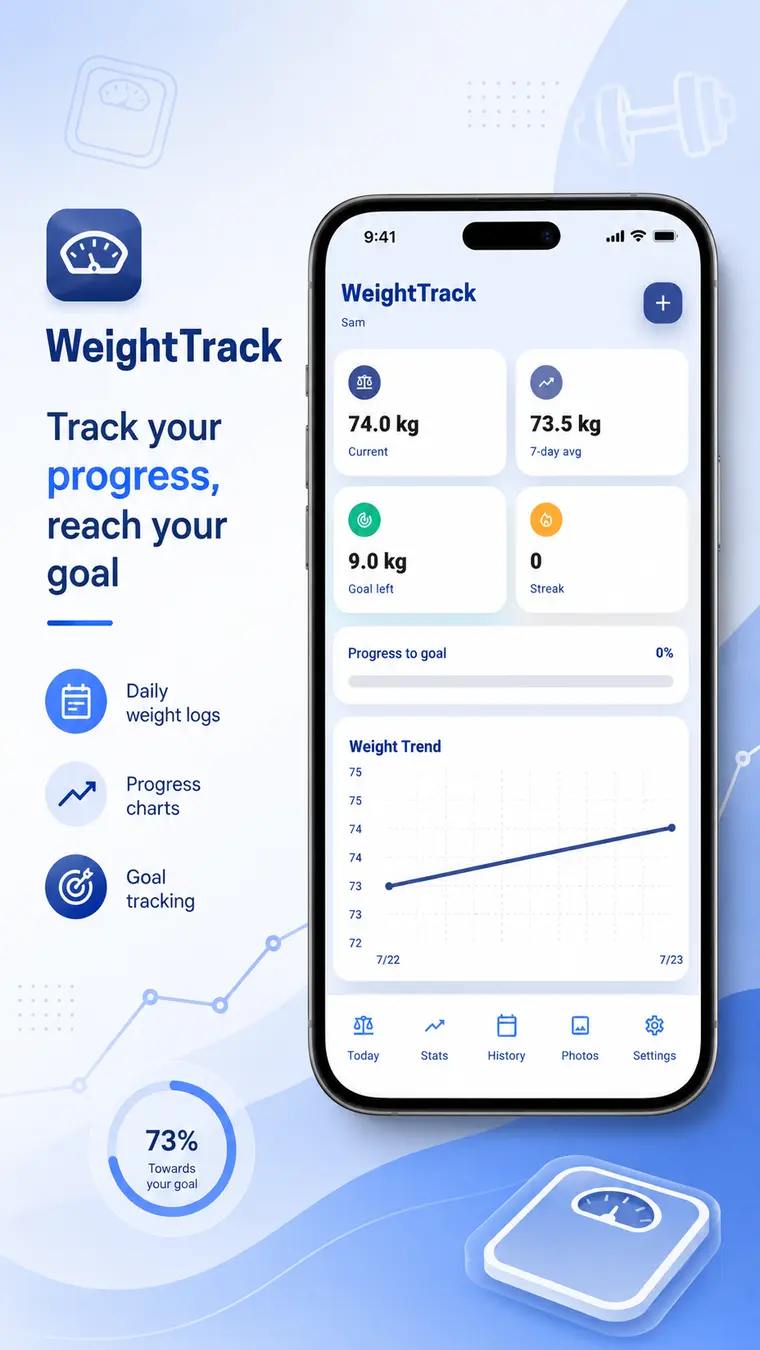
Keep it all in one place
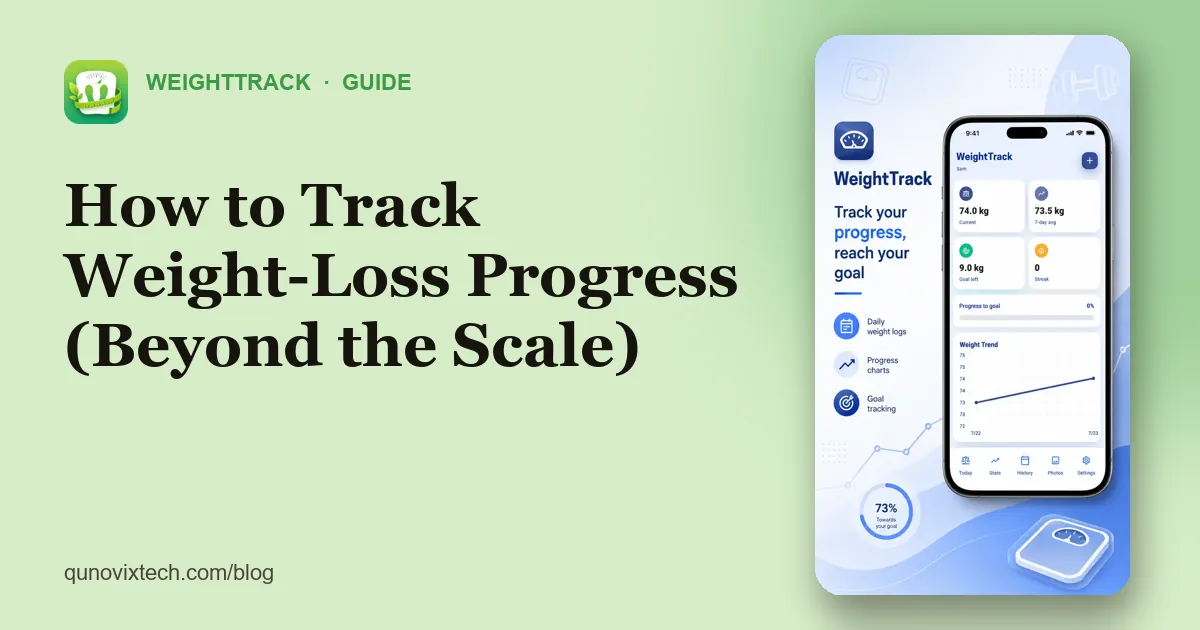
WeightTrack keeps weigh-ins, trends, BMI, progress photos and streaks together, so your monthly check takes minutes instead of digging through notes and photo galleries.
Key takeaways
- Track weight as a trend, alongside other measures.
- Measure your waist monthly at the same spot.
- Use progress photos, clothes fit and fitness markers.
- Write down non-scale victories so you remember them.
Frequently asked questions
What is the best way to track weight-loss progress?
Combine your weight trend with waist measurements, progress photos and fitness markers for the most complete picture.
How often should I measure my waist?
Every two to four weeks, at the same spot and time of day.
What are non-scale victories?
Improvements unrelated to your weight, such as more energy, better sleep, better fitness or clothes fitting better.
Can I lose inches without losing weight?
Yes. If you're losing fat while building muscle, your measurements can shrink while your weight changes slowly.

We're an independent app studio in Pune, India. We build WeightTrack: Weight Tracker and write these guides from what we learn making it and from the questions our users send us. Spotted an error? Email qunovixtechnologies@gmail.com.