The Best Time to Weigh Yourself (and Why It Matters)
For accurate weigh-ins, timing matters. Learn the best time of day to weigh yourself, what to do before you step on the scale and common mistakes to avoid.
- Why morning weigh-ins are the most consistent
- A simple pre-weigh-in checklist
- Scale mistakes that make readings jump around
If you weigh yourself at different times of day, your results will jump around for reasons that have nothing to do with fat loss or gain. The single biggest improvement you can make to your weight tracking is to weigh at a consistent time.
The best time: first thing in the morning
For most people, the best time to weigh yourself is in the morning, after using the toilet and before eating or drinking. It's the most consistent moment of the day because:
- You haven't eaten or drunk anything for several hours.
- Your digestive system has had time to process yesterday's meals.
- The routine is easy to repeat every day.
Weighing in the evening isn't wrong, but you'll usually be heavier because of the day's food and drink, and the amount varies more from day to day.
Your pre-weigh-in checklist
- Use the toilet first. This removes a variable that can change the reading noticeably.
- Weigh before breakfast and drinks. Even a glass of water has weight.
- Wear the same thing, or nothing. Clothes, watches and phones add weight.
- Place the scale on a hard, flat floor. Carpet and uneven tiles can make readings inaccurate.
- Stand still, feet centred. Wait for the reading to settle.
- Log it immediately, with a note if anything was unusual.
Common weigh-in mistakes
| Mistake | Why it matters |
|---|---|
| Weighing at different times | Food and water make later readings higher |
| Moving the scale around | Different floors give different readings |
| Weighing after exercise | Sweat loss makes you look lighter temporarily |
| Reacting to one reading | Daily fluctuations are normal |
| Switching scales | Two scales can differ by a kilogram or more |
Does the day of the week matter?
If you weigh daily, no, because you'll look at averages. If you weigh weekly, pick a typical day. Many people find weekends push numbers up through different meals and salt, so a Monday reading can look higher than the rest of the week. A Wednesday or Thursday weigh-in may be more representative.
What about after travel, festivals or illness?
Long journeys, festival meals, illness and changes in routine can all affect water balance. Keep weighing as usual if you like, but add a note and give it a few days before reading anything into the numbers.
Make it a habit
A consistent weigh-in time is easy to keep if you attach it to something you already do, such as straight after brushing your teeth. A daily reminder helps on busy mornings.
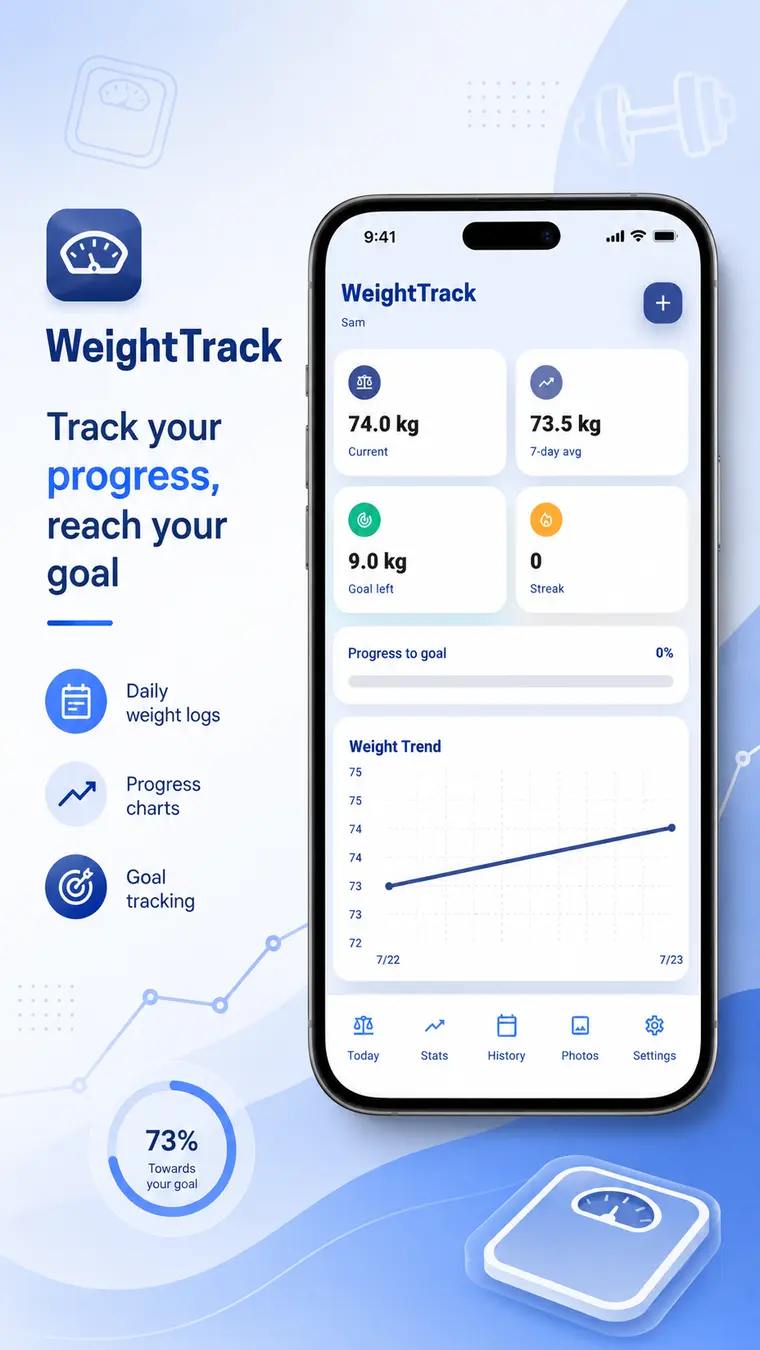
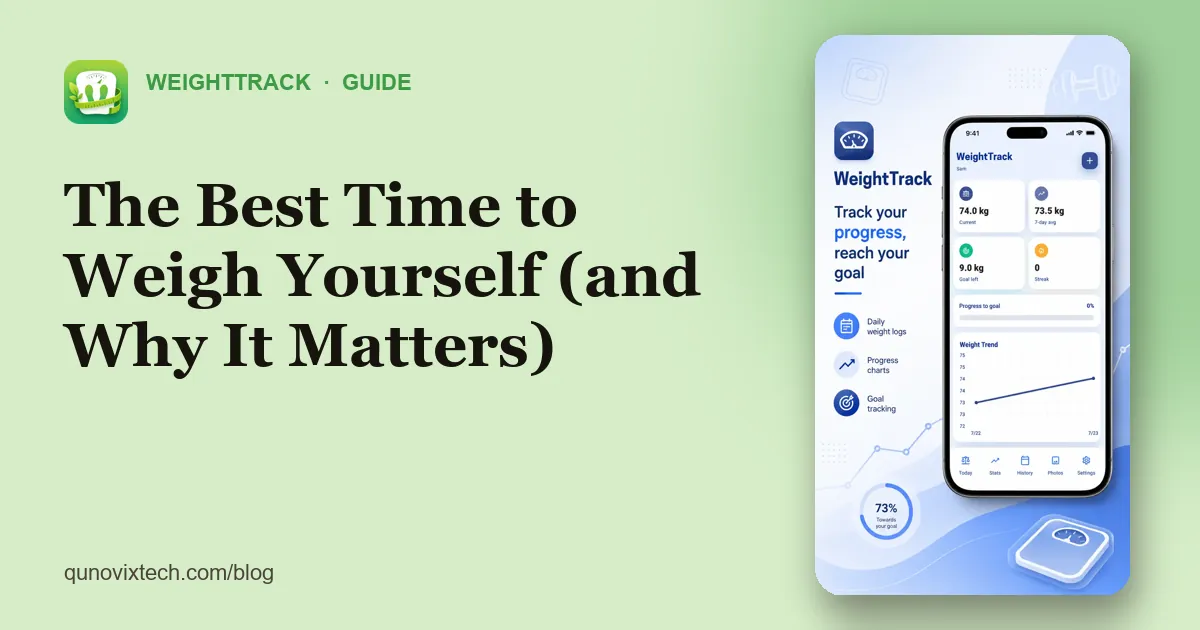
WeightTrack can remind you at your chosen time and keeps your entries in one history, so it's easy to stay consistent. Read more in how often you should weigh yourself.
Key takeaways
- Weigh first thing in the morning, after the toilet and before food or drink.
- Use the same scale, on the same hard floor, wearing the same clothing.
- Avoid weighing straight after exercise or switching scales.
- Log notes for unusual days and focus on weekly trends.
Frequently asked questions
Should I weigh myself in the morning or at night?
The morning, after using the toilet and before eating, gives the most consistent readings.
Why am I heavier at night?
Food, drinks and salt from the day add weight, and your body holds more water later in the day.
Should I weigh myself before or after a shower?
Either works if you're consistent. Dry yourself fully if you weigh after showering.
Why does my scale show different weights?
Moving the scale, uneven floors, low batteries and how you stand can all change readings. Keep the scale in one place on a hard floor.

We're an independent app studio in Pune, India. We build WeightTrack: Weight Tracker and write these guides from what we learn making it and from the questions our users send us. Spotted an error? Email qunovixtechnologies@gmail.com.