How to Set a Realistic Weight-Loss Goal (With Examples)
Unrealistic goals lead to giving up. Learn how to set a realistic weight-loss goal, what rate of loss is sensible, and how to break a big goal into milestones.
- What rate of weight loss is generally considered safe
- How to set a goal using BMI ranges and percentages
- How to turn one big goal into motivating milestones
"I want to lose 15 kilos by next month" is a common starting point, and a common reason people give up. Realistic goals keep you motivated because you can actually hit them. Here's how to set one.
What's a realistic rate of weight loss?
Health services such as the UK's NHS often suggest aiming to lose around 0.5 to 1 kg a week as a safe and sustainable rate for many adults. Faster loss may happen early on, often from water, but is usually hard to sustain.
At that rate:
| Time | Realistic loss |
|---|---|
| 1 month | 2–4 kg |
| 3 months | 6–12 kg |
| 6 months | 12–24 kg |
Everyone is different. Your starting weight, age, health and activity all play a part. If you have a health condition or a large amount of weight to lose, speak to a doctor for personalised advice.
Start with a 5–10% goal
Many health guidelines note that losing even 5–10% of your body weight can bring meaningful health benefits for people who are overweight. It's also achievable, which builds confidence.
| Current weight | 5% | 10% |
|---|---|---|
| 70 kg | 3.5 kg | 7 kg |
| 85 kg | 4.3 kg | 8.5 kg |
| 100 kg | 5 kg | 10 kg |
Use BMI as a long-term reference
A BMI calculator can show the healthy weight range for your height. That range is a useful long-term reference, but it's not the only measure of health. BMI has limits, especially for muscular people and older adults. Read more in is BMI accurate?.
How to set a realistic weight-loss goal
- Know your starting point. Use a weekly average weight, not one weigh-in.
- Choose a first goal of 5–10%. Calculate the number in kilograms.
- Estimate a timeline. Divide the goal by 0.5–1 kg per week, then add buffer weeks for holidays and plateaus.
- Set monthly milestones. Break the goal into 2–4 kg steps.
- Add behaviour goals. For example, walk 30 minutes five days a week or cook at home five nights.
- Review monthly. Adjust your timeline based on your real trend.
Why behaviour goals matter
You can't directly control the scale, but you can control your actions. Behaviour goals, such as walking, sleeping, cooking and eating more vegetables, are fully in your hands, and they're what lead to results. Track them alongside your weight.
Example goal plan
- Starting average: 86 kg
- First goal (≈7%): 80 kg
- Timeline: 12–16 weeks
- Milestones: 84 kg → 82 kg → 80 kg
- Behaviour goals: 8,000 steps a day, protein at every meal, no sugary drinks on weekdays
Celebrate milestones (without food guilt)
Reward each milestone: new workout clothes, a day out, a book. Celebrating progress keeps motivation high for the next step.
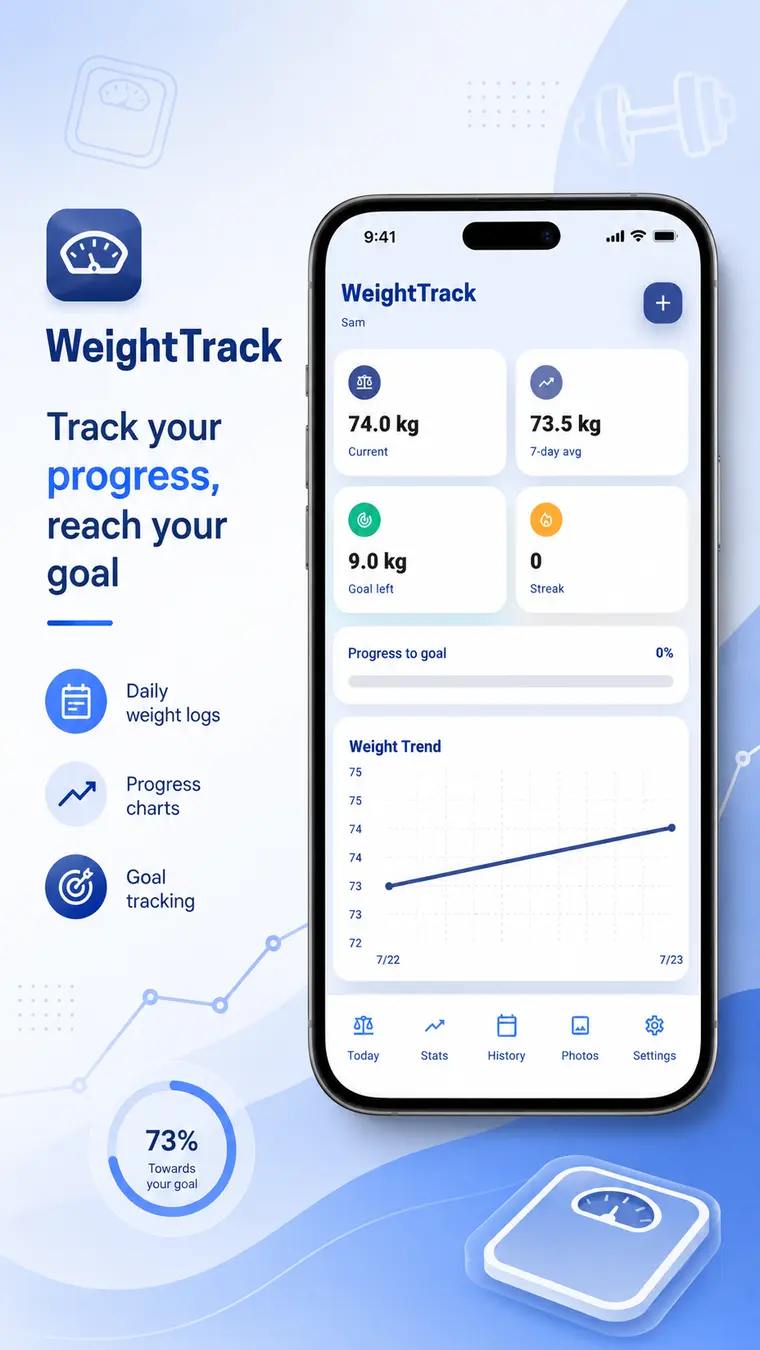
WeightTrack lets you set a goal, whether you want to lose, gain or maintain, and shows your progress toward it with trends and streaks.
Key takeaways
- 0.5–1 kg a week is widely considered a realistic, sustainable rate for many adults.
- A first goal of 5–10% of body weight is achievable and can benefit health.
- Break big goals into monthly milestones and add behaviour goals.
- Review your goal monthly based on your actual trend.
Frequently asked questions
How much weight can I realistically lose in a month?
Around 2–4 kg is realistic for many adults, though it varies by person.
Is losing 1 kg a week healthy?
For many adults, losing up to about 1 kg a week is considered safe. Check with a doctor if you have health conditions.
What should my goal weight be?
A first goal of 5–10% of your current weight is a good starting point. A BMI calculator can show a healthy range for your height as a long-term reference.
Why do I lose weight fast at first and then slower?
Early loss often includes water from reduced carbohydrate stores. Later loss is slower and more consistent.

We're an independent app studio in Pune, India. We build WeightTrack: Weight Tracker and write these guides from what we learn making it and from the questions our users send us. Spotted an error? Email qunovixtechnologies@gmail.com.