Old vs New Tax Regime FY 2026-27: Which Should You Choose?
Compare old vs new tax regime slabs for FY 2026-27, with worked examples at ₹10, ₹15 and ₹20 lakh, and the deductions needed for the old regime to win.
- The FY 2026-27 slabs for the old and new tax regimes
- Worked tax comparisons at ₹10, ₹15 and ₹20 lakh salary
- How to find your break-even deduction amount
Every year, salaried taxpayers in India choose between the old and new tax regimes. Since Budget 2025 made income up to ₹12 lakh effectively tax-free under the new regime, the new regime has become the better choice for many people, but not everyone.
This is a simplified guide for resident individuals below 60, for general information only. It isn't tax advice. Your situation may differ, so check with a tax professional or the Income Tax Department.
What changed for FY 2026-27?
The new Income-tax Act, 2025 came into force on 1 April 2026. It simplifies the language of the law, introduces the term "tax year" and renumbers many sections. Tax slabs, the rebate and the standard deduction carried over unchanged for FY 2026-27.
New regime slabs (FY 2026-27)
| Taxable income | Rate |
|---|---|
| Up to ₹4,00,000 | Nil |
| ₹4,00,001 – ₹8,00,000 | 5% |
| ₹8,00,001 – ₹12,00,000 | 10% |
| ₹12,00,001 – ₹16,00,000 | 15% |
| ₹16,00,001 – ₹20,00,000 | 20% |
| ₹20,00,001 – ₹24,00,000 | 25% |
| Above ₹24,00,000 | 30% |
- Standard deduction: ₹75,000 for salaried individuals and pensioners.
- Rebate: taxable income up to ₹12 lakh pays no tax (rebate up to ₹60,000). Marginal relief applies just above ₹12 lakh. The rebate doesn't cover special-rate income such as certain capital gains.
- Most deductions aren't allowed, but employer NPS contributions remain available.
Old regime slabs (below 60)
| Taxable income | Rate |
|---|---|
| Up to ₹2,50,000 | Nil |
| ₹2,50,001 – ₹5,00,000 | 5% |
| ₹5,00,001 – ₹10,00,000 | 20% |
| Above ₹10,00,000 | 30% |
- Standard deduction: ₹50,000.
- Rebate: taxable income up to ₹5 lakh pays no tax.
- Deductions allowed: such as investments (the former Section 80C, up to ₹1.5 lakh), health insurance (former 80D), home loan interest, HRA and others.
Add 4% health and education cess to tax under both regimes. Surcharge applies at higher incomes.
Worked examples
Assume salary income only. For the old regime, assume ₹1.5 lakh of investments and ₹25,000 of health insurance, in addition to the standard deduction.
| Gross salary | New regime tax | Old regime tax |
|---|---|---|
| ₹10,00,000 | ₹0 | ₹70,200 |
| ₹15,00,000 | ₹97,500 | ₹2,02,800 |
| ₹20,00,000 | ₹1,92,400 | ₹3,58,800 |
In all three cases, the new regime is cheaper with these typical deductions.
How much in deductions makes the old regime better?
At a ₹15 lakh salary, the new regime tax is ₹97,500. To pay the same under the old regime, your taxable income would need to fall to about ₹9.06 lakh. That means total deductions, including the ₹50,000 standard deduction, of roughly ₹5.9 lakh.
That's possible if you have large HRA exemptions, home loan interest and full investment deductions, but many salaried people don't.
How to choose your tax regime
- Add up your gross income. Salary, interest and other income.
- List your eligible old-regime deductions. Investments, health insurance, HRA, home loan interest, NPS and others.
- Calculate tax under both regimes. Include cess.
- Compare the totals. Pick the lower one.
- Tell your employer at the start of the year so TDS matches your choice.
- Confirm when filing your return. Salaried taxpayers can generally choose each year when filing.
Who might still prefer the old regime?
- People with high HRA exemptions in expensive cities.
- Home loan borrowers claiming significant interest deductions.
- People who already max out investment, insurance and NPS deductions.
A note on tax-saving investments
Under the new regime, investments like PPF and ELSS no longer reduce your tax, but they can still be good investments on their own merit. Don't stop a long-term plan just because the tax benefit changed. See how PPF interest works.
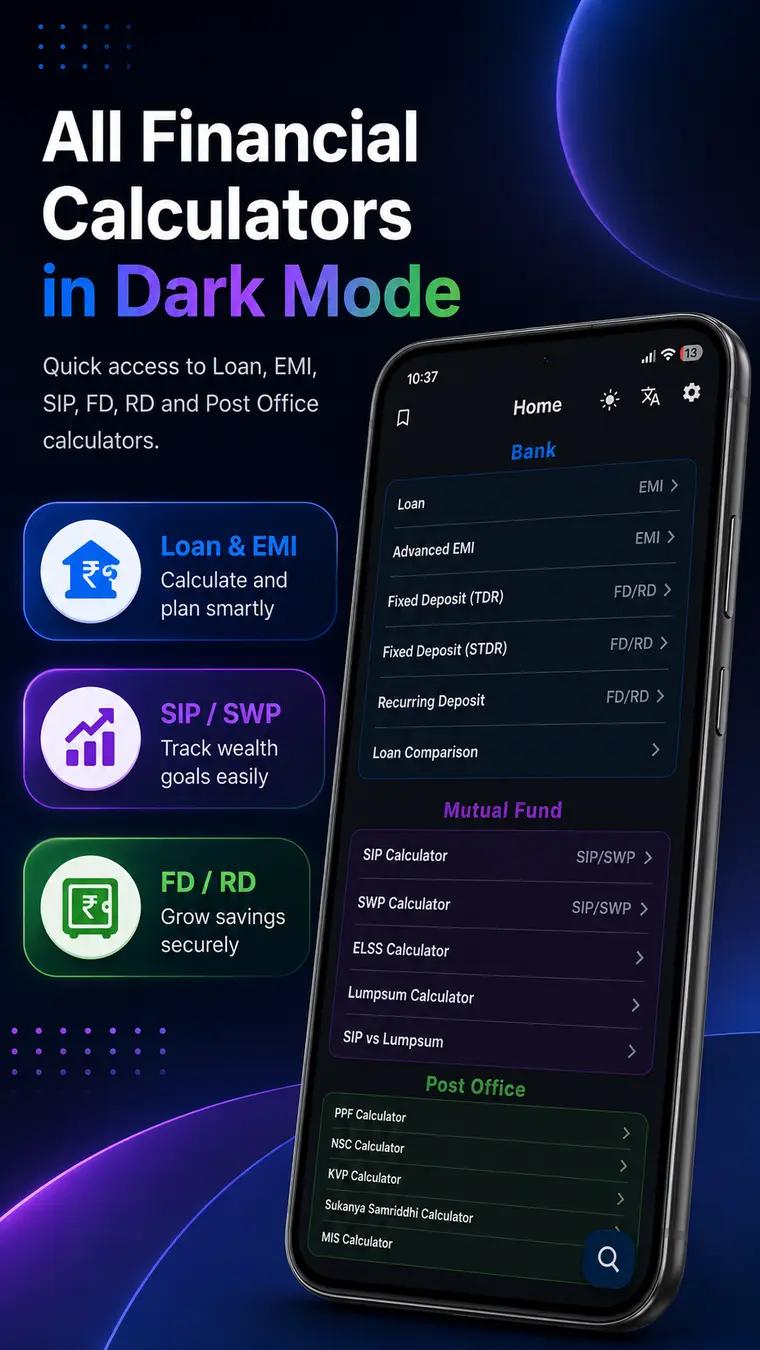
FinCalc India includes an income tax calculator that compares both regimes side by side.
Key takeaways
- FY 2026-27 slabs are unchanged, under the new Income-tax Act, 2025.
- The new regime makes taxable income up to ₹12 lakh tax-free, plus a ₹75,000 standard deduction.
- With typical deductions, the new regime is cheaper for most salaried people.
- The old regime wins only with large deductions. Calculate both before choosing.
Frequently asked questions
Which tax regime is better for FY 2026-27?
For most salaried people with typical deductions, the new regime results in lower tax. The old regime can be better with large deductions like HRA and home loan interest.
Is income up to ₹12 lakh tax-free?
Under the new regime, taxable income up to ₹12 lakh qualifies for a full rebate. For salaried individuals, that's about ₹12.75 lakh of salary after the ₹75,000 standard deduction.
Can I switch between regimes every year?
Salaried individuals without business income can generally choose each year when filing. Those with business income have more limited switching options.
Are 80C deductions allowed in the new regime?
No. Investment deductions like the former Section 80C are only available under the old regime.

We're an independent app studio in Pune, India. We build Finance Calculator: EMI & SIP and write these guides from what we learn making it and from the questions our users send us. Spotted an error? Email qunovixtechnologies@gmail.com.