Are Puzzle Games Good for Your Brain? What the Research Says
Do puzzle games make you smarter? We look at what research says about puzzles, brain training and ageing, what's overhyped, and how to get real benefits.
- What studies suggest about puzzles and thinking skills
- Why "brain training" claims are often overhyped
- How to make puzzle games part of a brain-healthy lifestyle
"Train your brain" is a common promise from puzzle games. Is there anything to it? The honest answer is more nuanced than either the marketing or the sceptics suggest.
What research suggests
Puzzles exercise specific skills
Puzzle games involve planning, spatial reasoning, attention and working memory. Playing them gives those skills practice, and people do get better at the specific puzzles they play.
Transfer to everyday life is limited
The big question is whether getting better at a puzzle makes you better at other things. Many studies of commercial "brain training" games have found that improvements tend to stay with the trained tasks and don't transfer broadly to general intelligence or everyday thinking. In 2016, the US Federal Trade Commission fined one brain-training company over claims that weren't supported by evidence.
Mental activity is linked with healthy ageing
Observational studies have found that older adults who regularly do mentally stimulating activities, such as puzzles, reading and learning, tend to keep their thinking skills better. Because these studies are observational, it's hard to know how much of that is caused by the activities themselves.
So, are puzzle games good for your brain?
| Claim | Evidence |
|---|---|
| You'll get better at the puzzle | Strong |
| Puzzles give attention and planning skills practice | Reasonable |
| Puzzles make you generally smarter | Weak |
| Puzzles prevent dementia | Not established |
| Puzzles can be an enjoyable mental break | Very plausible |
How to get the most from puzzle games
- Choose puzzles that challenge you. Easy wins are relaxing, but some challenge keeps you learning.
- Mix different types. Block, logic, word and number puzzles use different skills.
- Think strategically. Plan moves instead of playing on autopilot (see block puzzle strategy).
- Learn new things too. A language, an instrument or a craft is more varied mental exercise than any single game.
- Don't skip the basics. Sleep, exercise, social time and good health care matter more for brain health than any game.
Games as part of a balanced routine
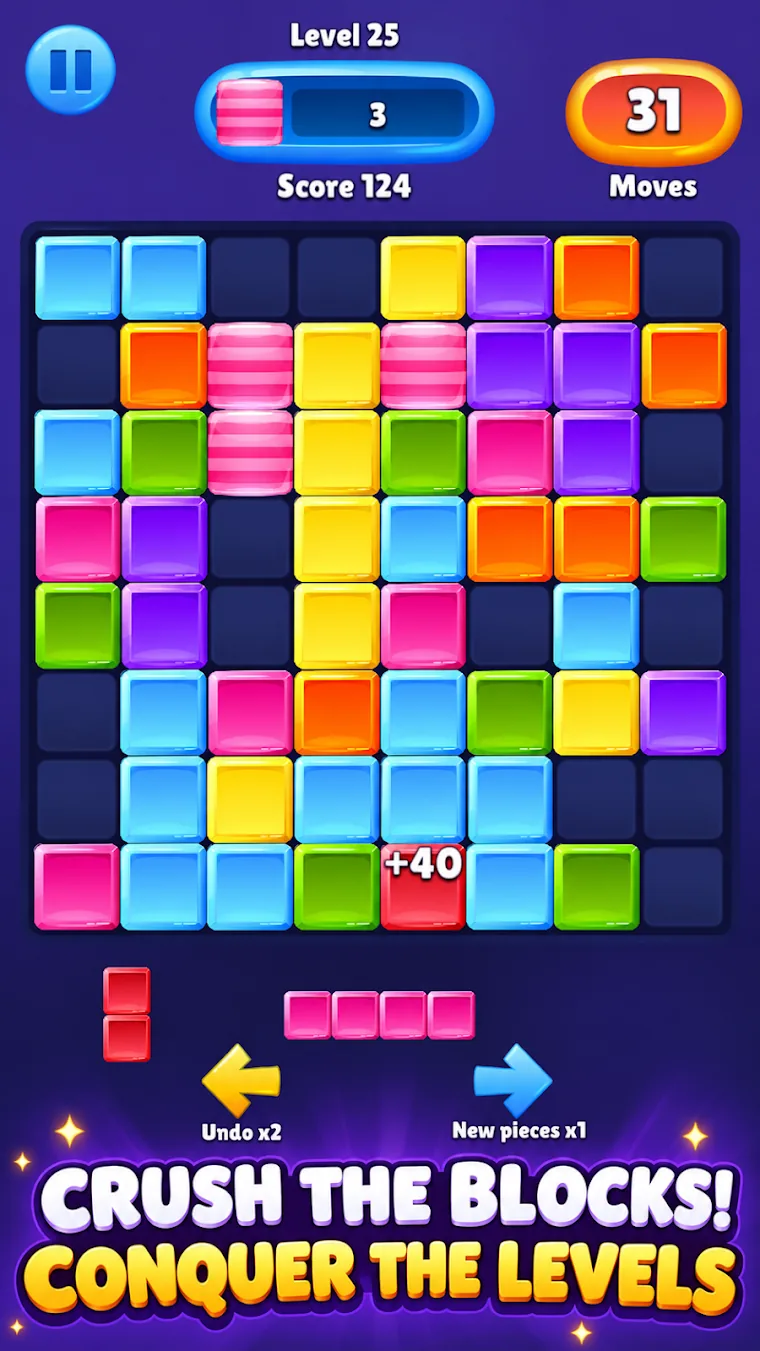
Puzzle games are best seen as an enjoyable activity that gives your mind something absorbing to do, not as medicine. Enjoy Block Trails or any puzzle you like as a relaxing break, and pair it with physical activity and time with people.
Key takeaways
- Puzzle games give specific skills practice, and you get better at the games you play.
- Evidence that brain games make you generally smarter is weak.
- Mental activity is linked with healthy ageing, but the cause isn't fully clear.
- Combine puzzles with exercise, sleep, learning and social time.
Frequently asked questions
Do puzzle games improve IQ?
Research doesn't show that puzzle games reliably raise general intelligence. You mostly improve at the puzzles you practise.
Are block puzzles good for your brain?
They exercise planning and spatial thinking and can be a pleasant mental break. Broader benefits aren't well established.
Can puzzles prevent dementia?
There's no strong evidence that puzzles prevent dementia. Staying mentally, physically and socially active is generally recommended for brain health.
How often should I play puzzle games for brain benefits?
There's no proven dose. Play for enjoyment, and include a variety of mental and physical activities in your week.

We're an independent app studio in Pune, India. We build Block Trails: Block Puzzle and write these guides from what we learn making it and from the questions our users send us. Spotted an error? Email qunovixtechnologies@gmail.com.