How to Stop Procrastinating: 9 Tricks Using Your To-Do List
Procrastination isn't laziness. Learn why we put things off and nine practical to-do list tricks, from tiny first steps to time limits, that help you start.
- Why procrastination is about feelings, not laziness
- Nine practical tricks to start tasks you've been avoiding
- How to rewrite your to-do list so tasks feel easier to begin
We all have that one task that's been on the to-do list for weeks. Every day it gets moved to tomorrow. Procrastination is frustrating, but it's rarely about laziness. Researchers increasingly describe it as a way of avoiding unpleasant feelings: boredom, uncertainty, fear of doing it badly.
That's useful, because it means the fix isn't "try harder." It's making tasks feel easier to start. Your to-do list can help.
Why we procrastinate
- The task is vague. "Sort out insurance" doesn't tell you what to do first.
- The task is big. Starting feels like committing to hours of work.
- The task is unpleasant. Boring, awkward or stressful tasks get avoided.
- Fear of doing it badly. Perfectionism makes starting risky.
- No deadline. Without a date, "later" never arrives.
9 tricks to stop procrastinating
1. Rewrite the task as the tiniest first step
Change "Write report" to "Open the report document and write the title." Tiny first steps lower the barrier. Once you start, continuing is easier.
2. Use the two-minute start
Promise yourself just two minutes. If you want to stop after two minutes, you can. Most of the time you won't, because starting was the hard part.
3. Break big tasks into a checklist
A task with five small steps feels much less daunting than one big block. Each ticked step gives a small sense of progress.
4. Do it first
If a task keeps getting moved, make it the first thing you do tomorrow, before email or messages. This is the "Eat the Frog" approach from our guide to to-do list methods.
5. Give it a time and a reminder
"Sometime this week" becomes "Tuesday 10:00, reminder at 9:55." A specific time removes the daily decision about whether to do it.
6. Set a time limit
Work for 25 minutes, then take a break. A clear end point makes starting less intimidating. (This is the idea behind the Pomodoro Technique.)
7. Remove the easiest escape
If you always end up on your phone, put it in another room or turn on Do Not Disturb for your focus block.
8. Lower the bar for "good enough"
Aim for a rough first version. You can improve a messy draft. You can't improve a blank page.
9. Reward yourself
Pair the task with something you enjoy: a cup of tea after sending the email, a walk after filing the paperwork. Ticking the task off is a reward too.
How to rewrite a procrastinated task
- Pick the task you keep moving. Be honest about which one it is.
- Ask what feels hard about it. Is it vague, big, boring or scary?
- Write the very first physical action. Something you could do in under five minutes.
- Add a checklist of next steps. Three to five small actions.
- Give the first step a time and reminder. Make it tomorrow morning if possible.
- Start for two minutes. Then decide whether to continue.
A before-and-after example
| Before | After |
|---|---|
| Do taxes | Download last year's return from email (5 min) |
| Log in to the income tax portal and check details | |
| List documents still needed | |
| Book a 1-hour slot on Saturday to file |
Track your progress
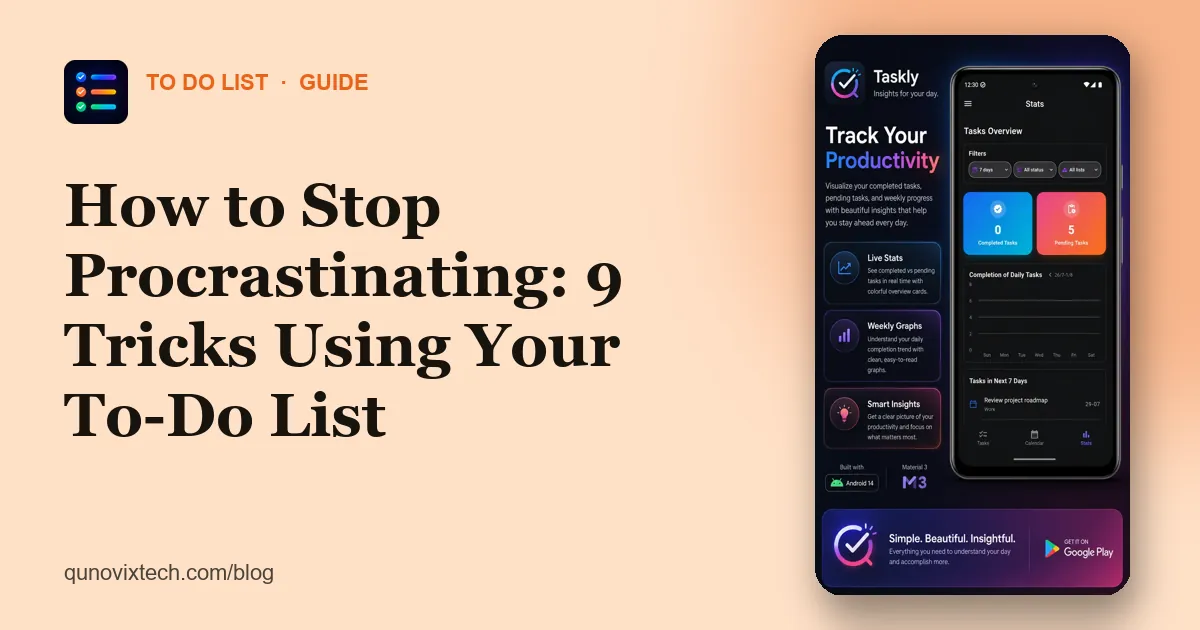
Seeing a record of tasks you've completed can be surprisingly motivating, especially on days when it feels like you've done nothing.
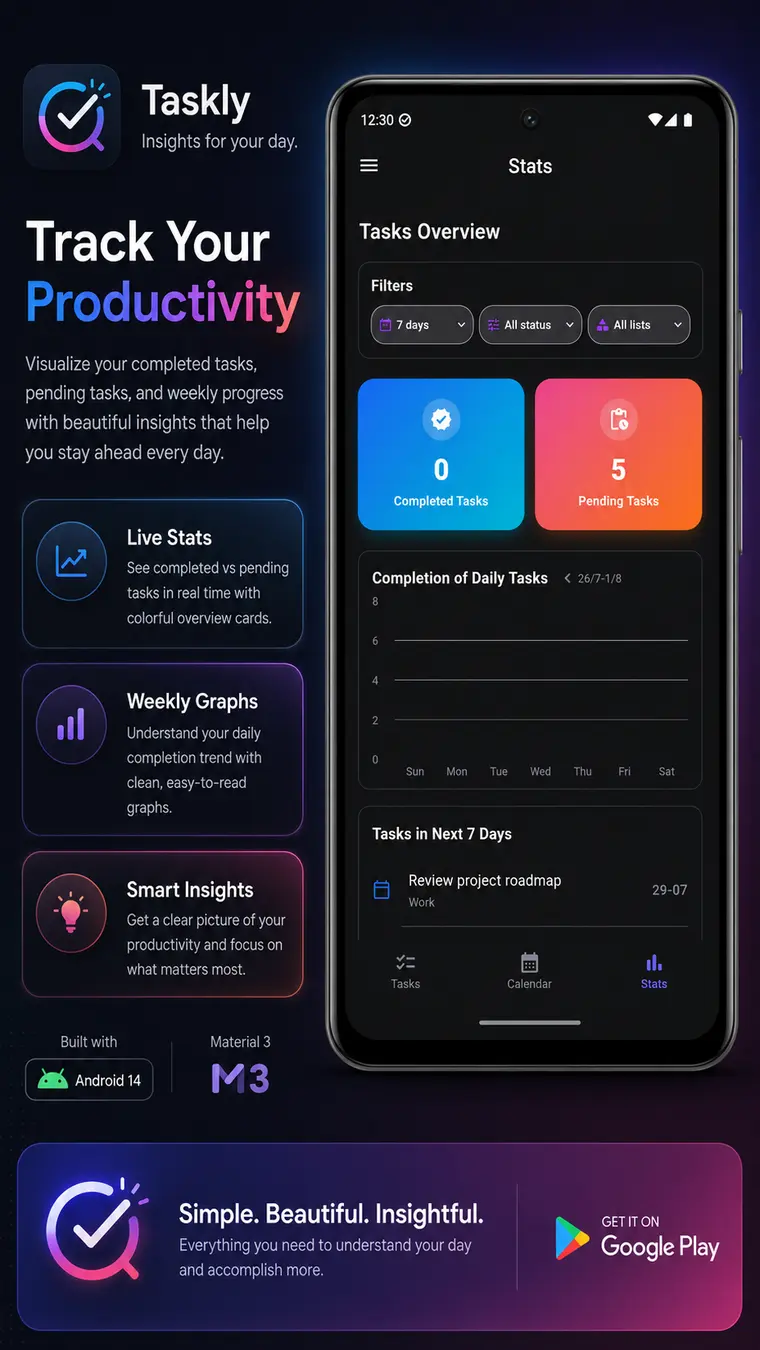
Apps like To Do List show completed and pending tasks over the week, which helps you see that progress is happening.
When it's more than procrastination
If you constantly struggle to start tasks, feel overwhelmed most days, or procrastination is affecting your work or relationships, it may be worth talking to a doctor or counsellor. Sometimes difficulty starting tasks is linked to stress, low mood or attention difficulties that can be helped with support.
Key takeaways
- Procrastination is mostly about avoiding unpleasant feelings, not laziness.
- Rewrite tasks as tiny, specific first steps.
- Give avoided tasks a specific time and do them first.
- Use time limits and small rewards to make starting easier.
Frequently asked questions
Why do I procrastinate even on important tasks?
Important tasks often feel bigger, more uncertain or more stressful, which makes them more likely to be avoided. Breaking them into small first steps helps.
What is the two-minute rule for procrastination?
Commit to working on a task for just two minutes. Starting is usually the hardest part, and you'll often keep going.
Can a to-do list make procrastination worse?
A long, vague to-do list can feel overwhelming. A short list with specific, small tasks makes starting easier.
How do I stop procrastinating on studying?
Break study into small sessions with clear goals, such as "summarise chapter 3 in 10 bullet points," and schedule them with reminders.

We're an independent app studio in Pune, India. We build To Do List: Tasks & Reminders and write these guides from what we learn making it and from the questions our users send us. Spotted an error? Email qunovixtechnologies@gmail.com.