Waist-to-Height Ratio: The Simple Health Check to Use With BMI
Keep your waist to less than half your height. Learn how to measure waist-to-height ratio, what the numbers mean and why it adds useful context to BMI.
- What waist-to-height ratio is and why it matters
- How to measure it accurately at home
- What your result means and how it complements BMI
BMI tells you about your weight relative to your height. It doesn't tell you where you carry fat. Waist-to-height ratio does, and it's one of the simplest health checks you can do at home.
What is waist-to-height ratio?
It's your waist circumference divided by your height, using the same units:
Waist-to-height ratio = waist ÷ height
A simple message used by health bodies such as the UK's National Institute for Health and Care Excellence (NICE) is: keep your waist to less than half your height.
Why it matters
Fat stored around the abdomen, especially deep "visceral" fat around organs, is linked with higher risk of conditions such as type 2 diabetes and heart disease. Waist-to-height ratio reflects this central fat better than BMI alone, and it works across different heights.
What the numbers mean
NICE guidance (2022) uses these bands for adults:
| Waist-to-height ratio | Health risk from central fat |
|---|---|
| 0.4 to 0.49 | No increased risk |
| 0.5 to 0.59 | Increased risk |
| 0.6 or more | High risk |
How to measure waist-to-height ratio
- Measure your height in centimetres, without shoes.
- Find the measuring point. Halfway between your lowest rib and the top of your hip bone.
- Measure your waist. Stand upright, breathe out naturally and keep the tape level and snug.
- Divide waist by height. For example, 84 cm ÷ 170 cm = 0.49.
- Compare to the bands above. Repeat monthly to track changes.
Worked examples
| Height | Waist | Ratio | Meaning |
|---|---|---|---|
| 160 cm | 76 cm | 0.48 | No increased risk |
| 170 cm | 90 cm | 0.53 | Increased risk |
| 180 cm | 110 cm | 0.61 | High risk |
The quick check: half of 170 cm is 85 cm. If your waist is under 85 cm, you're below 0.5.
Waist-to-height ratio vs BMI
| BMI | Waist-to-height ratio | |
|---|---|---|
| Measures | Overall weight for height | Central (abdominal) fat |
| Needs | Scale and height | Tape measure and height |
| Muscular people | Can overestimate risk | Usually more accurate |
| Normal weight, large waist | Can miss risk | Picks it up |
They work best together. NICE suggests using waist-to-height ratio alongside BMI for adults with a BMI under 35.
Especially useful for South Asians
Many South Asian adults carry more abdominal fat at lower BMIs, so waist-based measures are particularly helpful. See BMI for Indians and Asians.
Put it together
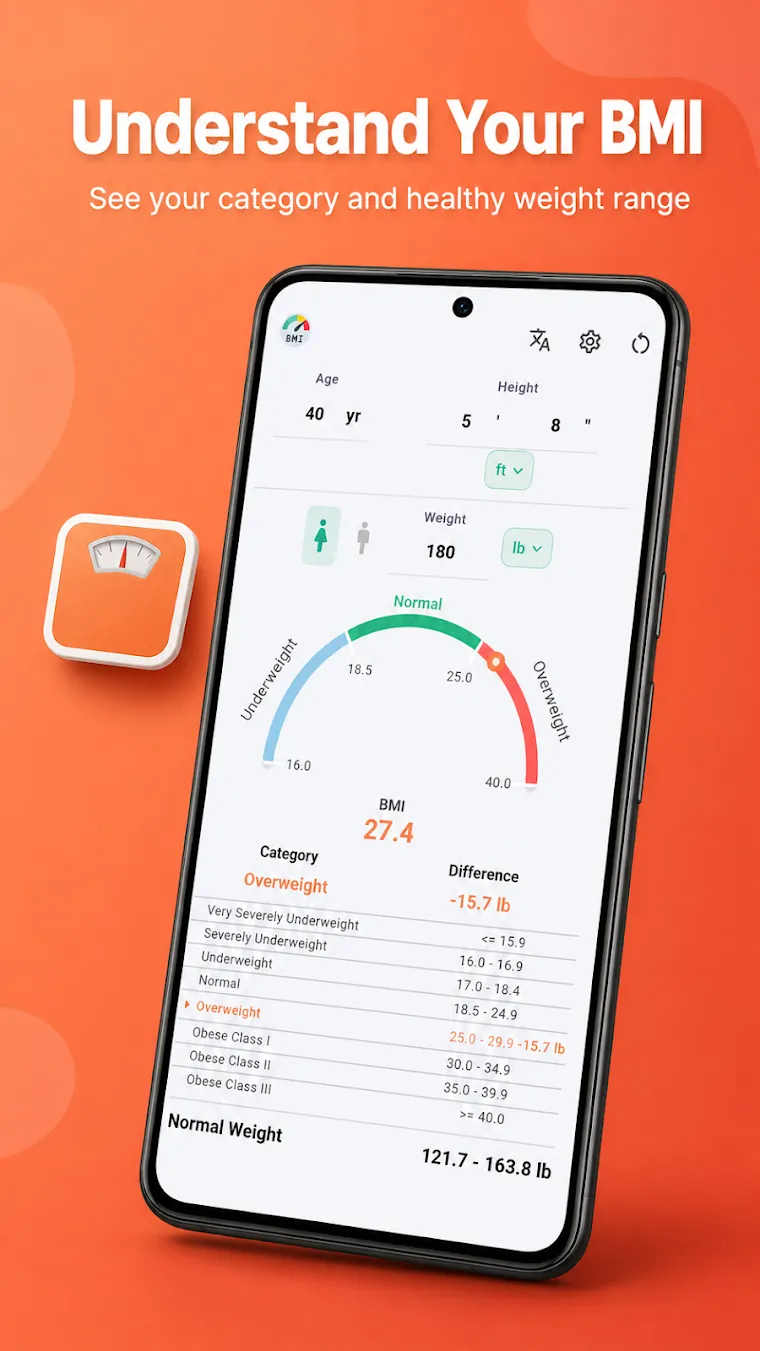
- Check your BMI with BMI Calculator.
- Measure your waist and calculate your ratio.
- If either is in a higher-risk range, talk to a doctor about blood pressure, blood sugar and cholesterol checks.
Read more about whether BMI is accurate and what else to consider.
Key takeaways
- Keep your waist to less than half your height (ratio under 0.5).
- 0.5–0.59 suggests increased risk. 0.6+ suggests high risk.
- Waist-to-height ratio reflects abdominal fat, which BMI can't show.
- Use it alongside BMI, especially if you're of South Asian descent.
Frequently asked questions
What is a good waist-to-height ratio?
Below 0.5, meaning your waist is less than half your height.
Is waist-to-height ratio better than BMI?
It adds information BMI can't provide, about where fat is stored. Many experts recommend using both.
Where should I measure my waist?
Halfway between your lowest rib and the top of your hip bone, after breathing out normally.
Does waist-to-height ratio work for children?
The "keep your waist to less than half your height" message has been used for children over a certain age in some guidance, but check with a paediatrician for children's health assessments.

We're an independent app studio in Pune, India. We build BMI Calculator and write these guides from what we learn making it and from the questions our users send us. Spotted an error? Email qunovixtechnologies@gmail.com.