Weight-Loss Plateau: Why It Happens and 8 Ways to Move Forward
Stuck at the same weight for weeks? Learn what a real weight-loss plateau is, why it happens, and eight sustainable ways to get progress moving again.
- How to tell a true plateau from a normal slow week
- Why weight loss slows down over time
- Eight practical ways to break a plateau without crash dieting
You've been doing everything right and the scale has stopped moving. A weight-loss plateau is one of the most common and frustrating parts of losing weight. Understanding why it happens makes it much easier to respond calmly.
Is it really a plateau?
Before changing anything, check whether you're actually stuck:
- Has your weekly average stayed flat for three to four weeks or more? A week or two of no change is often just normal fluctuation.
- Are you comparing like with like: same time of day, same scale?
- Could water retention be hiding progress, from salt, a new workout, your cycle or stress?
Our guide to weekly and moving averages shows how to read your trend properly.
Why weight loss slows down
- A smaller body needs less energy. As you lose weight, your body uses less energy at rest and during activity, so the gap between what you eat and what you use gets smaller.
- Portions creep up. Over weeks, portions and snacks can gradually grow without you noticing.
- Less everyday movement. Some people move less outside workouts when eating less, without realising it.
- Water masking fat loss. Fat loss can continue while water retention hides it temporarily.
8 ways to move past a plateau
1. Track honestly for two weeks
Log what you eat and drink for two weeks, including oils, drinks and snacks. Many plateaus are explained by small additions.
2. Check portion sizes
Measure common foods like rice, oil and nuts for a few days to recalibrate your eye.
3. Increase daily movement
Walking more, taking stairs and standing breaks add up. Everyday movement often has a bigger effect than people expect.
4. Add or adjust strength training
Strength training helps preserve muscle while losing weight, which supports your metabolism and how your body looks and feels.
5. Prioritise protein and fibre
Protein and fibre-rich foods, such as dal, beans, eggs, paneer, curd, vegetables and whole grains, help you feel full.
6. Improve sleep
Short sleep is linked with increased appetite in many people. Aim for consistent, sufficient sleep.
7. Review your goal
If you've lost a lot of weight, your current weight may be a sensible place to maintain for a while. Maintenance is a skill worth practising.
8. Look beyond the scale
Measure your waist, take progress photos and notice how clothes fit. Body composition can improve even when weight stays flat.
What not to do
- Don't slash calories drastically. Very low-calorie diets are hard to sustain and can backfire. Talk to a doctor before any very restrictive plan.
- Don't change everything at once. Make one or two changes and watch the trend for two to three weeks.
- Don't give up. Plateaus are a normal part of almost every weight-loss journey.
How to use a plateau productively
- Confirm it with weekly averages. Make sure the trend has been flat for at least three weeks.
- Review your habits honestly. Track food, drinks and movement for two weeks.
- Pick one or two changes. For example, add a daily 20-minute walk and measure cooking oil.
- Track other measures. Waist, photos and fitness.
- Reassess after three weeks. Look at the trend again before changing anything else.
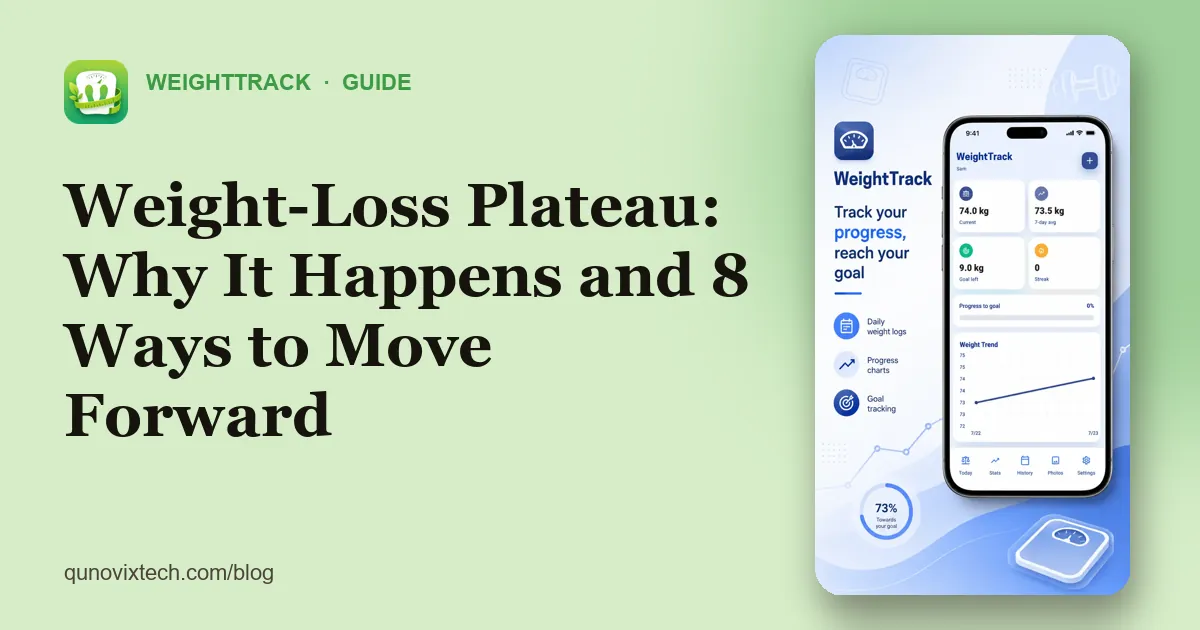
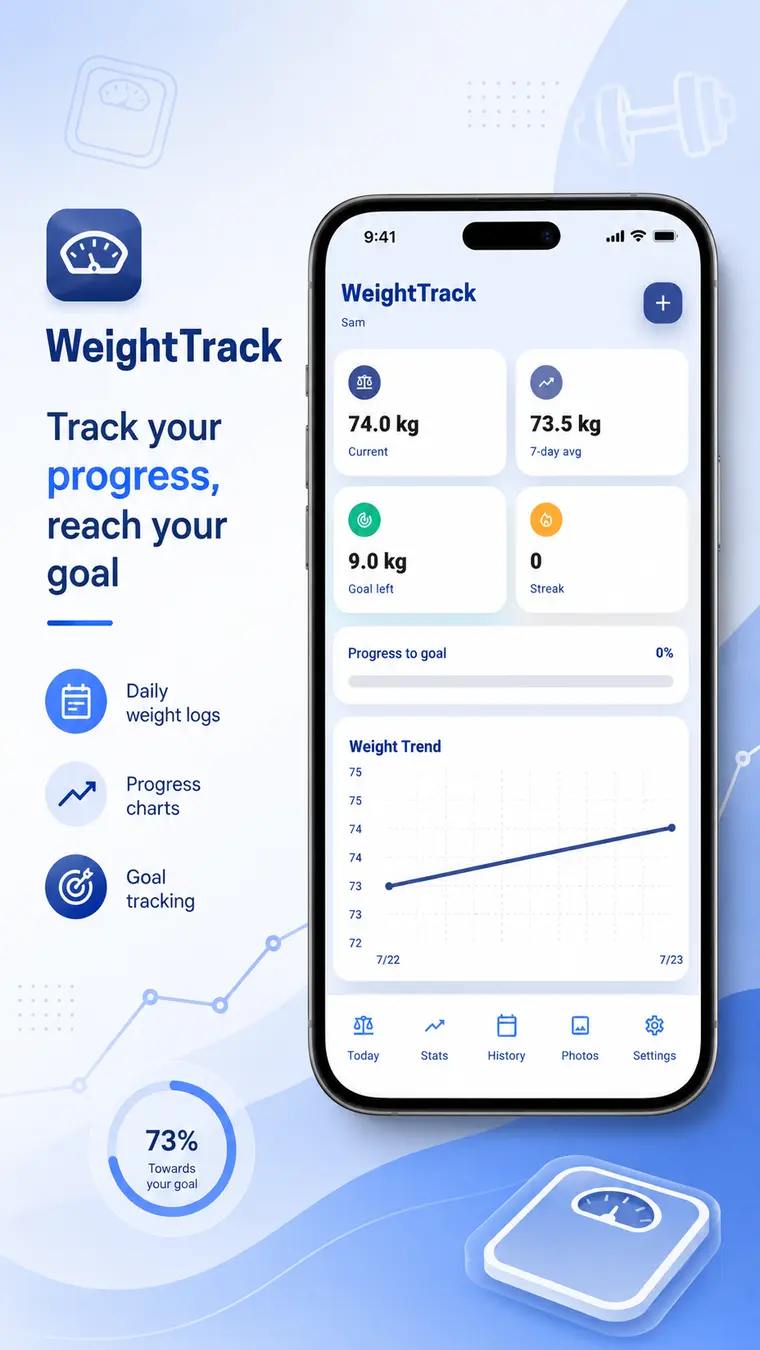
A tracker like WeightTrack shows your trend, goal progress and progress photos in one place, so you can see what's working.
Key takeaways
- A real plateau means a flat weekly average for three to four weeks or more.
- Weight loss naturally slows as your body gets smaller.
- Track honestly, move more, prioritise protein, fibre and sleep, and include strength training.
- Make one or two changes at a time and judge them over several weeks.
Frequently asked questions
How long does a weight-loss plateau last?
It varies. Some last a couple of weeks, others longer. If your average hasn't moved for over a month despite consistent habits, review your approach or speak to a professional.
Is a plateau a sign of a slow metabolism?
Your body does use less energy as you lose weight, which is normal. It doesn't mean your metabolism is "broken".
Can I still be losing fat during a plateau?
Yes. Water retention can hide fat loss for a while, especially if you've started a new exercise routine.
Should I eat less to break a plateau?
Not drastically. Check what you're eating honestly first and consider small adjustments to food and activity.

We're an independent app studio in Pune, India. We build WeightTrack: Weight Tracker and write these guides from what we learn making it and from the questions our users send us. Spotted an error? Email qunovixtechnologies@gmail.com.