Arrow Puzzle Strategy: 8 Advanced Techniques for Hard Levels
Hard arrow mazes need more than trial and error. Learn eight advanced techniques, from dependency chains and region splitting to working backwards.
- How to map dependencies between arrows
- Techniques for breaking huge mazes into manageable parts
- How to work backwards when you're completely stuck
On early levels, arrow puzzles almost solve themselves: tap the free arrows and the maze unravels. On harder levels, with hundreds of arrows packed tightly, you need a plan. These eight techniques will help.
1. Map dependency chains
For a stuck arrow, ask what blocks it. Then ask what blocks that. Following the chain backwards tells you exactly which arrow to clear first. Long chains are common in "Super Hard" levels.
2. Split the maze into regions
Big mazes often contain several areas that barely interact. Treat each region as its own mini-puzzle. Clearing one region at a time is far less overwhelming than scanning the whole board.
3. Clear "gateway" arrows
Some arrows sit at a junction, blocking several others at once. Freeing a gateway arrow can unlock a whole section. When you spot one, prioritise its chain.
4. Look for parallel arrows
Arrows pointing the same way along the same line form a queue. The one nearest the exit must leave first, then the next. Recognising queues saves you from tracing each arrow individually.
5. Spot head-to-head pairs
Two arrows pointing at each other on the same line block each other. At least one must be freed some other way, often by clearing an arrow that blocks its path elsewhere, or the level is telling you that one of them actually has a different route. Find the escape before you get stuck.
6. Work backwards
When completely stuck, think about which arrow could be the last one on the board. It must have a path that's only blocked by arrows that can leave earlier. Working backwards from the end can reveal the order.
7. Re-scan after every move
Each cleared arrow can free others anywhere on the board, not just nearby. Make a habit of a quick full-board scan after every tap.
8. Change your view
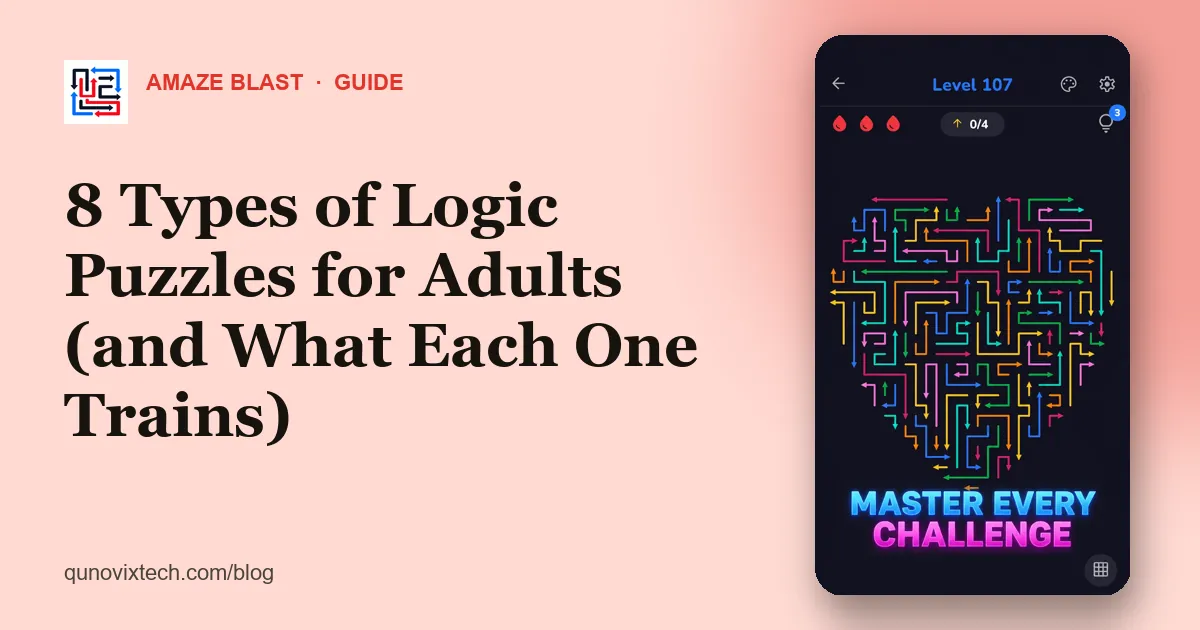
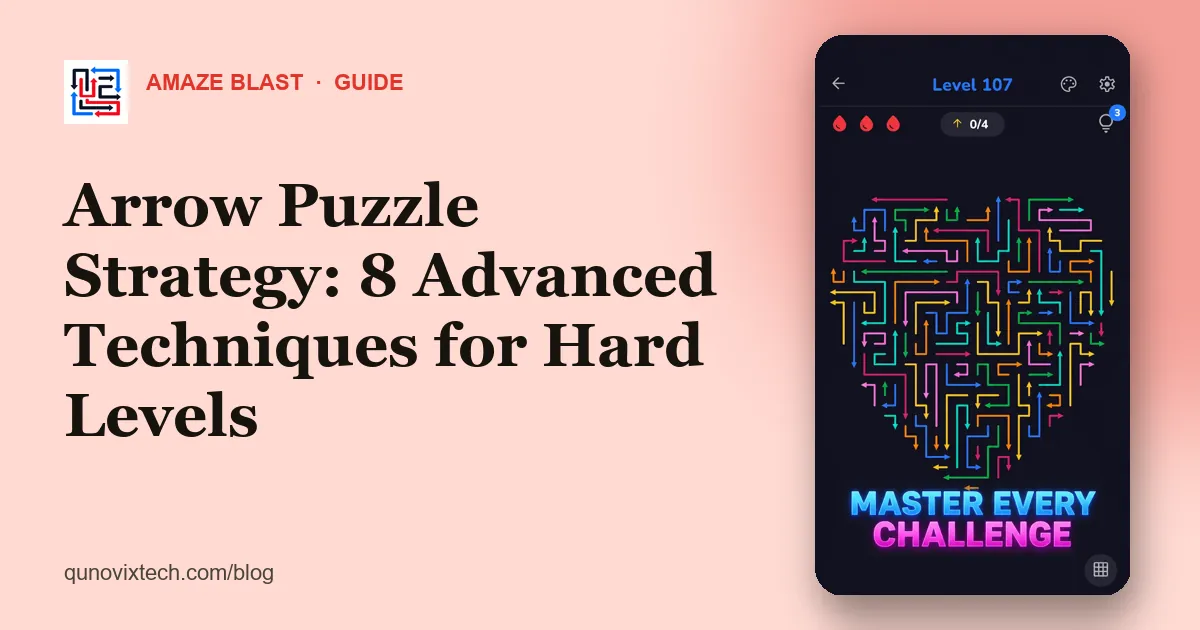
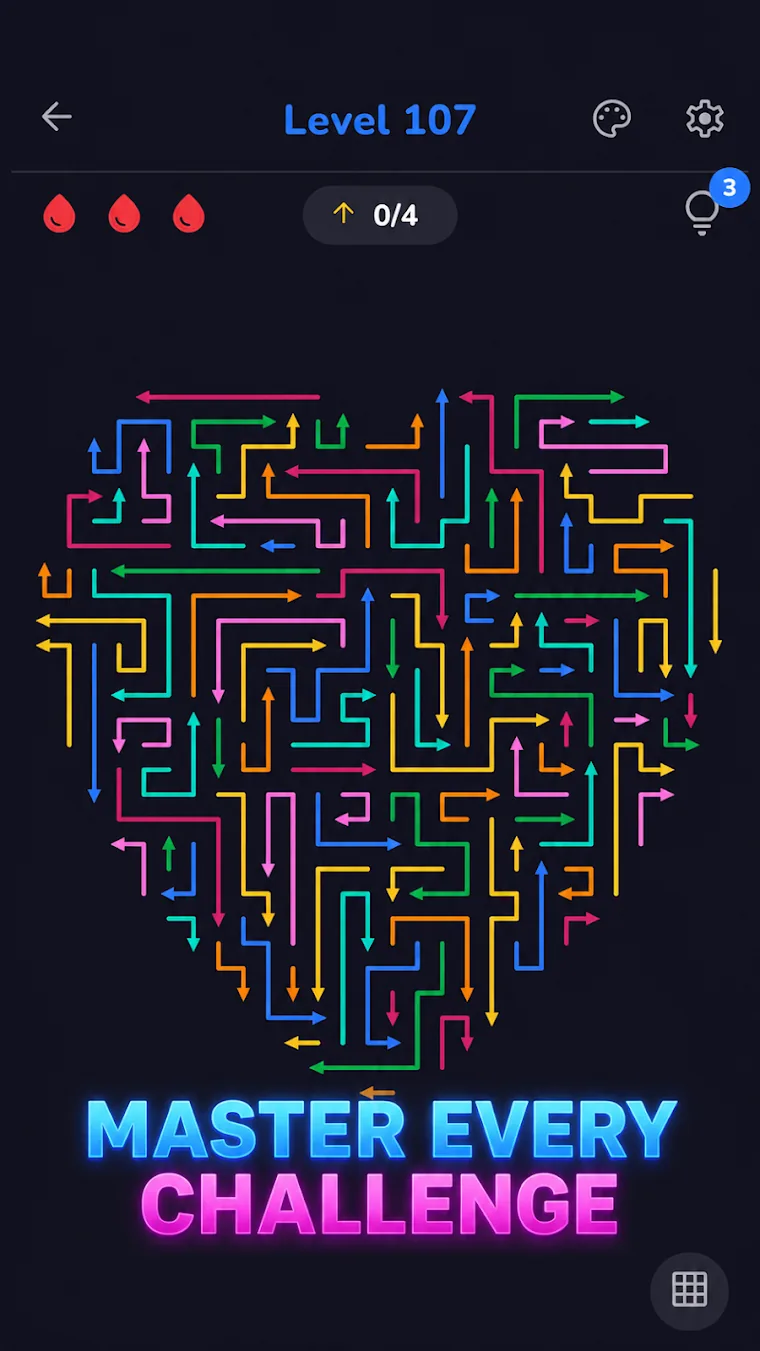
Many mazes form a picture, such as a duck, heart or ship. The picture can distract you. Try focusing only on arrow directions in one area, or zoom in if the game allows.
A solving routine for hard levels
- Clear all obviously free arrows. Edges first.
- Identify regions. Pick the most open one.
- Find the gateway arrows in that region.
- Follow their dependency chains and clear them.
- Re-scan the whole board.
- Repeat by region until the maze is clear.
- Work backwards if nothing seems free.
Difficulty tiers
In Amaze Blast, levels range from easy warm-ups to "Hard" and "Super Hard" mazes. The higher tiers usually have:
- More arrows packed closer together.
- Longer dependency chains.
- More head-to-head pairs and queues.
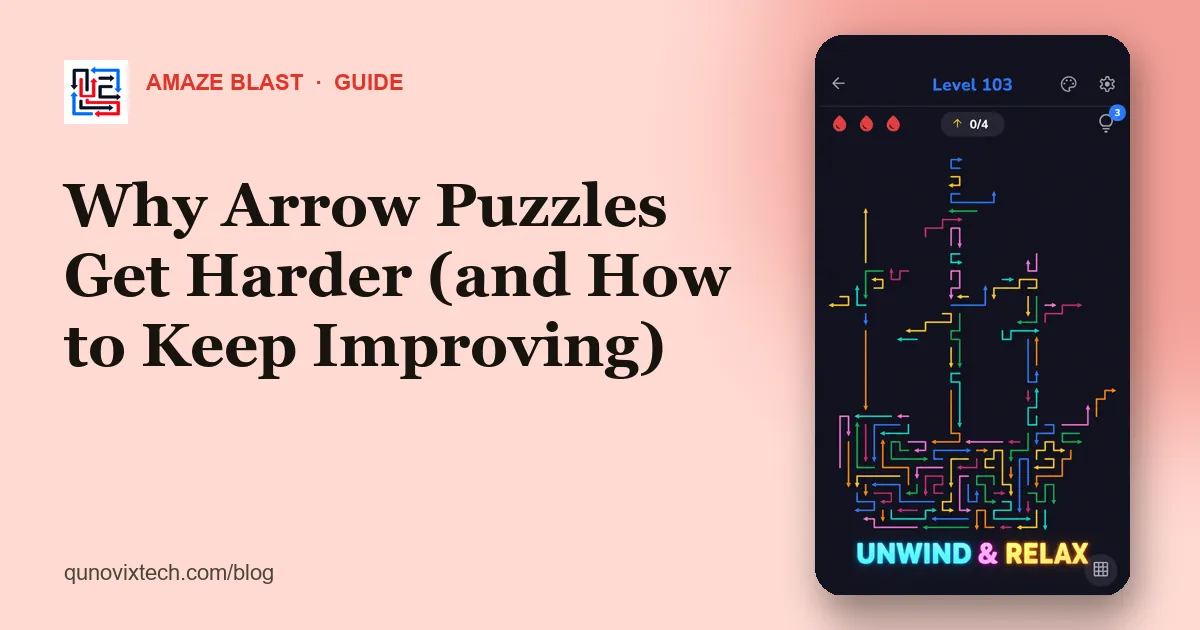
See why arrow puzzles get harder for more.
When to use a hint
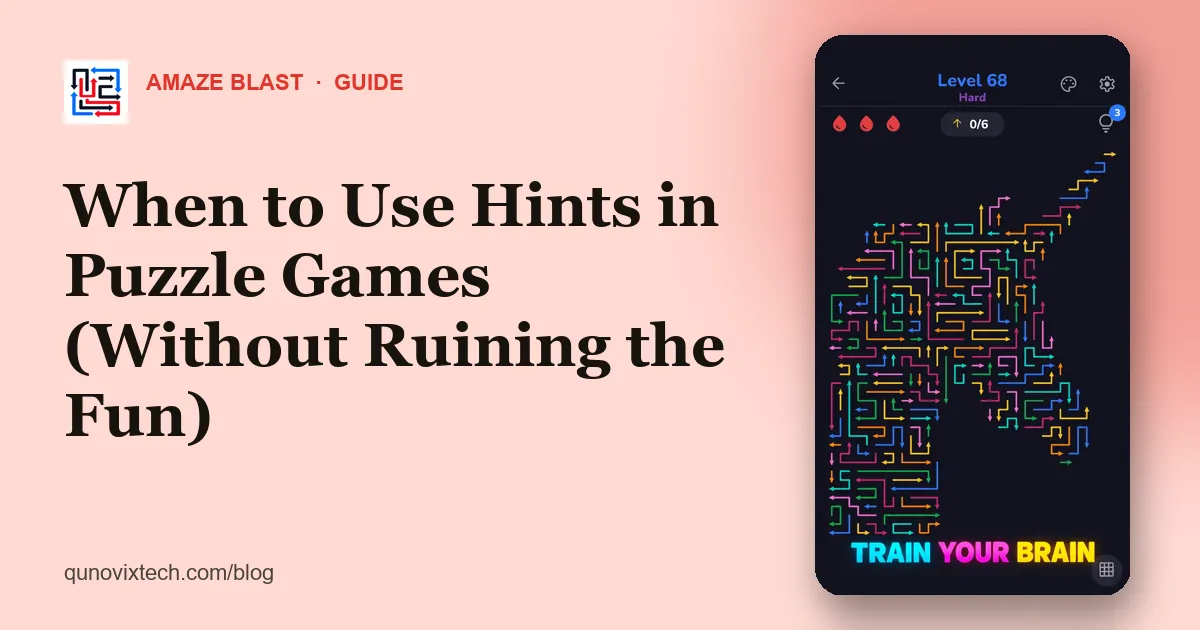
Hints are most useful when you've cleared everything obvious, tried working backwards and still can't see a move. Using one to reveal a single step, then continuing yourself, keeps the satisfaction of solving. Read using hints in puzzle games.
Key takeaways
- Map dependency chains to find which arrow must move first.
- Split huge mazes into regions and look for gateway arrows.
- Recognise queues and head-to-head pairs.
- Work backwards from the last possible arrow when stuck.
Frequently asked questions
How do you solve hard arrow puzzles?
Clear free arrows first, split the maze into regions, follow dependency chains to find blockers and re-scan after every move.
What is a dependency chain in arrow puzzles?
A sequence of arrows where each one blocks the next. The first arrow in the chain must be cleared before the others can move.
Why do I get stuck on arrow puzzles?
Usually because a blocking arrow is far away from the stuck area. A full-board scan or working backwards often reveals it.
Should I use hints on hard levels?
Use them sparingly. Revealing one step and solving the rest yourself keeps the challenge fun.

We're an independent app studio in Pune, India. We build Amaze Blast: Arrow Puzzle and write these guides from what we learn making it and from the questions our users send us. Spotted an error? Email qunovixtechnologies@gmail.com.