8 Types of Logic Puzzles for Adults (and What Each One Trains)
From Sudoku to arrow mazes, logic puzzles come in many forms. Explore eight popular types for adults, what skills each one uses and how to pick your favourite.
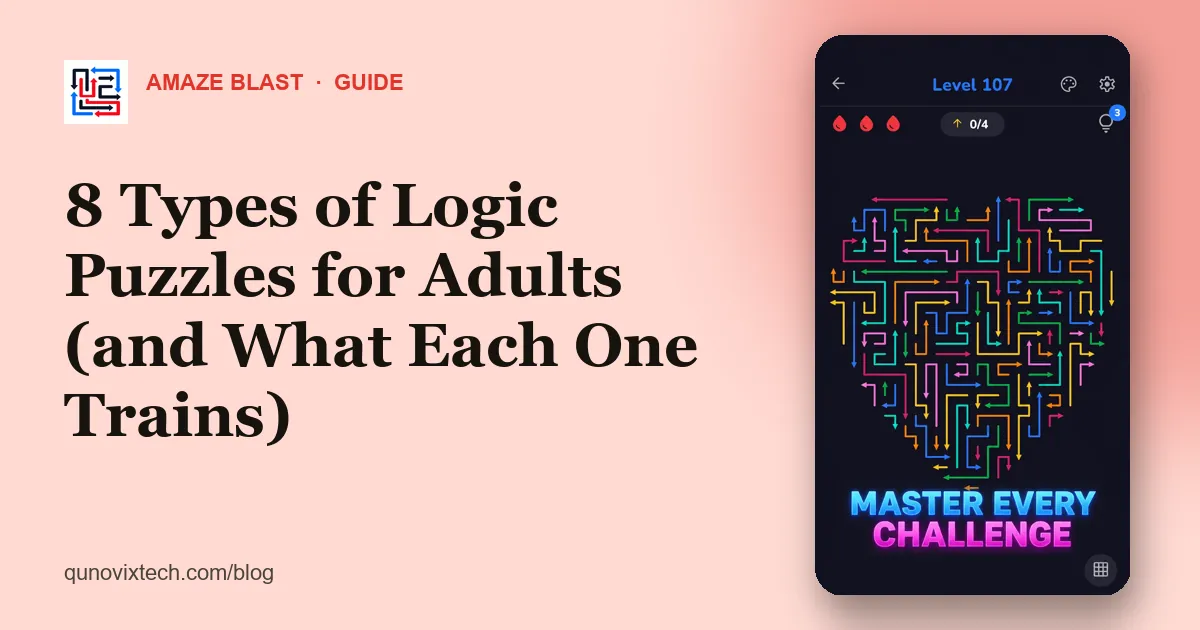
- Eight popular kinds of logic puzzle and how they work
- Which thinking skills each type uses
- How to choose puzzles that match your mood and time
Logic puzzles are some of the oldest and most loved games in the world. They need no luck, just careful thinking. Here are eight popular types, what makes each one different and what kind of thinking it uses.
1. Sudoku
Fill a 9×9 grid so each row, column and 3×3 box contains the digits 1–9. It's pure deduction: every number can be worked out from the clues.
Uses: elimination, pattern spotting, patience.
2. Arrow puzzles
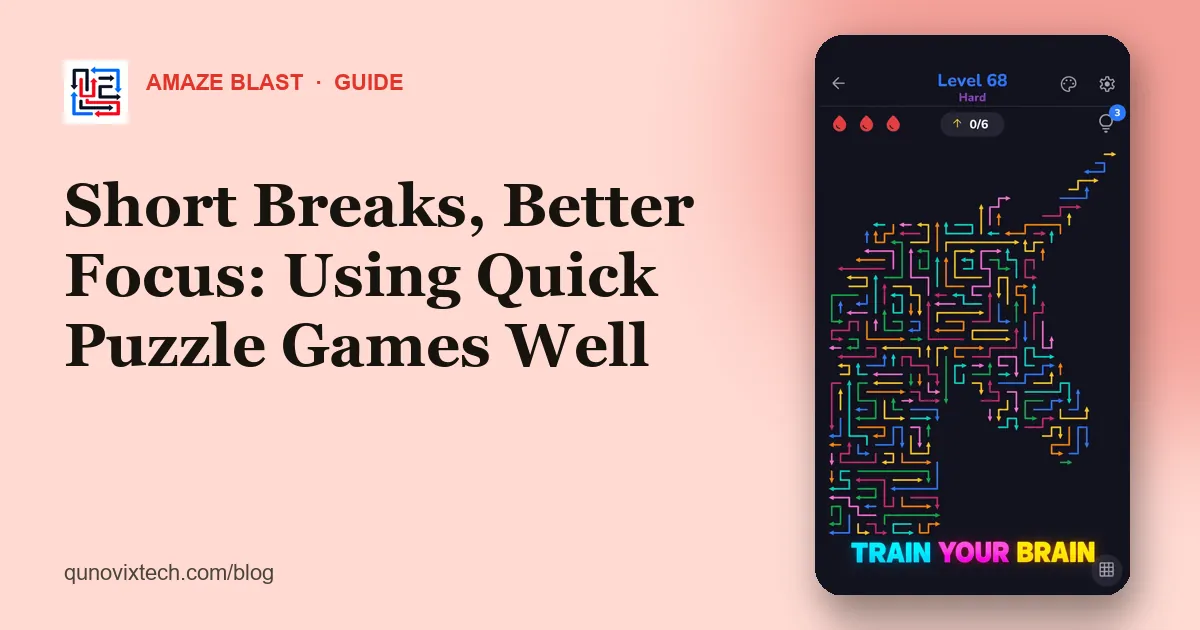
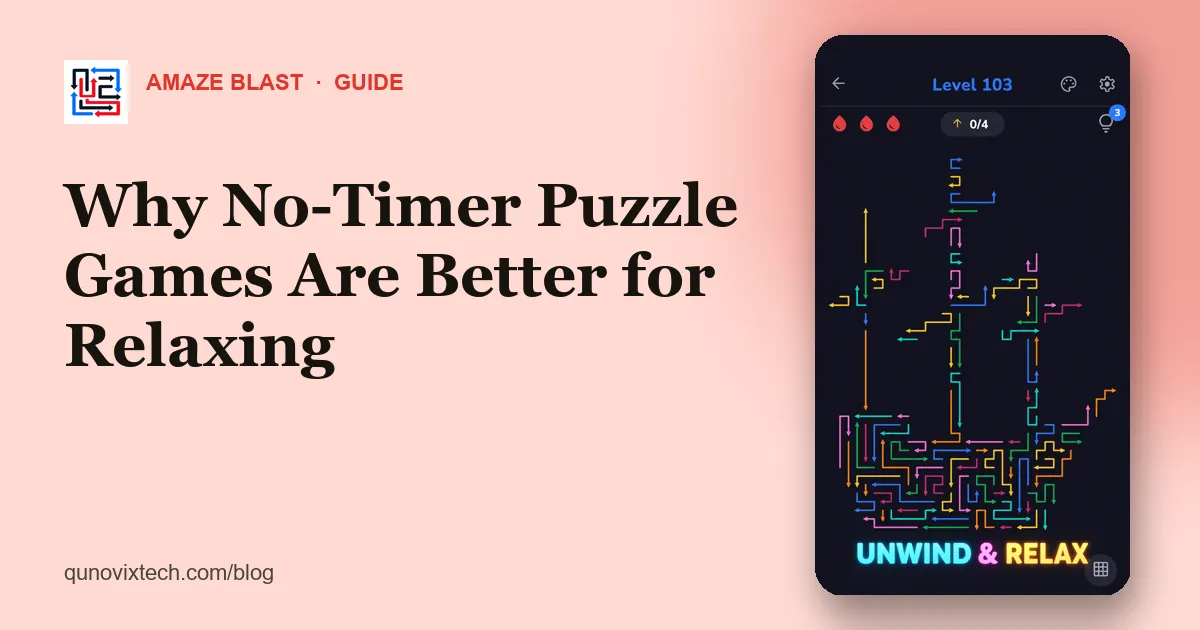
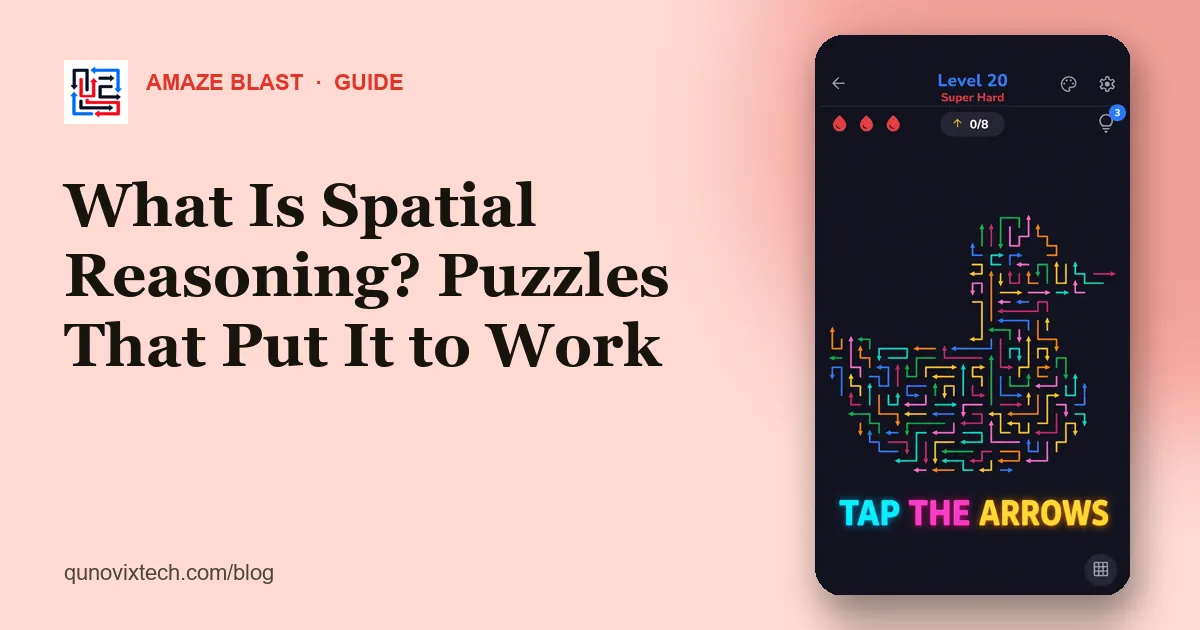
Tap arrows to slide them off the board in the direction they point, in the right order. Arrows can't pass through each other. Games like Amaze Blast build thousands of levels from this one rule.
Uses: sequencing, spatial reasoning, planning ahead. See how to solve arrow puzzles.
3. Block puzzles
Place pieces on a grid and clear full rows and columns. Less pure logic, more planning under uncertainty, since you don't know future pieces.
Uses: spatial planning, risk management. See how to play block puzzle.
4. Sorting puzzles
Pour coloured liquid or move balls between containers until each holds a single colour.
Uses: sequencing, short-term memory, planning. See how to play water sort.
5. Nonograms (picture logic)
Use number clues on the rows and columns to fill cells and reveal a hidden picture.
Uses: deduction, counting, careful checking.
6. Logic grid puzzles
"Five people live in five houses…" Use clues and a grid to work out who owns what.
Uses: reading carefully, deduction, holding several facts in mind.
7. Sliding puzzles
Slide tiles or blocks around a frame to reach a target arrangement, such as the classic 15-puzzle.
Uses: spatial reasoning, planning several moves ahead.
8. KenKen and Kakuro
Number puzzles that combine Sudoku-style rules with arithmetic clues.
Uses: arithmetic, deduction.
Which puzzle suits you?
| If you like… | Try |
|---|---|
| Quiet, number-based deduction | Sudoku, KenKen |
| Visual, satisfying clears | Arrow puzzles, block puzzles |
| Calm, colourful play | Sorting puzzles |
| Revealing pictures | Nonograms |
| Reading and reasoning | Logic grid puzzles |
| Short, touch-friendly breaks | Arrow and block puzzles |

Tips for getting into logic puzzles
- Start on easy levels to learn the rules properly.
- Learn one or two techniques at a time.
- Choose games without timers so you can think.
- Mix puzzle types to keep things fresh.
Curious whether puzzles really benefit your brain? Read are puzzle games good for your brain?
Key takeaways
- Logic puzzles range from number grids to visual arrow mazes.
- Each type uses different skills: deduction, sequencing, spatial reasoning or arithmetic.
- Pick puzzles that match your mood, time and favourite kind of thinking.
- Start easy, learn techniques gradually and avoid timers if you want to relax.
Frequently asked questions
What are the best logic puzzles for adults?
Sudoku, nonograms, logic grids and arrow puzzles are popular choices. The best one is the type you enjoy most.
Are arrow puzzles logic puzzles?
Yes. Every move can be reasoned out from the arrows' directions and positions. Finding the right order is a logic problem.
Are logic puzzles good for the brain?
They give specific thinking skills practice. Broader benefits are less certain, but they're an enjoyable mental activity.
Which logic puzzles are best on a phone?
Touch-friendly visual puzzles like arrow, block and sorting puzzles work especially well on phones.

We're an independent app studio in Pune, India. We build Amaze Blast: Arrow Puzzle and write these guides from what we learn making it and from the questions our users send us. Spotted an error? Email qunovixtechnologies@gmail.com.