Hindi Greetings: How to Say Hello, Goodbye and More (With Etiquette)
Learn common Hindi greetings for hello, goodbye, good morning and festivals, how to respond, formal vs informal forms and simple greeting etiquette in India.
- The most common Hindi greetings and how to reply
- Formal vs informal greetings and when to use each
- Festival greetings and simple etiquette tips
A warm greeting is the easiest way to make a good impression. Hindi has greetings for every situation, from a respectful namaste to a friendly kya haal hai? Here's how to use them.
The essential greeting: namaste
नमस्ते (namaste) is used for both hello and goodbye. It's polite, works with everyone, and is often said with palms pressed together in front of the chest.
नमस्कार (namaskaar) is a slightly more formal version, often heard on television or in formal settings.
Common greetings and replies
| Greeting | Hindi | Pronunciation | Typical reply |
|---|---|---|---|
| Hello | नमस्ते | namaste | नमस्ते (namaste) |
| How are you? (polite) | आप कैसे हैं? | aap kaise hain? | मैं ठीक हूँ (main theek hoon) |
| How are you? (casual) | क्या हाल है? | kya haal hai? | सब ठीक (sab theek) |
| What's up? (very casual) | और बताओ? | aur bataao? | बस, सब बढ़िया (bas, sab badhiya) |
| Good morning | सुप्रभात | suprabhaat | सुप्रभात |
| Good night | शुभ रात्रि | shubh raatri | शुभ रात्रि |
| Goodbye / see you | फिर मिलेंगे | phir milenge | ज़रूर (zaroor, "definitely") |
Tip: In everyday conversation, many people simply say "good morning" or "good night" in English. Suprabhaat and shubh raatri are correct but sound more formal.
Formal vs informal
Hindi has three forms of "you":
| Form | Hindi | When to use |
|---|---|---|
| Polite | आप (aap) | Elders, strangers, shopkeepers, at work |
| Familiar | तुम (tum) | Friends, people your age, younger family |
| Intimate | तू (too) | Very close friends, small children; can sound rude otherwise |
When in doubt, use आप. You'll never offend anyone by being too polite. Our Hindi grammar basics explain how these forms change verbs.
Respectful greetings for elders
- Add जी (ji) after a name or title to show respect: Sharma ji, Aunty ji.
- In many families, younger people touch the feet of elders as a sign of respect. As a guest, a namaste is always appropriate.
- Some people greet elders with प्रणाम (pranaam), a respectful greeting.
Religious and regional greetings
India is diverse, and greetings vary:
| Greeting | Used by / where |
|---|---|
| राम राम (Ram Ram) | Common in parts of North India |
| जय श्री कृष्ण (Jai Shri Krishna) | Common in parts of Gujarat and Rajasthan |
| सत श्री अकाल (Sat Sri Akaal) | Sikh greeting, common in Punjab |
| अस्सलाम अलैकुम (Assalaam alaikum) | Muslim greeting; reply वालेकुम अस्सलाम (Waalekum assalaam) |
Namaste is always a safe, respectful choice.
Festival greetings
| Occasion | Hindi | Pronunciation |
|---|---|---|
| Happy Diwali | दिवाली की शुभकामनाएँ | Diwali ki shubhkaamnaayen |
| Happy Holi | होली मुबारक / होली की शुभकामनाएँ | Holi mubaarak |
| Eid Mubarak | ईद मुबारक | Eid mubaarak |
| Happy New Year | नया साल मुबारक | naya saal mubaarak |
| Happy birthday | जन्मदिन मुबारक हो | janmadin mubaarak ho |
Practise out loud
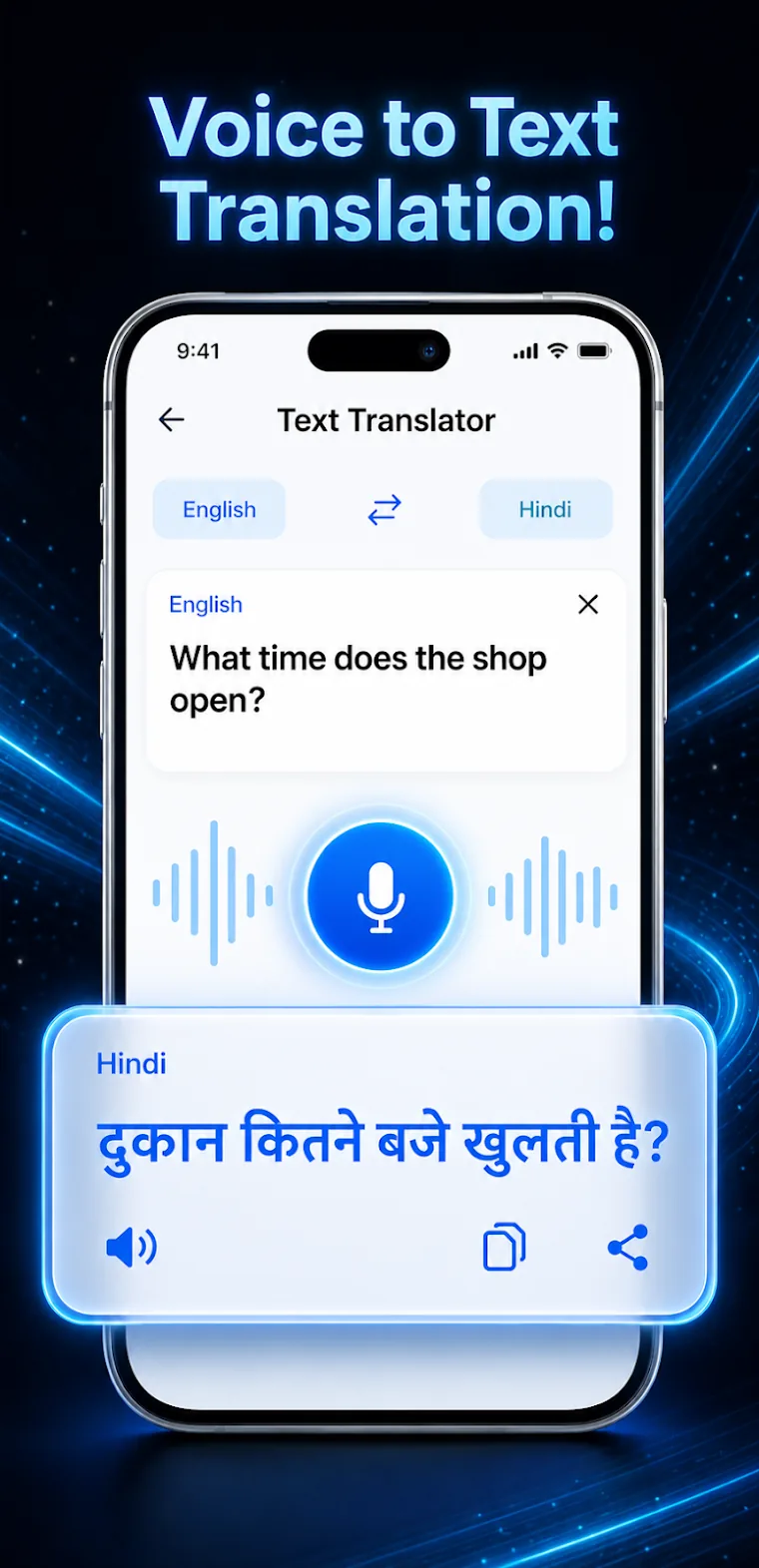
English To Hindi Translator lets you speak or type a greeting, see it in Devanagari and hear it read aloud. Save your favourites so they're ready when you need them. For more everyday expressions, see 50 common Hindi phrases.
Key takeaways
- Namaste works as hello and goodbye, with anyone.
- Use आप (aap) for polite situations and add "ji" for respect.
- Kya haal hai? is a friendly, casual "How are you?"
- Festival and religious greetings vary across India, but namaste is always safe.
Frequently asked questions
How do you say hello in Hindi?
नमस्ते (namaste). It works in almost every situation.
How do you say goodbye in Hindi?
नमस्ते (namaste) or फिर मिलेंगे (phir milenge), meaning "we'll meet again".
How do you say good morning in Hindi?
सुप्रभात (suprabhaat), though many people say "good morning" in English in daily life.
What does "ji" mean in Hindi?
It's a respectful suffix added to names, titles or "haan" (yes) to show politeness.

We're an independent app studio in Pune, India. We build English To Hindi Translator and write these guides from what we learn making it and from the questions our users send us. Spotted an error? Email qunovixtechnologies@gmail.com.