Habit Stacking: How to Attach New Habits to Old Ones (With Examples)
Habit stacking links a new habit to something you already do every day. Learn the formula, see 30 examples and use it to build routines that run on autopilot.
- The simple formula behind habit stacking
- 30 ready-to-use habit stacking examples
- How to choose good "anchor" habits and avoid common mistakes
The hardest part of a new habit is remembering to do it. Habit stacking solves that by attaching the new habit to something you already do every day. Your existing routine becomes the reminder.
The habit stacking formula
After I [current habit], I will [new habit].
The idea builds on research into "implementation intentions" (specific if-then plans studied by psychologist Peter Gollwitzer), and was popularised by BJ Fogg's Tiny Habits and James Clear's Atomic Habits.
Why it works
- A reliable cue. You already brush your teeth every day, so the new habit gets a daily reminder.
- No extra decision. You don't decide when. The anchor decides for you.
- It builds routines. Stacks can link several habits into a smooth sequence.
30 habit stacking examples
Morning
- After I turn off my alarm, I'll drink a glass of water.
- After I brush my teeth, I'll do two minutes of stretching.
- After I make tea, I'll write my top three tasks.
- After I get dressed, I'll make the bed.
- After I sit down at my desk, I'll start one focus session.
Daytime
- After I finish lunch, I'll walk for ten minutes.
- After I hang up a call, I'll stand and stretch.
- After I refill my water bottle, I'll do ten squats.
- After I close my laptop, I'll tidy my desk.
- After I park the car, I'll take three deep breaths.
Evening
- After dinner, I'll wash the dishes.
- After I put my phone on charge, I'll read one page.
- After I get into bed, I'll write one line in my journal.
- After I brush my teeth at night, I'll prepare tomorrow's clothes.
- After I set my alarm, I'll note three things I'm grateful for.
Money
- After I get paid, I'll transfer money to savings.
- After I make a purchase, I'll log it.
- After I check my bank balance, I'll review my budget.
- On Sunday after breakfast, I'll review the week's spending.
- After I receive a bill, I'll set a payment reminder.
Relationships
- After I sit in the car to drive home, I'll call a family member.
- After dinner, I'll ask my kids about their day.
- After I wake up on Sunday, I'll message a friend.
- After I arrive home, I'll greet everyone before checking my phone.
- After a meeting, I'll thank one person.
Mind and learning
- After my morning tea, I'll learn five new words.
- After I sit on the train, I'll read instead of scrolling.
- After lunch, I'll meditate for three minutes.
- After I finish work, I'll log my mood.
- After I shut down my computer, I'll plan tomorrow.
How to create your own stack
- List your daily anchors. Things you do every day without fail: waking up, brushing teeth, meals, commuting.
- Pick a matching new habit. It should fit the time and place of the anchor.
- Write the sentence. "After I…, I will…"
- Keep the new habit tiny. Two minutes or less to start.
- Track it. Tick it off each time.
- Add one more link once the first feels automatic.
Common mistakes
- Vague anchors. "In the morning" isn't a cue. "After I pour my tea" is.
- Mismatched locations. Don't stack "do yoga" after an anchor that happens at your desk.
- Too much at once. Long stacks fall apart. Build them one link at a time.
Track your stacks
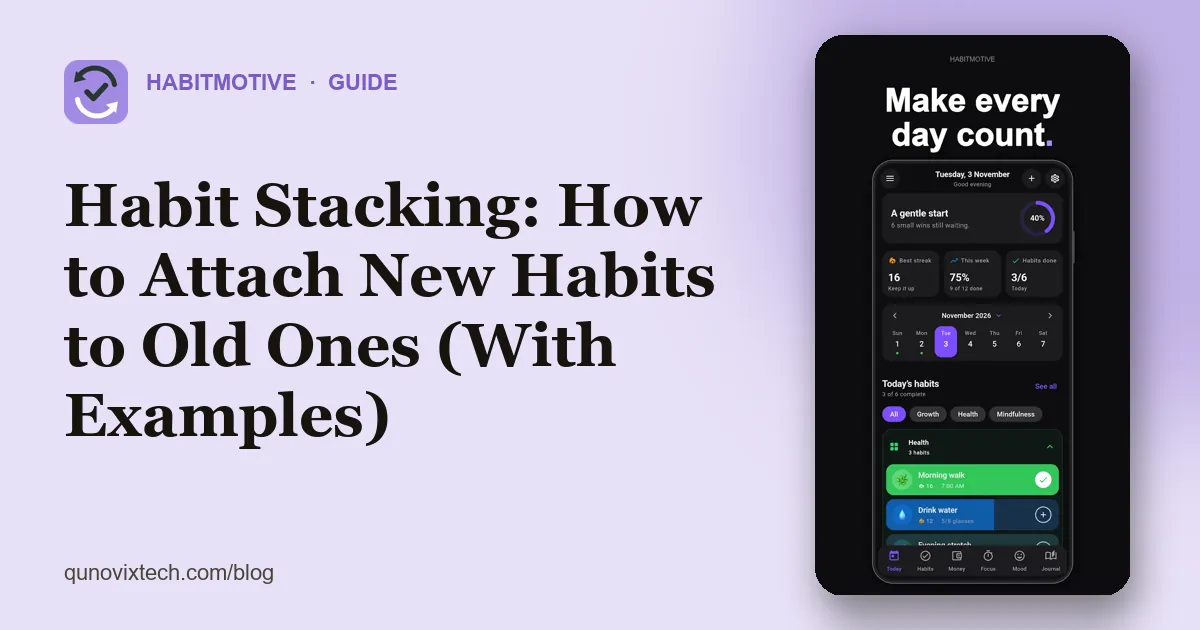
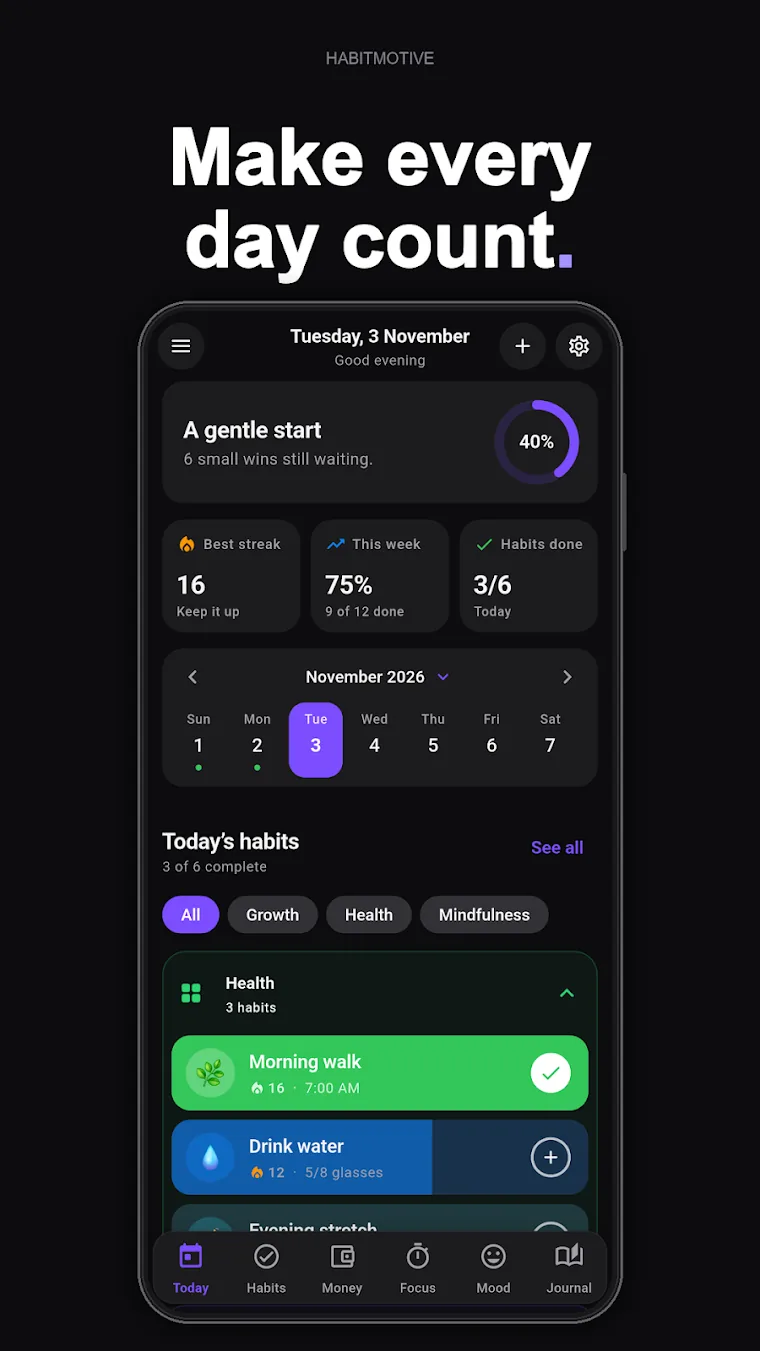
HabitMotive shows habits and tasks together in a Today view, with reminders and flexible schedules. Order habits by your routine so your stack is right in front of you. For the bigger picture, see how to build a habit and morning routine ideas.
Key takeaways
- Formula: "After I [current habit], I will [new habit]."
- Choose anchors you do daily, in the right time and place.
- Keep new habits tiny and add one link at a time.
- Track your stack so you can see it working.
Frequently asked questions
What is habit stacking?
Linking a new habit to an existing one, using the formula "After I [current habit], I will [new habit]."
Who created habit stacking?
The idea draws on research into implementation intentions and was popularised by BJ Fogg and James Clear.
How many habits can I stack?
Start with one. Once it's automatic, add another. Short stacks are more reliable.
What makes a good anchor habit?
Something you already do every day, at a consistent time and place.

We're an independent app studio in Pune, India. We build HabitMotive: Habit Tracker and write these guides from what we learn making it and from the questions our users send us. Spotted an error? Email qunovixtechnologies@gmail.com.