How to Play Block Puzzle Games: Rules and Basics for Beginners
New to block puzzles? Learn the basic rules: placing pieces, clearing rows and columns, how scoring and combos work, and when the game ends, with beginner tips.
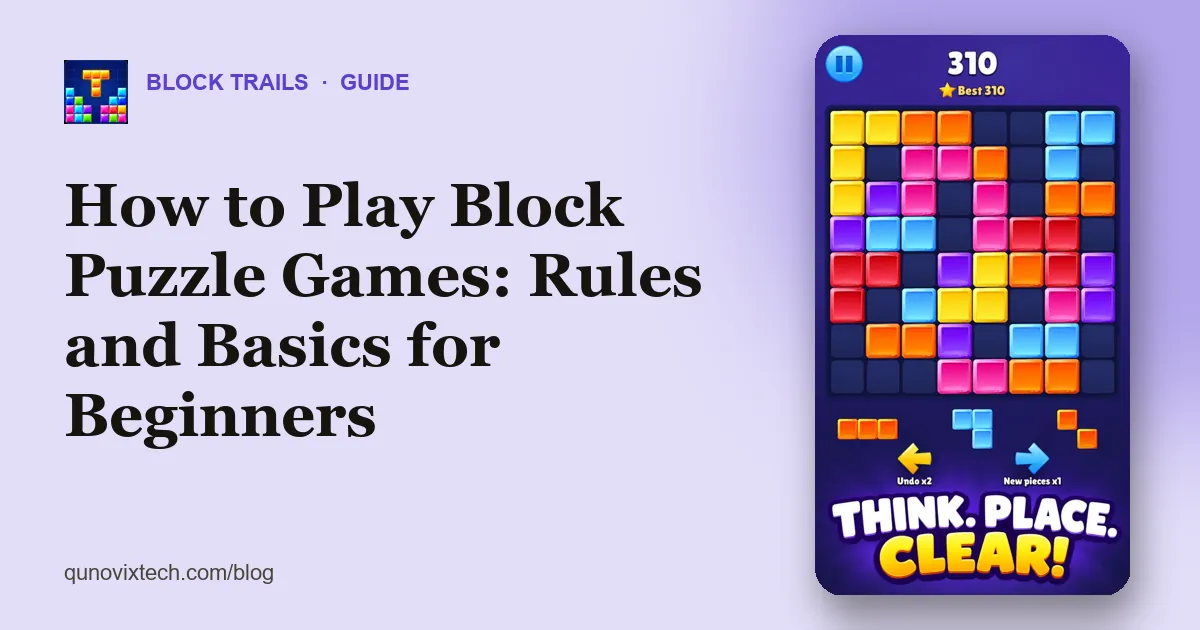
- The basic rules of 8×8 block puzzle games
- How clearing, scoring and combos work
- Five beginner mistakes and how to avoid them
Block puzzle games are among the most popular casual games on phones. They're easy to learn, need no timer, and a single game can last two minutes or twenty. Here's everything you need to know to start.
The board
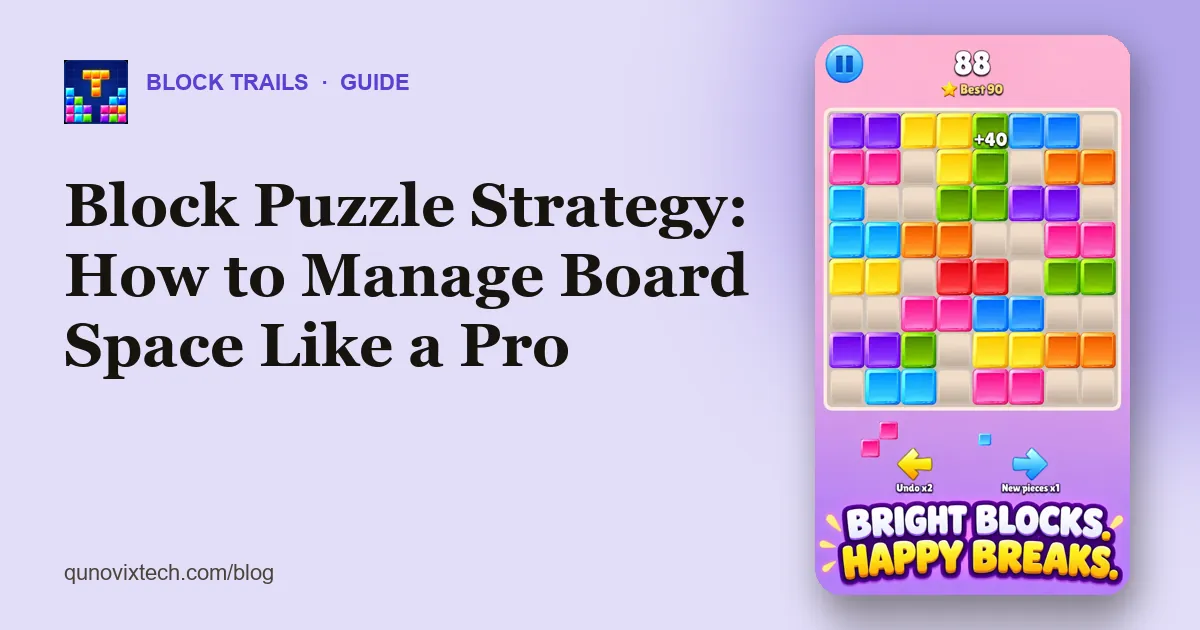
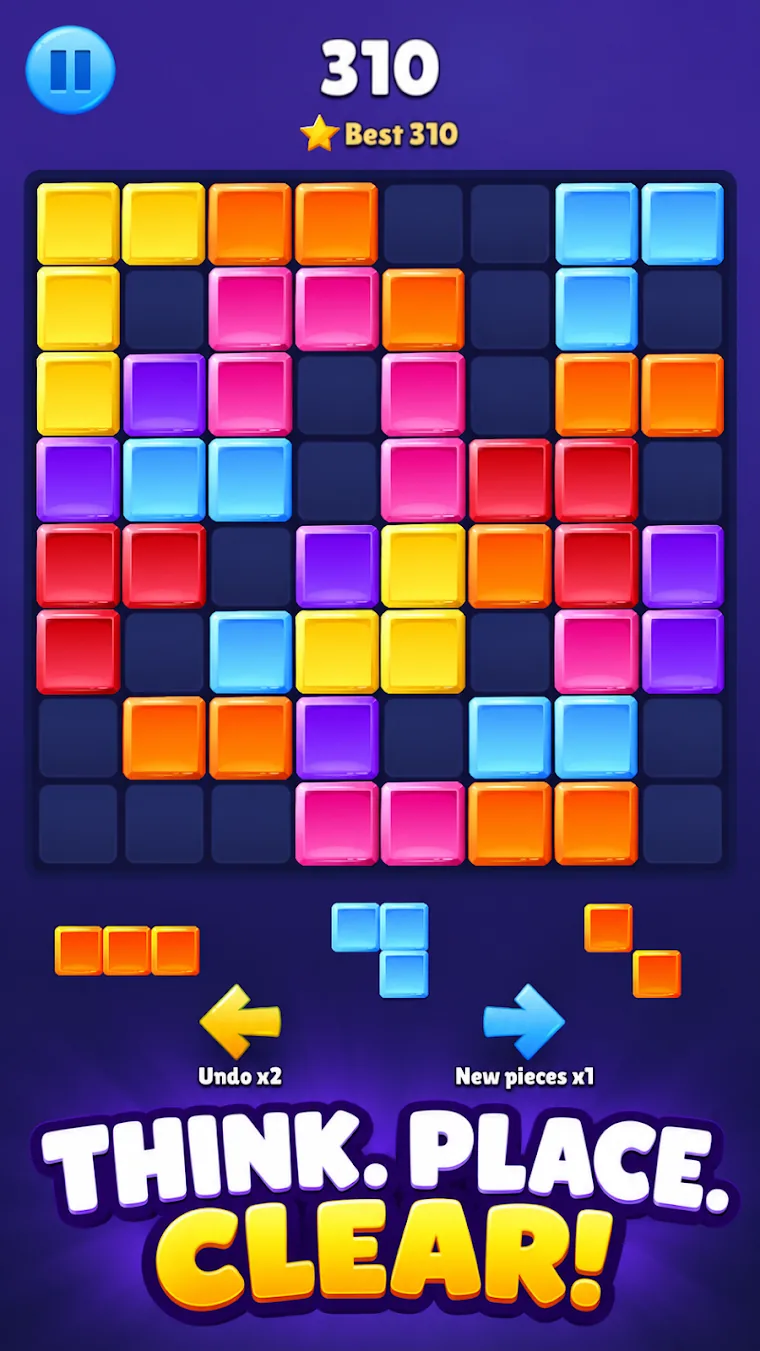
Most block puzzles use a square grid. Block Trails uses an 8×8 board: 64 cells that start empty in Classic mode.
The pieces
At the bottom of the screen is a tray, usually with three pieces at a time. Pieces are made of square blocks in different shapes:
- Single blocks and short lines.
- Long lines of four or five blocks.
- Squares, such as 2×2 and 3×3.
- L-shapes and corner shapes.
Pieces usually can't be rotated, so you place them exactly as they appear.
The basic rules
- Drag a piece onto the board. Drop it anywhere it fits without overlapping other blocks.
- Place all pieces in the tray. When the tray is empty, a new set appears.
- Fill a row or column to clear it. A complete horizontal row or vertical column disappears, freeing space.
- Clear multiple lines at once for more points. Completing several lines in one move scores more.
- The game ends when no piece fits. If none of the pieces in your tray can be placed anywhere, the game is over.
How scoring works
Exact scoring varies by game, but generally:
- You earn points for each block placed.
- You earn bonus points for each line cleared.
- Clearing several lines at once gives extra points.
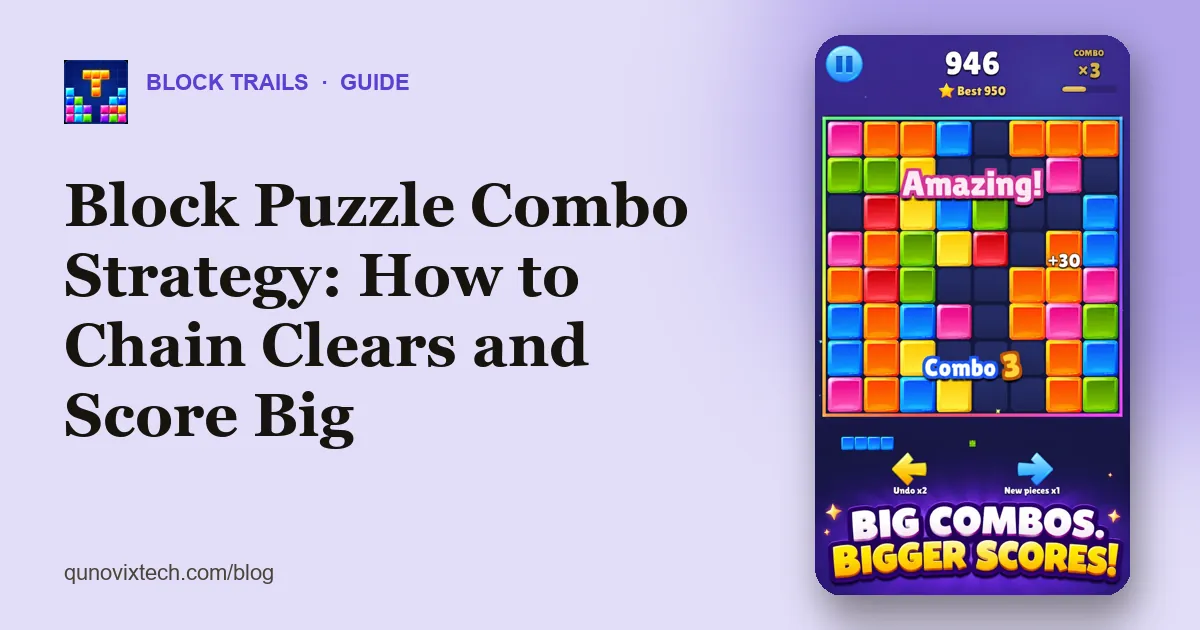
- Clearing lines on consecutive moves builds a combo, which multiplies your score.
- In some games, clearing the whole board gives a special bonus. In Block Trails it's called a Perfect Clear.
Game modes you'll often find
| Mode | How it works |
|---|---|
| Classic / endless | Play until no piece fits; chase your high score |
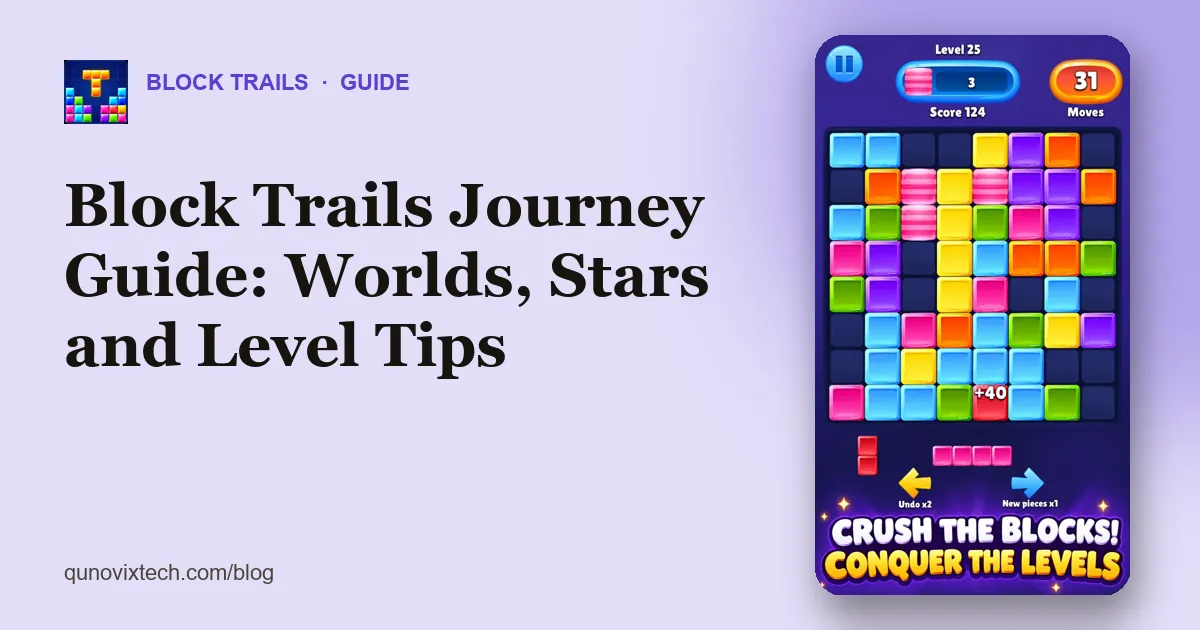
| Levels / journey | Complete goals within a number of moves; earn stars |
| Daily challenge | One new puzzle every day, the same for everyone |
Block Trails includes all three: Classic, a 1,000-level Journey across five worlds and a Daily Challenge.
Five beginner mistakes
- Placing pieces in the middle. It splits the board into awkward spaces. Start from the edges.
- Ignoring the rest of the tray. Always check where all three pieces will go.
- Leaving single holes. One-cell gaps are hard to fill.
- Waiting too long to clear. A crowded board ends games quickly.
- Playing too fast. There's usually no timer, so take your time.
For more, read our 12 block puzzle tips.
Why people love block puzzles
They're quick to pick up, satisfying to play and easy to put down. There's no time pressure, and every game is a fresh puzzle. Many people play to unwind for a few minutes (see relaxing puzzle games).
Key takeaways
- Place pieces from your tray onto the grid. Fill full rows or columns to clear them.
- Pieces usually can't be rotated, so plan around their exact shape.
- Multi-line clears and combos score extra points.
- The game ends when no piece in your tray fits on the board.
Frequently asked questions
Can you rotate pieces in block puzzle games?
In most block puzzles, including Block Trails, pieces can't be rotated. You place them as they appear.
When does a block puzzle game end?
When none of the pieces in your tray can fit anywhere on the board.
Are block puzzles the same as Tetris?
No. In block puzzles, pieces don't fall. You place them anywhere on the board and clear both rows and columns. See block puzzle vs falling-block games.
Do block puzzle games need the internet?
Many don't. Block Trails plays fully offline.

We're an independent app studio in Pune, India. We build Block Trails: Block Puzzle and write these guides from what we learn making it and from the questions our users send us. Spotted an error? Email qunovixtechnologies@gmail.com.