Phonics for Kids: A Simple Guide for Parents
Phonics helps children read by linking letters to sounds. Learn how phonics works, which sounds to teach first, blending tips and easy activities at home.
- What phonics is and why schools use it
- Which sounds to teach first and how to blend them
- Easy phonics activities you can do at home
Phonics is the method many schools use to teach children to read. It teaches the sounds that letters make and how to blend those sounds into words. Parents can support it at home with simple, playful activities.
What is phonics?
Phonics links letters (graphemes) to sounds (phonemes). Instead of memorising whole words, children learn that c-a-t makes the sounds "k-a-t", which blend to make "cat". This lets them read words they've never seen.
Systematic phonics is widely recommended for early reading instruction, including in national curricula such as England's.
Key phonics terms
| Term | Meaning | Example |
|---|---|---|
| Phoneme | A single sound | /k/ in "cat" |
| Grapheme | Letters that represent a sound | "sh" in "ship" |
| Blending | Joining sounds to read a word | s-u-n → sun |
| Segmenting | Splitting a word into sounds to spell it | dog → d-o-g |
| Digraph | Two letters, one sound | sh, ch, th, ee |
Which sounds to teach first
Many phonics programmes start with letters that make lots of simple words quickly. One common starting set is s, a, t, p, i, n, which makes words like:
- sat, pat, tap, nap, pin, tin, sip, pan, ant
After these, programmes add more single letters, then digraphs like sh, ch, th and ng, and later long vowel sounds like ai, ee and oa.
How to teach blending
- Say each sound clearly. Short and crisp: "s", not "suh".
- Point to each letter as you say the sound.
- Say the sounds faster. "s-u-n… s-un… sun!"
- Ask your child to try. Start with three-letter words.
- Celebrate success. Then try another word with the same letters.
Common mistakes
- Adding "uh" to sounds. "Muh" instead of "mmm" makes blending harder. Keep sounds pure.
- Moving too fast. Master a few sounds before adding more.
- Teaching names only. Letter names help with the alphabet song, but sounds are what help with reading.
Easy phonics activities at home
| Activity | How it works |
|---|---|
| I spy | "I spy something beginning with sss…" |
| Sound hunts | Find objects starting with today's sound |
| Magnetic letters | Build and change simple words: cat → hat → hot |
| Sound buttons | Draw dots under each sound in a word and touch as you say them |
| Rhyming games | "What rhymes with cat?" |
How apps can support phonics
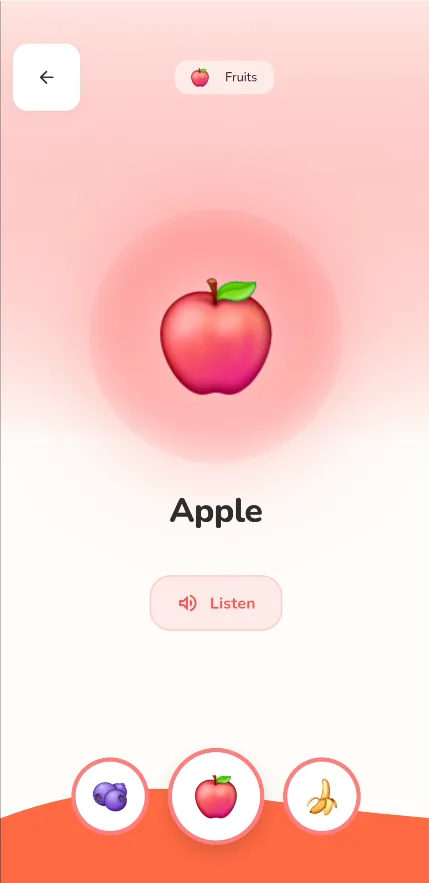
Apps where children tap a picture and hear the word clearly, like KidsEnglish, help build vocabulary and listening skills. Pair them with hands-on phonics activities and reading together.
For more early-reading ideas, see how to teach the alphabet to toddlers and first English words for kids.
Key takeaways
- Phonics teaches the sounds letters make and how to blend them into words.
- Start with a small set like s, a, t, p, i, n, then build up.
- Keep sounds short and pure, and practise blending three-letter words.
- Use games like I spy, sound hunts and magnetic letters at home.
Frequently asked questions
What age should children start phonics?
Many children start phonics around age 4 or 5 at school, with playful sound games beforehand.
What are the first phonics sounds to teach?
Many programmes begin with s, a, t, p, i, n because they make many simple words.
What is the difference between phonics and the alphabet?
The alphabet teaches letter names and order. Phonics teaches the sounds letters make and how to blend them.
How can I help my child with phonics at home?
Play sound games, practise blending simple words and read together every day.

We're an independent app studio in Pune, India. We build Kids English and write these guides from what we learn making it and from the questions our users send us. Spotted an error? Email qunovixtechnologies@gmail.com.