How to Teach the Alphabet to Toddlers: 12 Fun, Simple Ideas
Teaching the ABCs doesn't need flashcard drills. Try 12 playful ways to teach the alphabet to toddlers and preschoolers, plus what to expect at each age.
- When children are typically ready to learn letters
- Twelve playful activities for learning the ABCs
- How to combine letter names with letter sounds
Children learn the alphabet best through play, repetition and everyday moments, not long drills. Here are 12 simple, fun ways to teach the ABCs at home, and what's realistic at each age.
When are children ready?
Every child is different, but a rough guide:
| Age | What's common |
|---|---|
| 2 years | Enjoys alphabet songs, may recognise a few letters (often from their name) |
| 3 years | Recognises more letters, starts linking some letters to sounds |
| 4 years | Knows many letter names, more letter sounds, may try writing some letters |
| 5 years | Knows most letters and sounds, starting to blend sounds into words |
Don't worry if your child is earlier or later. Interest and enjoyment matter more than speed.
12 ways to teach the alphabet
1. Sing the alphabet song
Songs make sequences easy to remember. Sing slowly and point to letters as you go.
2. Start with their name
The letters in a child's own name are the most meaningful. Point them out on toys, labels and books.
3. Letter of the week
Focus on one letter. Find things that start with it around the house: B for ball, banana, book.
4. Pair letters with pictures
"A for apple, B for ball." Pictures help children connect letters to words they know.
5. Teach sounds, not just names
The letter B is called "bee" but sounds like "buh". Knowing letter sounds is what helps children read later. See phonics for kids.
6. Letter hunts
Look for letters on shop signs, cereal boxes and car number plates.
7. Build letters with your hands
Make letters from playdough, sticks, blocks or your bodies. Touch and movement help memory.
8. Trace letters in sand or rice
A tray of sand, rice or salt is a mess-friendly way to practise shapes.
9. Alphabet puzzles
Wooden letter puzzles and matching games build recognition.
10. Read alphabet books
Picture books with one letter per page are perfect for bedtime.
11. Colour and draw letters
Colouring letters builds recognition and fine motor skills (see benefits of colouring).
12. Use a learning app, together
Short sessions with an app where children tap a letter or picture and hear the word can add variety, especially when you play together.
How to teach a letter step by step
- Show the letter. Uppercase and lowercase together.
- Say its name and sound. "This is B. It says buh."
- Find a familiar word. "B for ball."
- Make it physical. Trace it, build it or draw it.
- Spot it in the world. Look for it during the day.
- Revisit tomorrow. Repetition across days builds memory.
Keep it fun
- Short sessions of 5–10 minutes are plenty for young children.
- Stop while they're still enjoying it.
- Praise effort: "You found the B!"
- Avoid pressure or comparing with other children.
How KidsEnglish helps
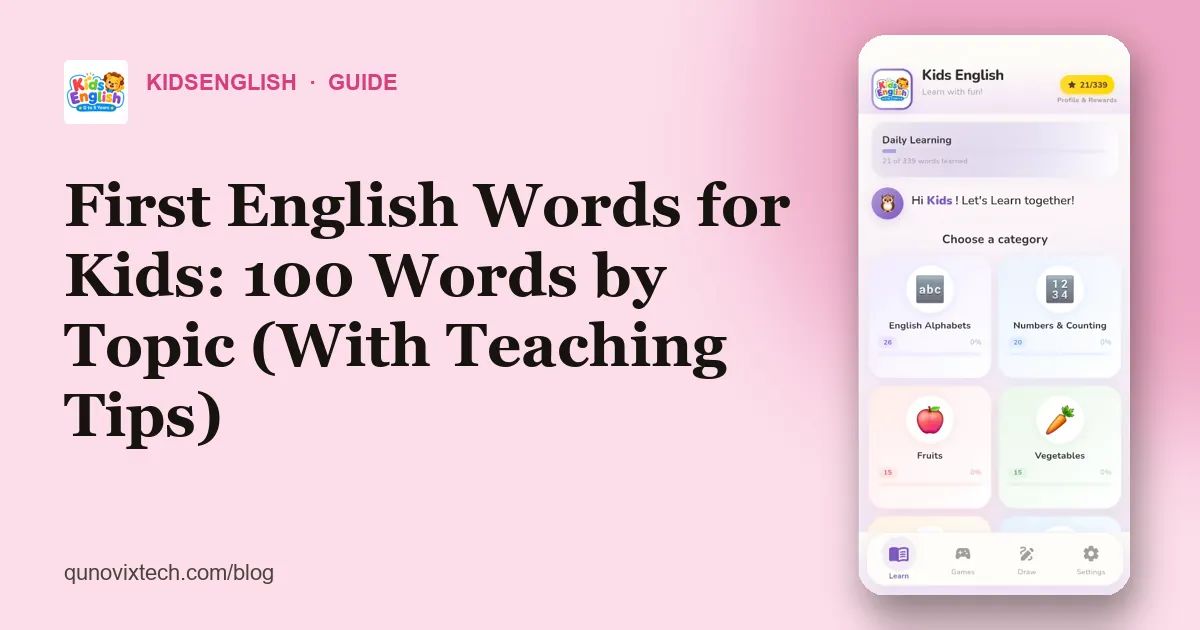
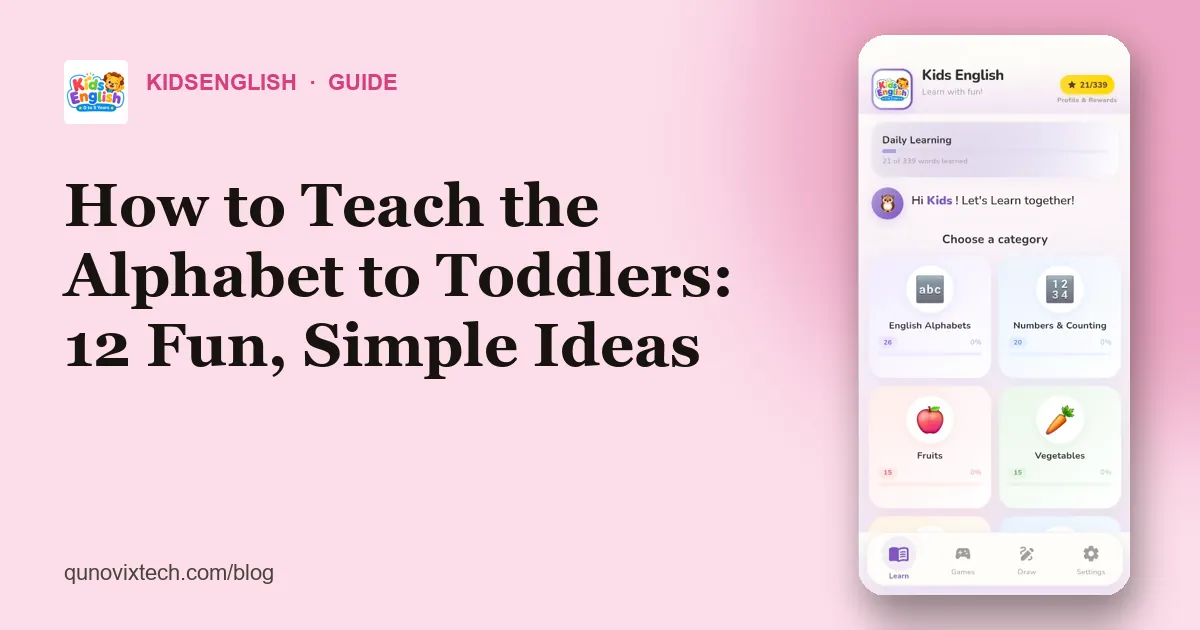
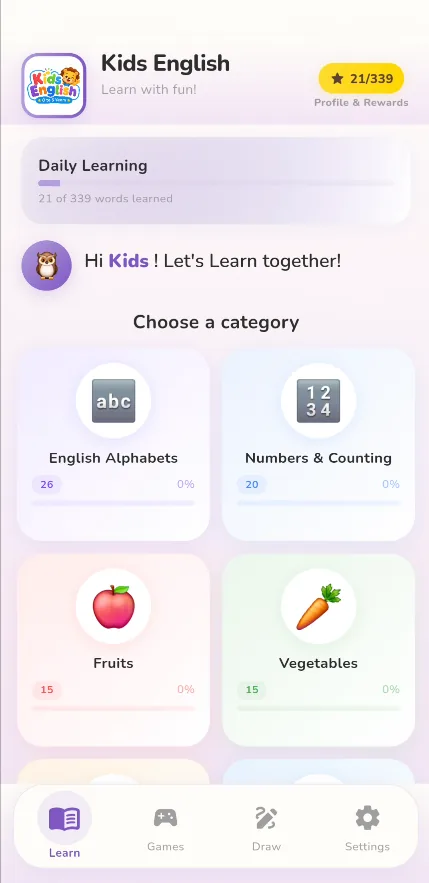
KidsEnglish includes an English alphabet category where children tap pictures to hear words, plus games, drawing and colouring. Combine short app sessions with the hands-on ideas above, and keep an eye on screen time guidelines.
Key takeaways
- Teach through songs, play and everyday moments, not drills.
- Start with the letters in your child's name.
- Teach letter sounds alongside letter names.
- Keep sessions short, playful and pressure-free.
Frequently asked questions
At what age should a child know the alphabet?
Many children know most letters by around age 4 or 5, but there's a wide normal range.
Should I teach uppercase or lowercase first?
Many parents start with uppercase because the shapes are simpler, but showing both together is fine. Most text uses lowercase.
Should I teach letter names or letter sounds?
Both. Letter sounds are especially important for learning to read.
How long should alphabet practice be?
Five to ten minutes is enough for toddlers and preschoolers. Short, frequent sessions work best.

We're an independent app studio in Pune, India. We build Kids English and write these guides from what we learn making it and from the questions our users send us. Spotted an error? Email qunovixtechnologies@gmail.com.