First English Words for Kids: 100 Words by Topic (With Teaching Tips)
100 first English words for young children, grouped by topic such as family, food, animals, body and colours, with tips for teaching them through play.
- 100 useful first English words grouped by topic
- How to teach new words through daily routines
- Simple games that make new words stick
Whether English is your child's first language or a second one, a strong set of everyday words is the foundation for speaking, reading and confidence. Here are 100 first English words grouped by topic, with tips for teaching them.
Family and people
mother, father, baby, brother, sister, grandma, grandpa, friend, teacher, boy, girl
Body parts
head, eyes, ears, nose, mouth, hands, feet, hair, teeth, tummy
Food and drink
milk, water, apple, banana, mango, rice, bread, egg, juice, biscuit
Fruits and vegetables
orange, grapes, carrot, tomato, potato, onion, peas
Animals
cat, dog, cow, horse, elephant, lion, monkey, fish, duck, hen
Birds and insects
bird, parrot, crow, butterfly, bee, ant
Colours
red, blue, yellow, green, black, white, pink, orange
See teaching colours and shapes for activities.
At home
bed, chair, table, door, window, cup, plate, spoon, ball, book
Clothes
shirt, shoes, socks, cap, dress
Transport
car, bus, train, bike, aeroplane, boat
Action words
eat, drink, sleep, go, come, play, run, jump, sit, look
Describing words
big, small, hot, cold, happy, sad
Social words
hello, bye, please, thank you, sorry, yes, no
How to teach new words
- Name things during routines. "Here's your spoon. Spoon!" at every meal.
- Point and pause. Point to an object and wait for your child to try the word.
- Repeat in different places. A ball at home, in the park, in a book.
- Use pictures. Picture books and flashcards connect words to images.
- Expand what they say. Child: "Car!" You: "Yes, a red car!"
- Celebrate attempts. Praise effort, even if pronunciation isn't perfect.
Games that make words stick
| Game | How to play |
|---|---|
| What's in the bag? | Hide objects in a bag; your child pulls one out and names it |
| Simon says | "Simon says touch your nose" teaches body parts |
| Picture match | Match pictures to real objects around the house |
| Animal sounds | "What does the cow say?" |
| I spy colours | "I spy something red" |
More ideas: English learning games at home.
Learning with KidsEnglish
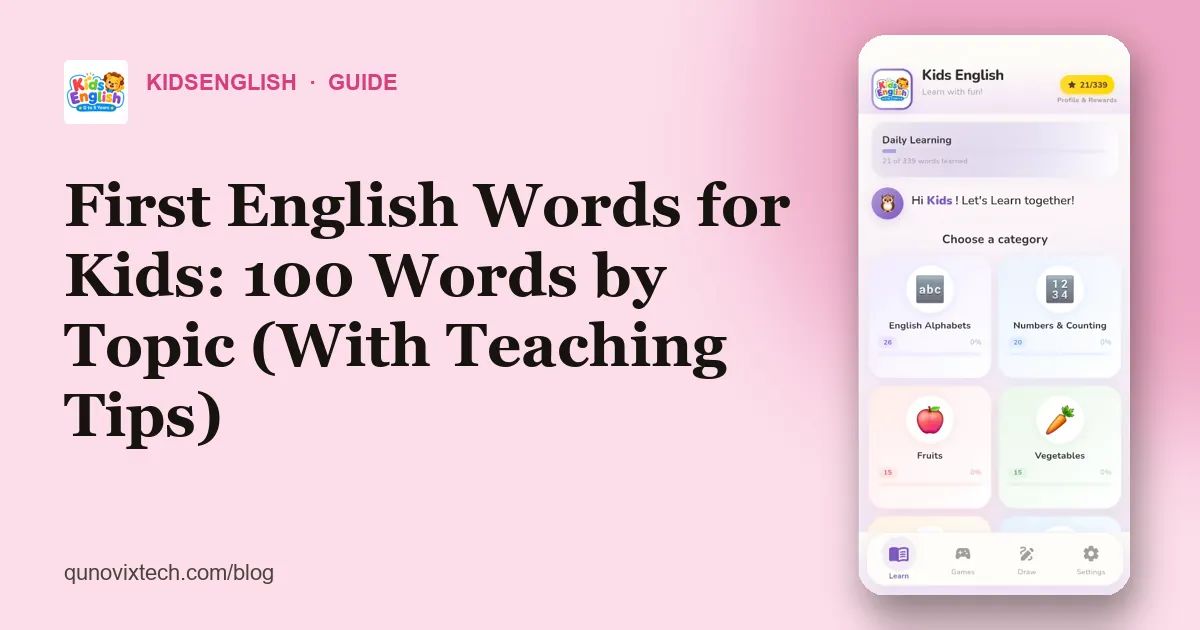
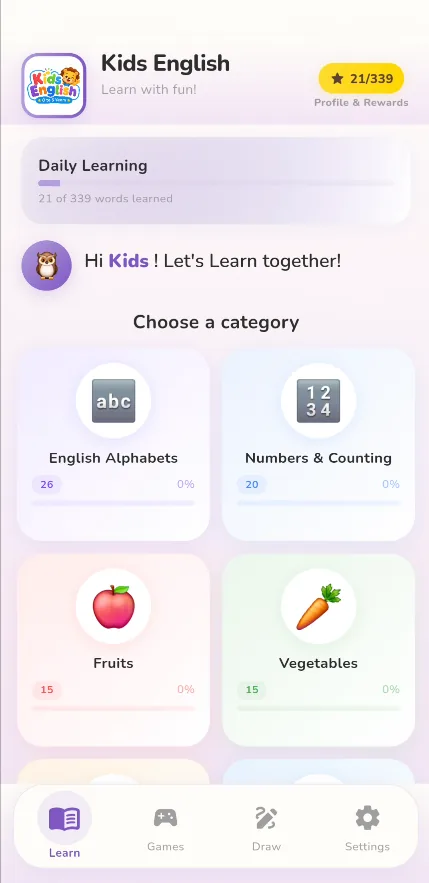
KidsEnglish organises words into categories like fruits, vegetables, animals, birds, insects, colours, shapes, body parts, transport, festivals and jobs. Children tap a picture to hear the word and see their progress grow. Use short sessions together, then find the same words in real life.
Bilingual families
If your child is learning English alongside another language, that's a strength, not a problem. See raising bilingual children.
Key takeaways
- Start with words from your child's daily life: family, food, body, toys.
- Teach through routines, pictures and repetition in different places.
- Expand on what your child says and celebrate every attempt.
- Use games and short app sessions together to make words stick.
Frequently asked questions
What are the first words to teach a child in English?
Words from everyday life: family names, food, body parts, animals, toys and social words like hello and thank you.
How many words should a 2-year-old know?
There's a wide range. Many 2-year-olds use around 50 words or more and are starting to combine two words, but children vary. Talk to a doctor if you're concerned.
How do I teach English words to my toddler?
Name objects during daily routines, use pictures and books, repeat words often and play simple naming games.
Should I use flashcards?
Flashcards can help, but words learned through play and real objects tend to stick better.

We're an independent app studio in Pune, India. We build Kids English and write these guides from what we learn making it and from the questions our users send us. Spotted an error? Email qunovixtechnologies@gmail.com.