What Is Spatial Reasoning? Puzzles That Put It to Work
Spatial reasoning helps you picture shapes, directions and movement. Learn what it is, where it's used in daily life and which puzzles give it a workout.
- What spatial reasoning means in plain English
- Where you use it every day
- Puzzle types that use spatial thinking, and what research says about practice
Spatial reasoning is the ability to think about objects in space: their shapes, positions, directions and how they move. You use it when you park a car, pack a suitcase, follow a map or assemble furniture. Many puzzle games use it constantly.
What is spatial reasoning?
Spatial reasoning includes several related skills:
| Skill | Example |
|---|---|
| Visualisation | Picturing how a shape looks when rotated |
| Spatial orientation | Knowing which way you're facing on a map |
| Spatial relations | Seeing how objects relate to each other |
| Mental movement | Predicting where something will end up |
Where you use it every day
- Parking and reversing a car.
- Loading a dishwasher or packing a bag.
- Reading maps and following directions.
- Arranging furniture in a room.
- Many jobs, from engineering and design to surgery and carpentry.
Puzzles that use spatial reasoning
Arrow puzzles
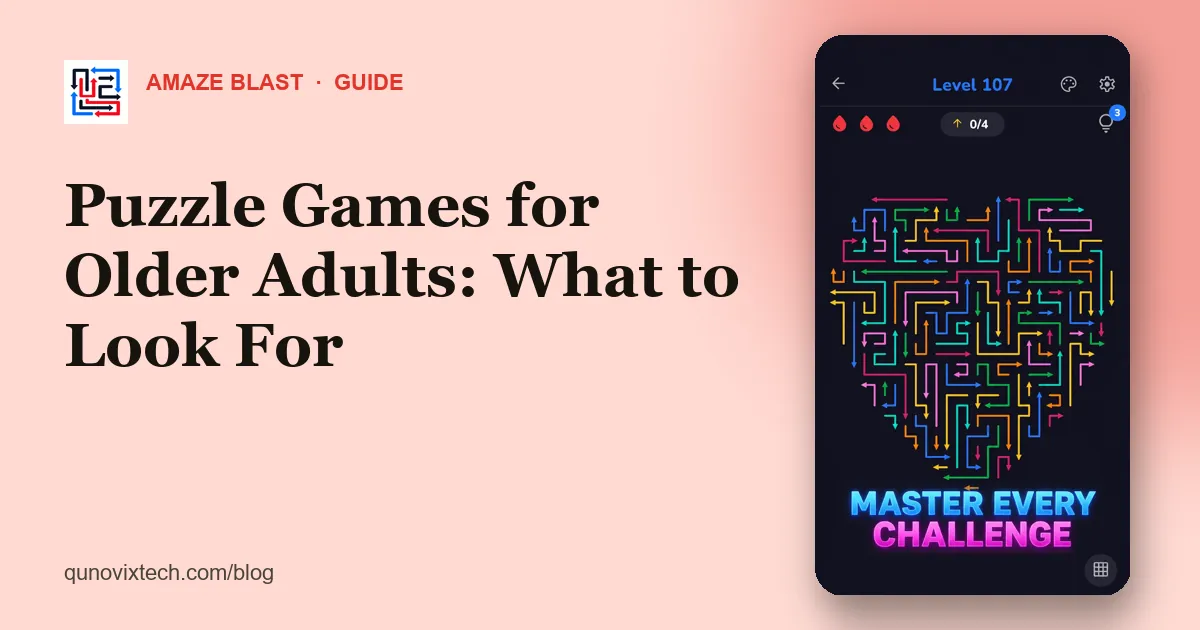
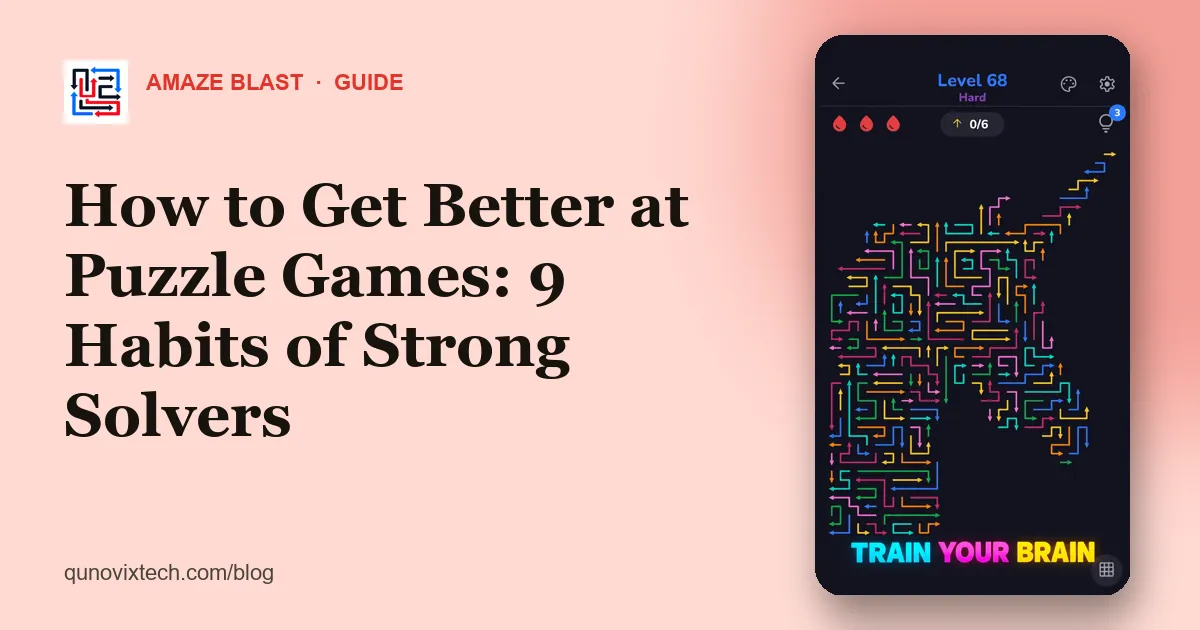
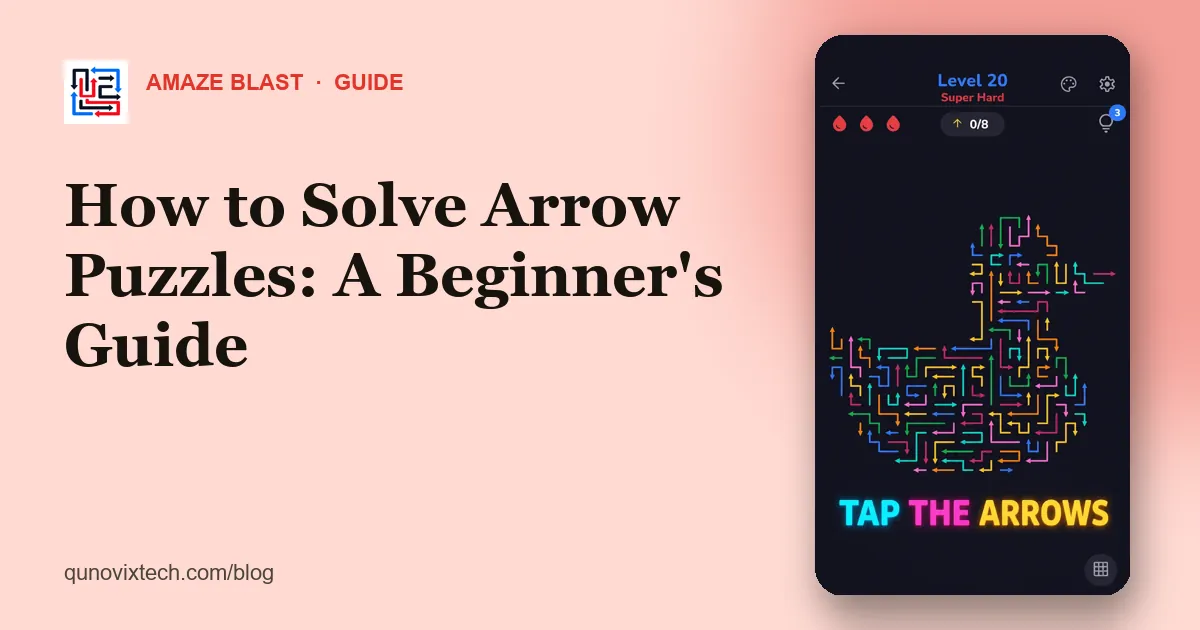
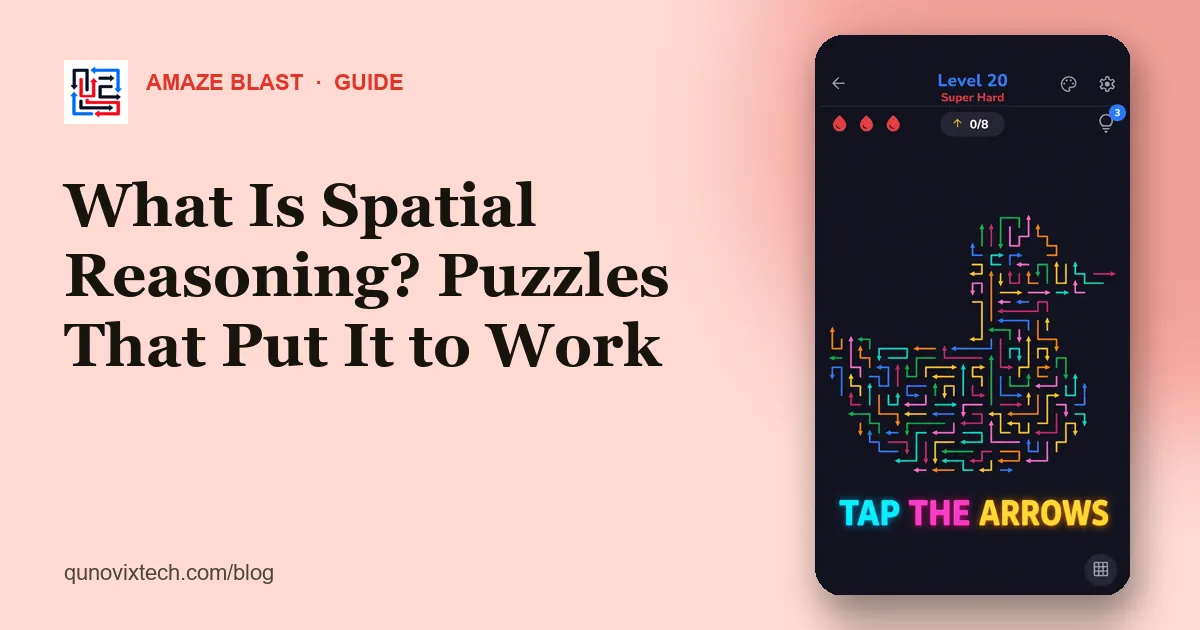
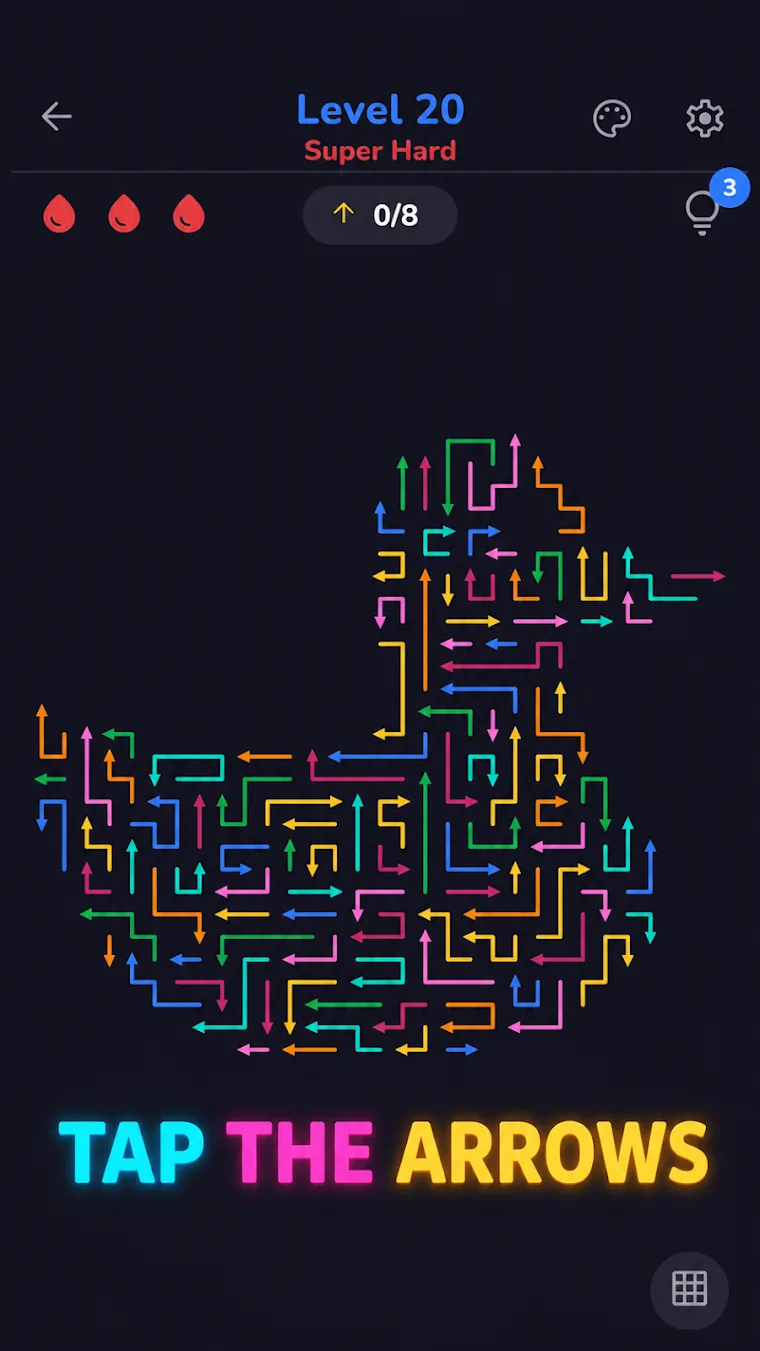
You trace each arrow's path across the board and predict whether it will escape or collide. That's mental movement and spatial relations working together. See how to solve arrow puzzles.
Block puzzles
Fitting shapes into the space available is classic spatial visualisation. See how to play block puzzle.
Jigsaw and tangram puzzles
Matching shapes and edges uses visualisation and spatial relations.
Sliding puzzles
Moving tiles to reach a target arrangement requires planning movement several steps ahead.
Can spatial skills be improved?
Research suggests that spatial skills can improve with practice. A 2013 meta-analysis by Uttal and colleagues, which reviewed over 200 studies, found that spatial training produced meaningful improvements that lasted over time and showed some transfer to related spatial tasks.
That doesn't mean any single game will transform your abilities. But practising spatial tasks, including puzzles, model-building, drawing and sports, can help build these skills.
How to give spatial reasoning a workout
- Play visual puzzles regularly. Arrow, block and jigsaw puzzles are good options.
- Plan before you move. Picture the result before tapping or placing.
- Try physical puzzles too. Building sets, origami and model kits use similar skills.
- Use maps without GPS sometimes. Navigating by map practises orientation.
- Draw. Sketching objects from different angles trains visualisation.
Key takeaways
- Spatial reasoning is thinking about shapes, positions, directions and movement.
- You use it daily, from parking to packing to following maps.
- Arrow, block, jigsaw and sliding puzzles all use spatial thinking.
- Research suggests spatial skills can improve with practice.
Frequently asked questions
What is an example of spatial reasoning?
Picturing whether a sofa will fit through a doorway, or predicting where an arrow will slide on a puzzle board.
Can you improve spatial reasoning?
Studies suggest spatial skills can improve with practice, including through training tasks and activities.
Which games are good for spatial reasoning?
Arrow puzzles, block puzzles, jigsaws, tangrams and sliding puzzles all use spatial thinking.
Is spatial reasoning important?
Yes. It's used in many everyday tasks and in fields like engineering, architecture, design and medicine.

We're an independent app studio in Pune, India. We build Amaze Blast: Arrow Puzzle and write these guides from what we learn making it and from the questions our users send us. Spotted an error? Email qunovixtechnologies@gmail.com.