8 Benefits of Colouring for Kids (and How to Make the Most of It)
Colouring is more than a quiet activity. Discover eight benefits of colouring for children, from fine motor skills and focus to language and creativity.
- How colouring supports fine motor skills and pencil grip
- How it can build focus, creativity and vocabulary
- Tips for getting more learning from colouring time
Colouring is a favourite activity for many children, and a welcome quiet moment for parents. It's also good for development in several ways.
1. Fine motor skills
Holding a crayon and controlling its movement strengthens the small muscles in the hands and fingers. These are the same skills children need for writing, buttoning clothes and using cutlery.
2. Pencil grip
Colouring with crayons and pencils gives children lots of practice holding a writing tool, which helps them develop a comfortable grip over time.
3. Hand–eye coordination
Staying near the lines, or at least trying to, links what children see with how their hands move.
4. Focus and patience
Finishing a picture takes attention. Colouring can gradually build the ability to stay with a task.
5. Colour recognition
Choosing and naming colours reinforces colour words (see teaching colours and shapes).
6. Creativity and self-expression
There's no wrong colour for a sky or an elephant. Children make choices and express ideas.
7. Language and conversation
Talking about a picture builds vocabulary: "What colour is the whale? Where does it live?"
8. Calm and relaxation
Many children find colouring soothing, especially during wind-down times of the day.
Make the most of colouring time
- Offer different tools. Thick crayons for toddlers, pencils and markers for older children.
- Choose age-appropriate pages. Big simple shapes for little ones, more detail as skills grow.
- Talk while they colour. Name colours, objects and actions.
- Don't insist on staying inside the lines. Control develops with age.
- Mix free drawing with colouring pages. Both are valuable.
- Display their work. It builds pride and confidence.
Paper vs digital colouring
| Paper | Digital |
|---|---|
| Builds pencil grip and hand strength | Quick, no mess, easy to restart |
| Physical, tactile experience | Lots of pages in one place |
| No screen time | Counts towards screen time |
Both have a place. Paper is especially important for developing grip and hand strength, while digital colouring is handy when travelling or when you want a mess-free option.
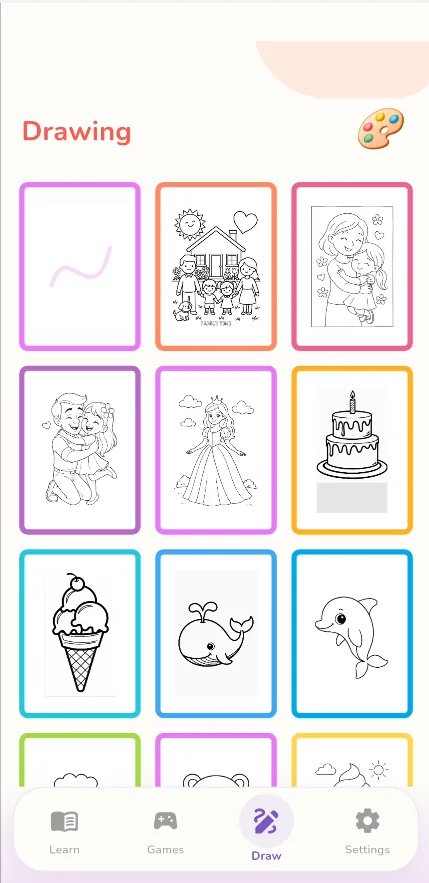
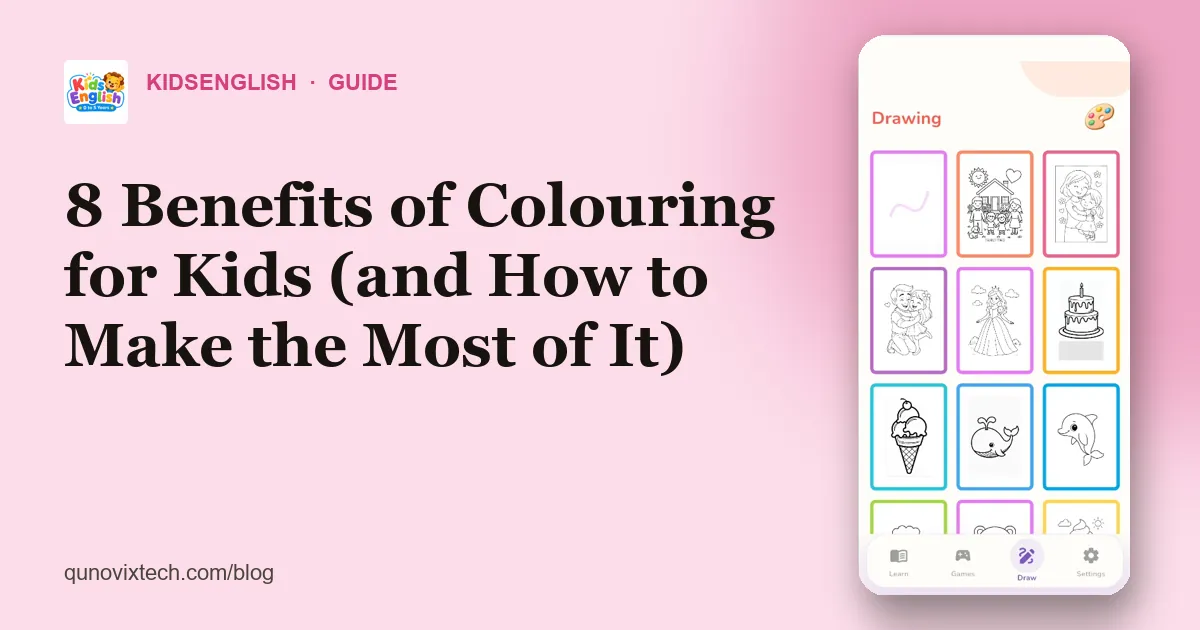
KidsEnglish includes drawing and colouring pages alongside its word categories, so children can colour the animals and objects they've just learned. Balance digital colouring with crayons and paper, and keep an eye on screen time guidelines.
Key takeaways
- Colouring builds fine motor skills, grip and hand–eye coordination.
- It also supports focus, colour recognition, creativity and language.
- Talk while children colour and offer a variety of tools.
- Mix paper and digital colouring, favouring paper for hand strength.
Frequently asked questions
At what age can children start colouring?
Many children start scribbling with chunky crayons from around 12–18 months.
Is colouring good for handwriting?
It builds the fine motor skills and grip that support handwriting later.
Should children colour inside the lines?
Not necessarily. Control develops gradually. Encourage effort and creativity over neatness.
Is digital colouring as good as paper?
Both have benefits, but paper colouring is better for building grip and hand strength.

We're an independent app studio in Pune, India. We build Kids English and write these guides from what we learn making it and from the questions our users send us. Spotted an error? Email qunovixtechnologies@gmail.com.