How to Teach Numbers and Counting to Preschoolers
Help your child learn numbers and counting through play. Understand the stages from rote counting to number sense, with easy activities for ages 2 to 5.
- The difference between reciting numbers and real counting
- Stages of early number learning from 2 to 5
- Playful activities for counting at home
Many toddlers can "count" to ten in a sing-song voice long before they understand what numbers mean. Real counting develops in stages. Knowing those stages helps you support your child at the right level.
The stages of early counting
| Stage | What it looks like | Typical age |
|---|---|---|
| Rote counting | Reciting "1, 2, 3…" like a song | 2–3 years |
| One-to-one correspondence | Touching one object per number | 3–4 years |
| Cardinality | Knowing the last number counted is "how many" | 3–4 years |
| Number recognition | Recognising written numerals | 3–5 years |
| Simple adding and taking away | "2 apples and 1 more makes 3" | 4–5 years |
Ages vary. These skills develop gradually, often overlapping.
Counting activities by stage
Rote counting
- Counting songs and rhymes.
- Count steps as you climb stairs.
- Count down for fun: "3, 2, 1, go!"
One-to-one correspondence
- Count toys as you put them away, touching each one.
- Set the table: one plate for each person.
- Count fingers and toes slowly.
Cardinality ("how many?")
- After counting, ask "So how many are there?"
- Line up 5 cars, count them, then ask how many.
- Use small groups (1–5) before larger ones.
Number recognition
- Point out numbers on clocks, lifts, buses and house doors.
- Match numeral cards to groups of objects.
- Play hopscotch with numbers.
Early adding and taking away
- "You have 3 biscuits. If I give you 1 more, how many now?"
- Use fingers or toys to show the change.
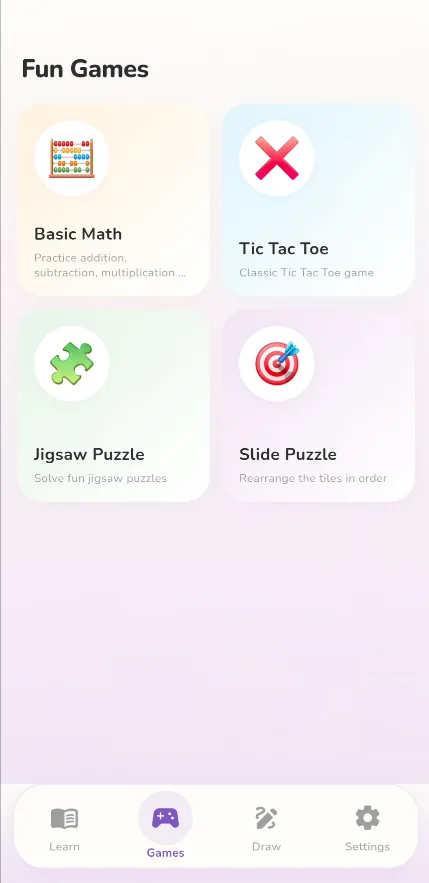
- Simple maths games, like those in KidsEnglish.
Everyday counting moments
- Cooking: "We need 2 tomatoes."
- Shopping: "Let's pick 4 bananas."
- Getting dressed: "One sock, two socks."
- Playtime: count jumps, claps or blocks in a tower.
- Walks: count red cars, birds or trees.
Tips
- Use real objects first. Physical counting comes before abstract numbers.
- Go slowly. Touch and count one object at a time.
- Start small. Master 1–5 before 1–10.
- Make mistakes together. "Did I count right? Let's check!"
- Praise the strategy. "You touched each one, great counting!"
Numbers in English and home languages
In bilingual homes, children may count in more than one language. That's fine. Counting skills transfer between languages. See raising bilingual children.
Key takeaways
- Reciting numbers comes before understanding them.
- Build one-to-one counting and "how many" with real objects.
- Use everyday moments: cooking, shopping, walks and tidying up.
- Start with small numbers and progress gradually.
Frequently asked questions
At what age should a child count to 10?
Many children can recite numbers to 10 around age 3, but counting objects accurately often develops between 3 and 4.
How do I teach my child to count objects?
Touch each object as you say the number, then ask "how many?" at the end.
When should children recognise written numbers?
Many children start recognising numerals between 3 and 5 years.
Are counting apps useful?
Short, interactive sessions can support counting, especially when combined with real objects and play.

We're an independent app studio in Pune, India. We build Kids English and write these guides from what we learn making it and from the questions our users send us. Spotted an error? Email qunovixtechnologies@gmail.com.