Raising Bilingual Kids: Teaching English Alongside Your Home Language
Many children grow up with two or more languages. Learn bilingual approaches, myths about language delay and tips for teaching English alongside your own.
- Common myths about bilingual children, and what research says
- Practical approaches like one parent, one language
- Everyday ways to add English without losing your home language
In India and many other countries, children grow up surrounded by several languages: a home language, a regional language, Hindi and English. Parents often wonder whether this confuses children or slows them down. The research is reassuring.
Myths and facts
| Myth | What research suggests |
|---|---|
| Two languages confuse children | Children can learn to separate languages from an early age |
| Bilingualism causes speech delay | Bilingualism doesn't cause language delay; milestones are broadly similar |
| Mixing languages is a problem | Code-switching is a normal part of bilingual development |
| You should drop the home language for English | Keeping the home language supports identity, family bonds and overall language skills |
Bilingual children may know some words in one language and other words in the other. When you count vocabulary across both languages, their total is often similar to monolingual children.
Common approaches
One parent, one language
Each parent consistently speaks a different language to the child. Clear and structured, but takes commitment.
Home language at home, English outside
The home language is used in the family; English comes from school, books and media.
Time or place based
English at certain times, such as storytime or weekends, or in certain places.
Mixed
Many families naturally mix languages. This works too, especially if children get plenty of rich input in each language.
Tips for adding English
- Read English picture books together. Talk about the pictures in either language.
- Sing English songs and rhymes. Music helps with pronunciation and memory.
- Name things in both languages. "This is a seb. In English, apple."
- Use short learning app sessions together. Hearing clear pronunciation helps.
- Play English games. Simon says, I spy, animal sounds (see English learning games at home).
- Be patient with mixing. It's normal.
- Keep the home language strong. Stories, songs and conversations with grandparents.
When to seek advice
Bilingualism doesn't cause delays, but bilingual children can have speech or language difficulties like any child. Talk to a doctor or speech therapist if your child:
- Isn't babbling by around 12 months.
- Uses very few words in any language by around 18–24 months.
- Isn't combining words by around 2 to 2½ years.
- Has trouble understanding simple instructions.
Assessment should consider all of a child's languages.
How KidsEnglish fits in
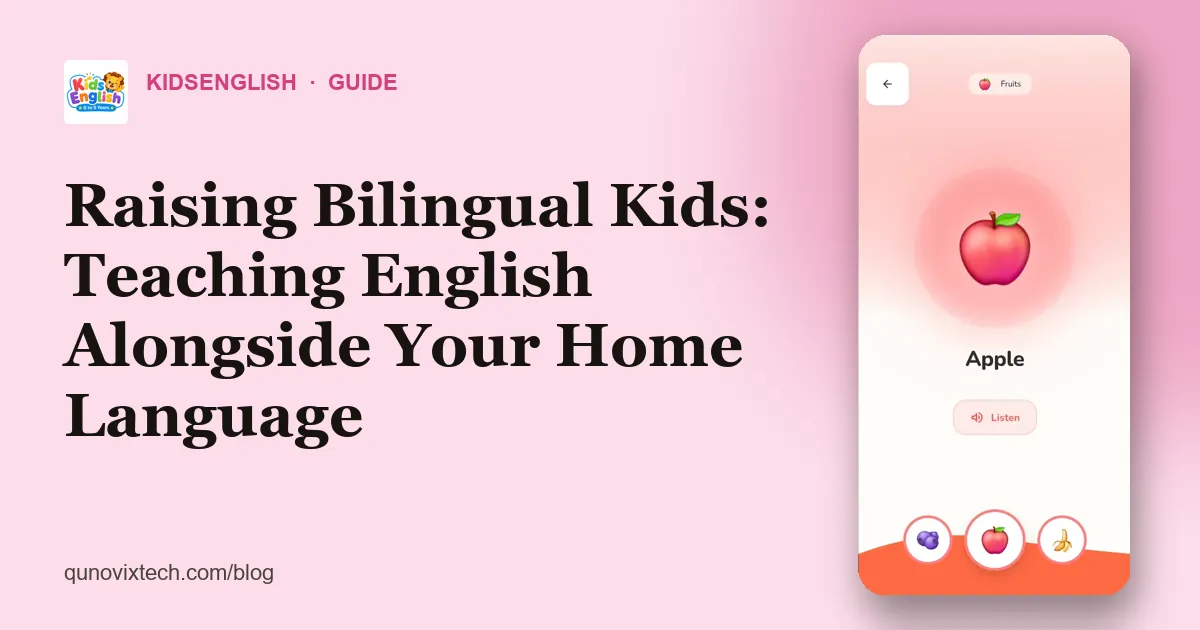
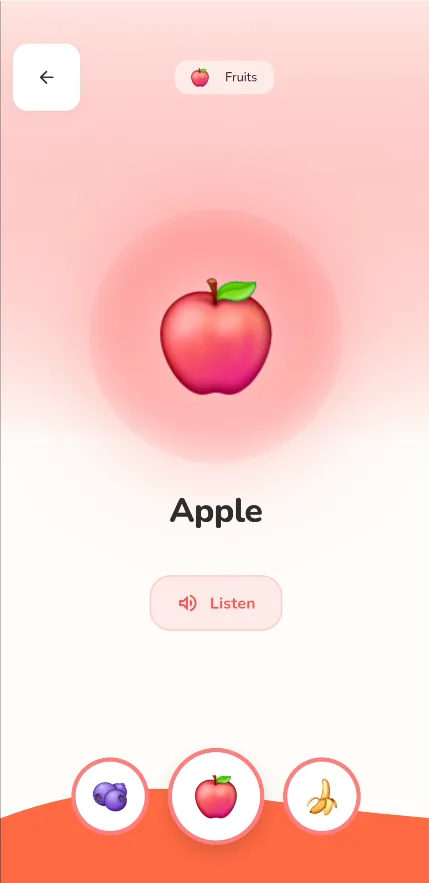
KidsEnglish is designed for young learners starting to recognise English letters, numbers and everyday words. Children tap pictures to hear words, which is helpful when parents aren't confident about English pronunciation. Start with first English words for kids.
Key takeaways
- Bilingualism doesn't cause language delay or long-term confusion.
- Mixing languages is a normal part of learning.
- Keep the home language strong while adding English through books, songs and games.
- Seek advice if there are concerns in all of a child's languages.
Frequently asked questions
Does learning two languages confuse children?
Research suggests children can learn to separate languages early. Mixing is normal and not a sign of confusion.
Should I speak English at home if it's not my first language?
Many experts suggest speaking the language you're most fluent in at home, and adding English through books, songs, school and media.
Will my child speak later if they're bilingual?
Bilingualism doesn't cause speech delay. Milestones are broadly similar when both languages are counted.
When should children start learning English?
Children can be exposed to English from an early age through songs, books and play, alongside their home language.

We're an independent app studio in Pune, India. We build Kids English and write these guides from what we learn making it and from the questions our users send us. Spotted an error? Email qunovixtechnologies@gmail.com.