Short Breaks, Better Focus: Using Quick Puzzle Games Well
Short breaks help you refocus. Learn what research says about microbreaks, why quick puzzle games suit them and how to keep a short break short.
- What research suggests about short breaks during work
- Why short-level puzzle games suit quick breaks
- Rules to keep a five-minute break from becoming an hour
Long stretches of focused work are tiring. A short break can help you come back sharper. For many people, a quick puzzle is a favourite way to take that break, but only if it stays short.
What research suggests about short breaks
Studies on "microbreaks" (short breaks of a few minutes during work) have found that they can help people feel more energetic and less fatigued. A 2022 meta-analysis of microbreak studies reported benefits for vigour and fatigue, with more mixed effects on performance depending on the task.
The takeaway: short, regular breaks are generally a good idea, especially during demanding mental work.
Why puzzle games can suit short breaks
- Short levels. Many puzzles take one to five minutes to finish.
- A clear stopping point. Finishing a level is a natural moment to stop.
- A change of thinking. Spatial puzzles use a different kind of attention from emails or documents.
- No timers. Games without countdowns feel less like more work.
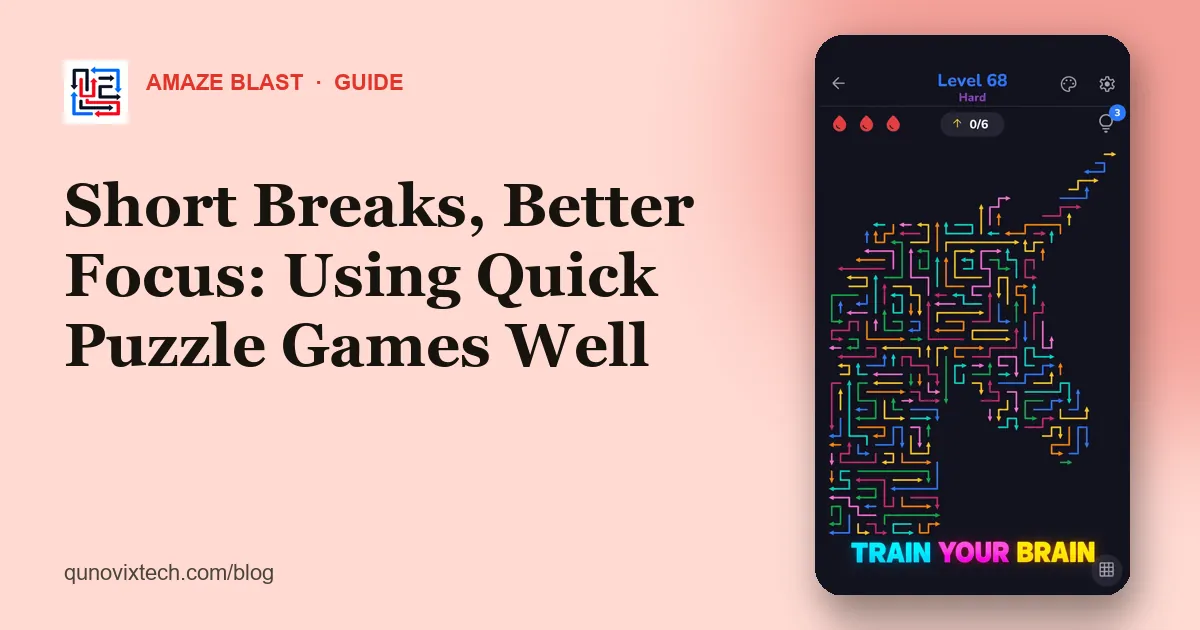
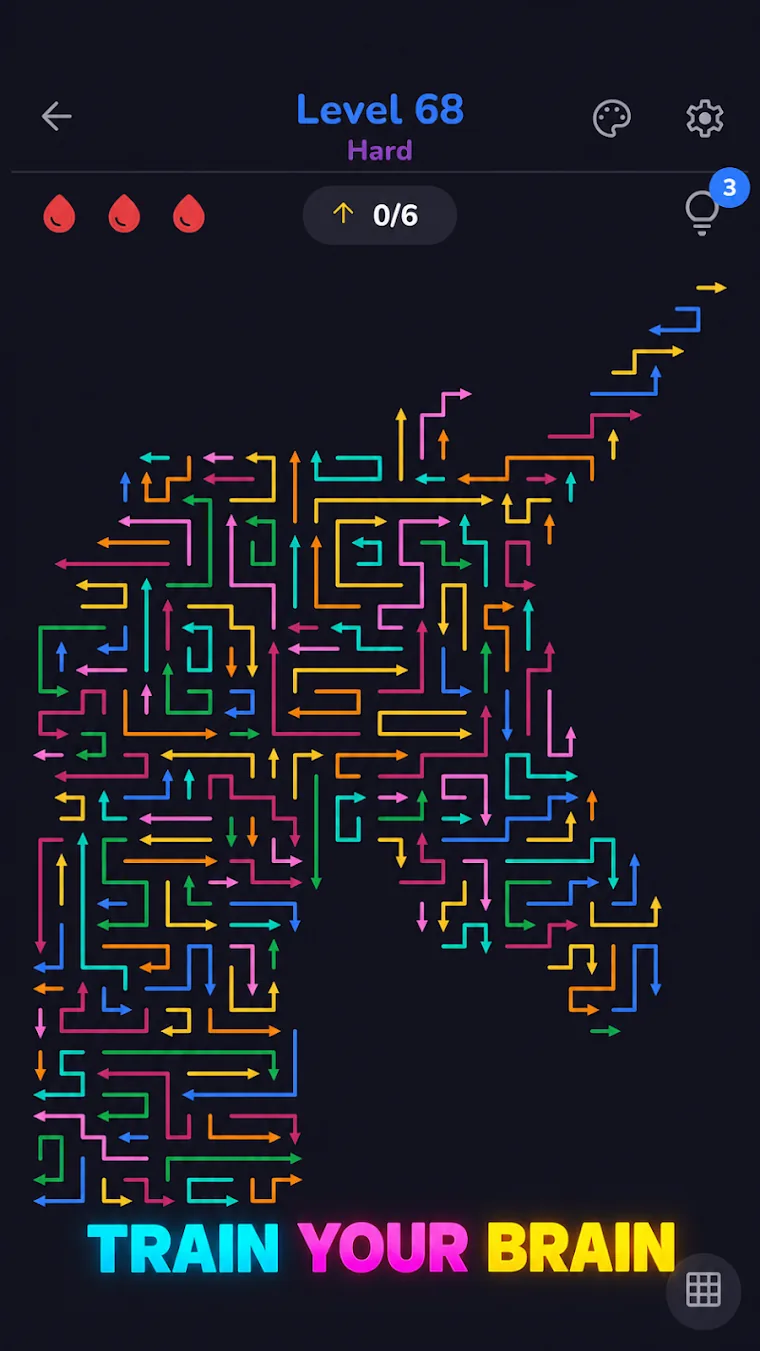
Amaze Blast is built around short levels with no timers, so one level fits easily into a quick break.
The risk: breaks that grow
The danger with any game is "just one more". A five-minute break that turns into forty minutes leaves you more behind, not refreshed.
Rules for a good puzzle break
- Decide the length first. "Two levels" or "five minutes," not "until I feel like stopping."
- Set a timer. Use your phone's timer, not your willpower.
- Stop at a level end. Avoid starting a new level when your time is nearly up.
- Mute notifications. Don't let the break turn into scrolling messages.
- Stand up first. Stretch or get water, then play. Your body needs a break too.
- Return to one clear task. Know what you'll do when the break ends.
Mix up your breaks
Not every break should be on a screen. Rotate between:
| Break type | Good for |
|---|---|
| Quick puzzle | Mental reset during desk work |
| Short walk | Energy, posture, fresh air |
| Stretching | Stiff neck and shoulders |
| Looking into the distance | Tired eyes after screen time |
| A chat with someone | Mood and connection |
A common eye-care tip is the "20-20-20 rule": every 20 minutes, look at something 20 feet away for 20 seconds. Pair it with your puzzle breaks.
Best times for a puzzle break
- After finishing a task, as a small reward.
- When you notice you've re-read the same sentence several times.
- Midway through a long study or work session.
- During a wait, such as for a build, a download or a meeting to start.
For more on why puzzles feel calming, read why puzzle games are relaxing.
Key takeaways
- Short, regular breaks can reduce fatigue and boost energy.
- Puzzle games with short levels and no timers suit quick breaks.
- Decide the break length first, use a timer and stop at a level end.
- Mix screen breaks with walks, stretches and eye rests.
Frequently asked questions
Are short breaks good for productivity?
Research on microbreaks suggests they can reduce fatigue and increase energy. Effects on performance vary by task.
How long should a short break be?
Five to ten minutes is common. Even a minute or two can help.
Is playing games on a break bad?
Not if it stays short and refreshes you. Set a time limit and stop at a level end.
What are the best games for short breaks?
Puzzles with short levels and no timers, such as arrow and block puzzles.

We're an independent app studio in Pune, India. We build Amaze Blast: Arrow Puzzle and write these guides from what we learn making it and from the questions our users send us. Spotted an error? Email qunovixtechnologies@gmail.com.