Why No-Timer Puzzle Games Are Better for Relaxing
Timers add stress. Learn why puzzle games without time limits feel calmer, how they change the way you think and what to look for in a pressure-free game.
- How time pressure changes the way you play
- Why untimed puzzles reward thinking over reflexes
- Features of a genuinely pressure-free puzzle game
Some games put a countdown on every level. Others let you take as long as you like. For many players, especially those playing to unwind, untimed puzzles are far more enjoyable. Here's why.
How timers change the experience
A timer turns a puzzle into a race. That's exciting for some people, but it changes how you think:
- You make faster, less careful decisions.
- You notice your heart rate rise as time runs out.
- Mistakes feel like failures rather than learning.
- You stop enjoying the puzzle and start fighting the clock.
What untimed puzzles do differently
Without time pressure:
- You can think. Plan several moves ahead and test ideas in your head.
- You can pause. Answer the door, reply to a message, come back later.
- You enjoy the "aha!" moment. Solving comes from insight, not speed.
- Anyone can play. Players of all ages and reaction speeds are on equal footing.
Timed vs untimed at a glance
| Timed puzzles | Untimed puzzles | |
|---|---|---|
| Feeling | Exciting, tense | Calm, absorbing |
| Rewards | Speed, reflexes | Planning, insight |
| Interruptions | Lose progress or time | Pause anytime |
| Best for | Competition, adrenaline | Relaxing, thinking |
Features of a pressure-free puzzle game
- No countdown timers on standard levels.
- Hints for when you're stuck (see when to use hints).
- Short levels you can finish in one sitting.
- Clean, calm visuals without flashing alerts.
- Offline play so connection problems don't interrupt.
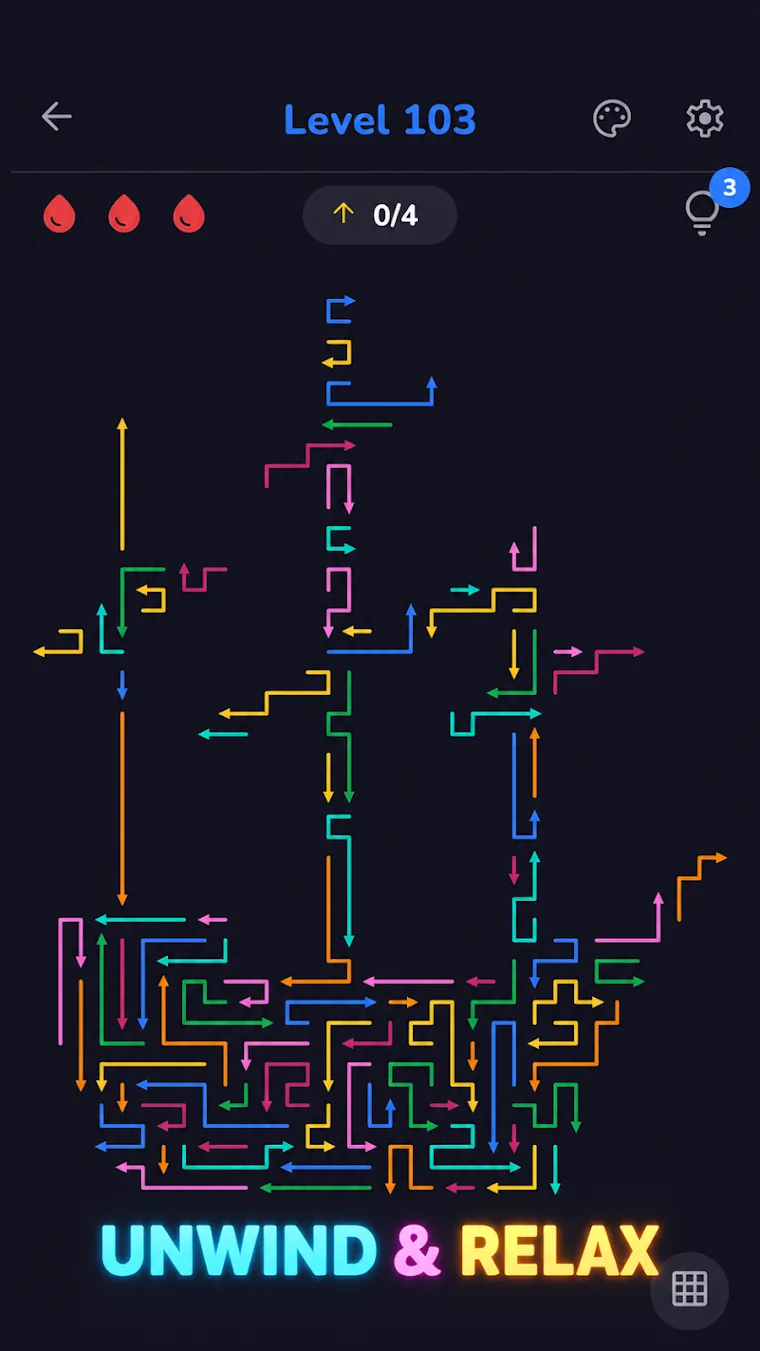
Amaze Blast has no timers and no rush, with hints for tricky mazes and offline play.
Untimed doesn't mean easy
Untimed puzzles can be very challenging. Hard arrow mazes, for example, require long chains of reasoning. The difference is that the challenge is in your thinking, not your speed. Read why arrow puzzles get harder to see how.
Who benefits most from untimed games
- Players who use games to wind down.
- Older adults who prefer to play at their own pace (see puzzle games for older adults).
- Anyone who gets anxious under time pressure.
- People who play in short, interrupted bursts.
Key takeaways
- Timers push you toward fast, less careful decisions and add tension.
- Untimed puzzles reward planning and insight, and you can pause anytime.
- Look for no timers, hints, short levels, calm visuals and offline play.
- Untimed puzzles can still be challenging, just not stressful.
Frequently asked questions
Are there puzzle games without timers?
Yes. Many arrow, block and sorting puzzles, including Amaze Blast, have no timers.
Why are timed games stressful?
Time pressure pushes faster decisions and makes mistakes feel costly, which raises tension.
Are untimed puzzles too easy?
No. They can be very challenging, but the challenge is in thinking, not speed.
Are untimed games better for kids and older adults?
They're often more accessible because players can think at their own pace.

We're an independent app studio in Pune, India. We build Amaze Blast: Arrow Puzzle and write these guides from what we learn making it and from the questions our users send us. Spotted an error? Email qunovixtechnologies@gmail.com.