Wedding Season Planning for Photographers: A Practical Guide
Busy wedding seasons need planning. Learn how photographers can manage peak dates, multi-day events, teams, payments and rest during wedding season.
- How to prepare months before peak season
- How to handle multi-day weddings and back-to-back events
- How to protect cash flow, gear and your own energy
For many photographers, wedding season brings most of the year's income in a few busy months. It's exciting, but back-to-back multi-day events, travel and editing backlogs can quickly become overwhelming. Planning ahead makes the difference.
Know your peak dates early
In India, wedding demand often clusters around auspicious dates (muhurat) and favourable seasons, with the cooler months typically busiest in many regions. Popular dates can be booked many months in advance.
- Note the most in-demand dates as early as possible.
- Expect several enquiries for the same popular dates.
- Decide your pricing for peak dates before enquiries arrive.
Before the season
- Update your packages and prices. Including peak-date pricing if you use it.
- Block personal dates. Family events and rest days go on the calendar first.
- Line up your team. Second shooters, videographers and editors for key dates.
- Service your gear. Clean sensors, test batteries, check memory cards and backups.
- Set up your booking system. One calendar with enquiries, holds and confirmations (see photography booking system).
Handling multi-day weddings
Weddings often span several events: haldi, mehendi, sangeet, wedding and reception.
| Tip | Why |
|---|---|
| Record each event separately | Different times, venues and teams |
| Note travel time between venues | Avoid tight schedules |
| Assign team members per event | Everyone knows where to be |
| Create one client record for all events | Payments and contacts in one place |
Avoid burnout
- Schedule rest days between big weddings.
- Limit consecutive events to what you can deliver well.
- Batch editing on fixed days instead of late nights after every shoot.
- Eat and hydrate on long shoot days, and pack snacks.
Protect cash flow
Wedding income often arrives in bursts. Keep track of:
- Advances received for future events.
- Balances due before or after each wedding.
- Payments to your team and vendors.
- Monthly revenue and pending amounts.
See tracking photography income and advance payments.
Communicate clearly
- Send shoot details and schedules a few days ahead.
- Confirm the contact person for each event.
- Share realistic delivery timelines, since peak season means longer editing queues.
Ready-made messages save time when you're busy: see WhatsApp templates for photographers.
Use your calendar to plan
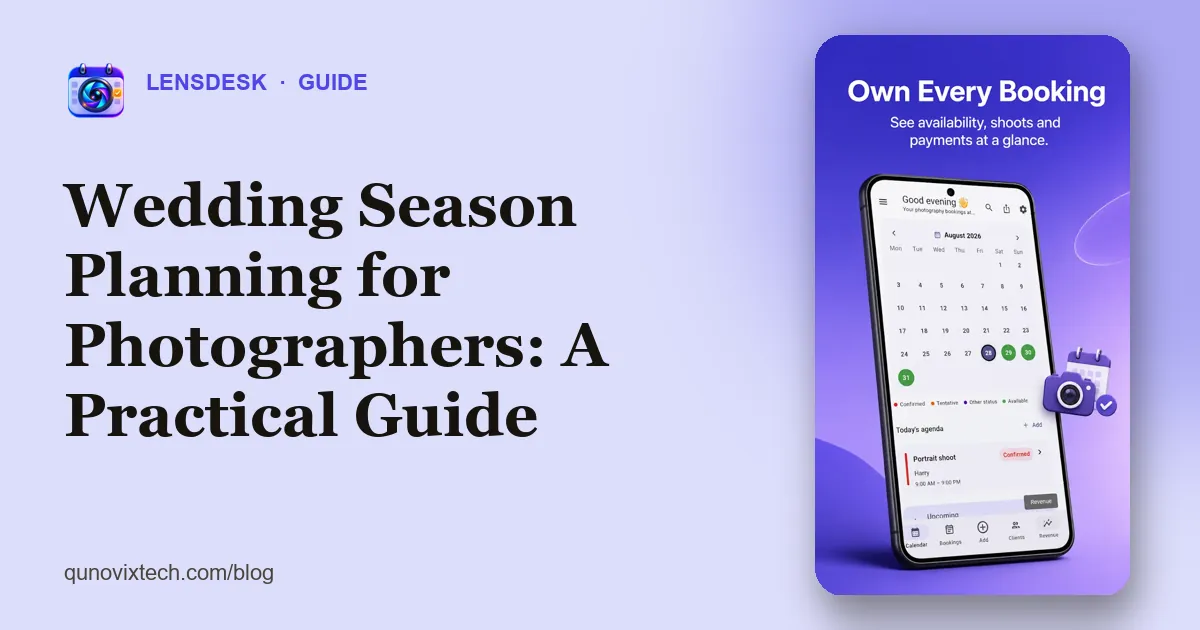
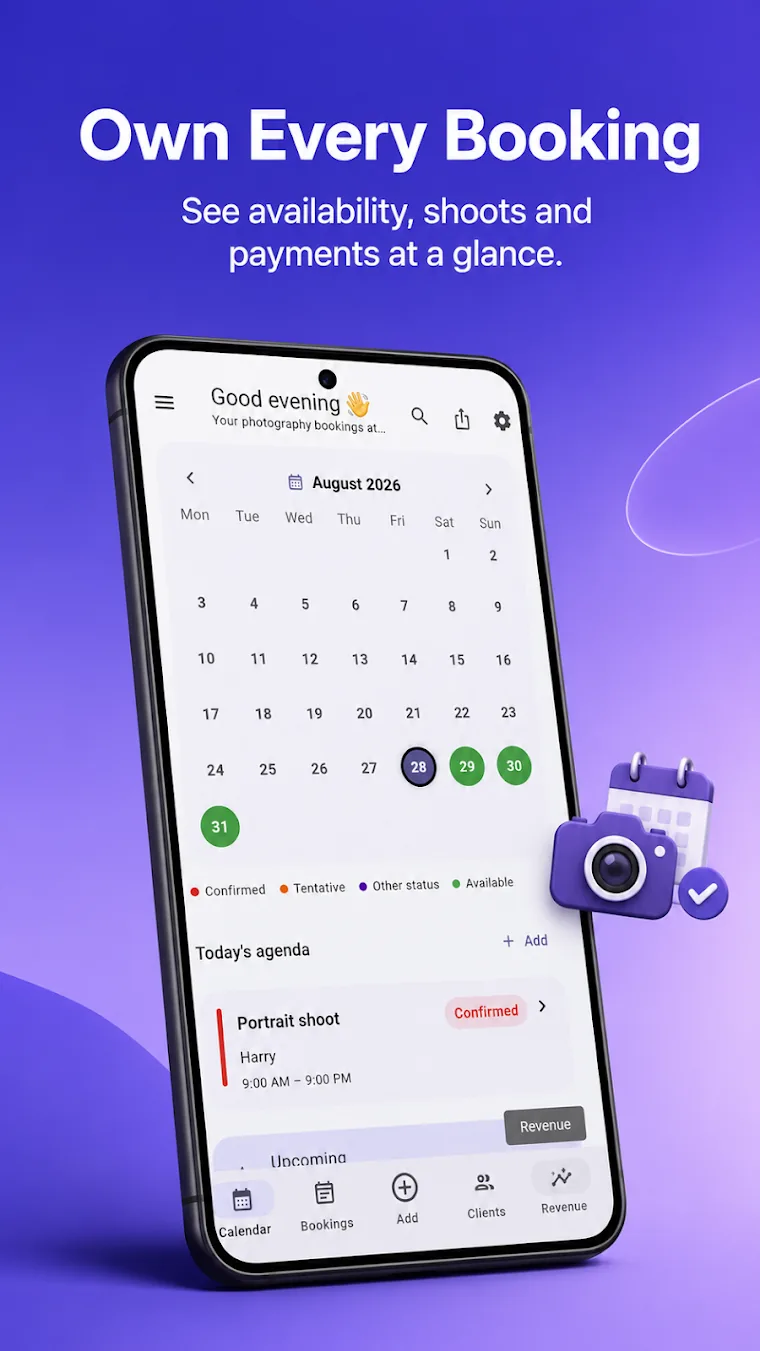
LensDesk lets you jump to any month, see booked and available dates at a glance, add custom event types like haldi or sangeet, and set recurring reminders. You can also share your monthly availability with clients and review monthly revenue and pending balances.
Key takeaways
- Identify peak dates early and set pricing before enquiries arrive.
- Prepare gear, team and packages before the season starts.
- Record multi-day weddings as separate events with travel times.
- Protect cash flow and your energy with rest days and batch editing.
Frequently asked questions
When is wedding season in India?
It varies by region and community, but the cooler months and auspicious muhurat dates are typically the busiest.
How far ahead do couples book photographers?
Popular dates can be booked many months in advance, especially for peak season.
How do photographers handle multi-day weddings?
By recording each event separately with times, venues and team assignments, under one client record.
How can photographers avoid burnout in wedding season?
Schedule rest days, limit consecutive events, batch editing and look after basics like food and sleep.

We're an independent app studio in Pune, India. We build LensDesk-Photographer Calendar and write these guides from what we learn making it and from the questions our users send us. Spotted an error? Email qunovixtechnologies@gmail.com.